Anna Morales : Photography, Yoga, and Human Connection
What if your wedding photos were more than pretty images—what if they were evidence that your love, your people, and your day truly existed? We follow photographer Anna Morales from a dorm-room epiphany to a career built on visual anthropology, yoga-informed presence, and the belief that a photograph is a drawing of light that can outlast chaos, fashion, and even memory.
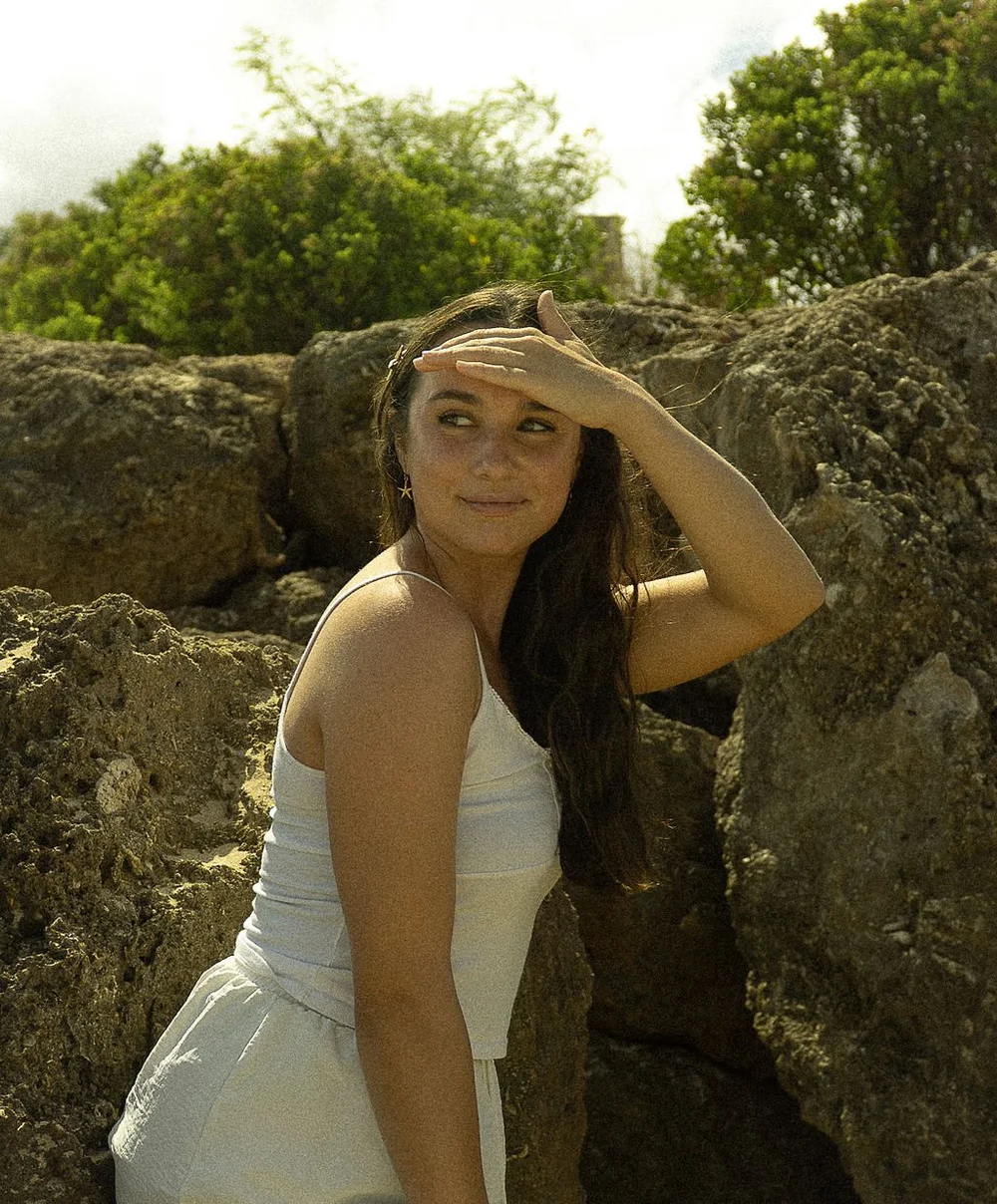
We start with the moment Anna discovered visual anthropology and fought to build a custom degree that fused religious studies with ethnographic imagery. That decision reframed her craft: intention over speed, connection over detachment. Through powerful case studies—the final moments of Sudan, the last male northern white rhino; Edward S. Curtis’s controversial yet invaluable documentation of ritual; aerial images of a sinking Carolina island; and stark portraits from 2020 protests—Anna’s framework comes into focus. Photographs can preserve what vanishes: tenderness, belief, topography, struggle. They become cultural artifacts, not just content.
Then we bring that method into weddings. Anna’s participant-observer approach uses grounding breath and yoga practice to de-escalate stress, help couples drop their shoulders, and make space for real laughter. A Waimanalo ceremony that turned stormy mid-vow became a favorite precisely because the weather rewrote the plan and revealed the truth. We compare Hawaii’s dramatic landscapes with the East Coast’s beauty in restraint, and we explore her next creative horizons: documenting surf and yoga spaces and crafting a global Ayurveda cookbook that ties food to healing, lineage, and place.
We close with a challenge for the digital age: if photos are our portable artifacts, how will we safeguard them beyond fragile clouds and lost logins? Slow down, breathe, and choose with intention. Subscribe, share this episode with a friend who loves photography, and leave us a review telling us about the one image that changed how you see your life.
About Hawaii Wedding Studio
Rev. James Chun and his team, Hawaii Wedding Studio specializes in sophisticated, stress-free elopements exclusively on the island of Oahu. From the quiet shores of the North Shore to the dramatic cliffs of the East Side, we help couples trade wedding performance for true presence.
——————————–
TRANSCRIPT
Setting The Stage: Anna’s Lens
SPEAKER_00 Welcome back. I’m Brittany from Hawaii Wedding Studio. Today we’re diving into the fascinating approach of Anna Morales, a talented photographer who blends visual anthropology with wedding photography to capture what she calls love with a capital L. Anna used to shoot intimate elopements right here on Oahu before moving to the East Coast. We’ll be talking about how she turns your wedding photos into lasting emotional artifacts, and how she uses her yoga and mindfulness background to help couples find stillness, laughter, and authenticity in front of the camera on their big day. All right, let’s get engaged.
SPEAKER_02 I am Sam.
SPEAKER_01 And I am Riley.
SPEAKER_02 And today we are just hanging out, cracking a few jokes, and doing what we do best.
SPEAKER_01 Which is doing a massive deep dive into a really fascinating topic.
SPEAKER_02 Exactly, a real deep dive. I actually brought my scuba gear today.
SPEAKER_01 So don’t need the fins for an intellectual deep dive, Sam. Put those away.
SPEAKER_02 Right, right. Good point. So today we are looking at a stack of sources that I gotta be honest, made me look at my own camera roll entirely differently this morning.
SPEAKER_01 Oh, it is a heavy stack today. We are covering um everything from the extinction of the northern white rhino to the highly specific way you should breathe during a yoga session.
SPEAKER_02 Which sounds completely unrelated.
SPEAKER_01 It sounds like a disjointed mess when you just list it out like that. But somehow all of this eventually leads back to weddings.
SPEAKER_02 And the thread connecting it all is actually incredible. We are diving into the world of Anna Morales. Now, if you follow the wedding scene out here in Hawaii, specifically on Oahu, you probably know her.
SPEAKER_01 Yeah, she spent years shooting elopements with the legendary Reverend James Chun.
SPEAKER_02 Right. But if you look at the research we have today, calling her a photographer is, well, it’s technically true, but it misses the whole intent of what she does.
Defining Visual Anthropology
SPEAKER_01 It’s sort of like calling a brilliant novelist a typist.
SPEAKER_02 Exactly. She calls herself a visual anthropologist.
SPEAKER_01 Which, first of all, sounds incredibly cool.
SPEAKER_02 It really does. It sounds like something you put on a heavy cardstock business card if you wanted to get into a secret society or something.
SPEAKER_01 It has a lot of gravity to it. But what is so interesting to me is that this is not just marketing fluff, it is an actual rigorous academic discipline.
SPEAKER_02 One that she essentially had to fight tooth and nail to even study.
SPEAKER_01 Right. And that is really our mission for this deep dive today. We want to unpack how someone goes from, you know, eating a bagel in a college dorm room to creating their very own academic degree.
SPEAKER_02 And then packing up, moving out to Hawaii to shoot weddings, and completely redefining photography along the way.
SPEAKER_01 Not just taking pictures, but creating historical artifacts.
SPEAKER_02 I love an origin story that involves carbohydrates. Oh. So let’s start right there. Take us back to the University of South Carolina.
SPEAKER_01 So picture the scene. Anna is a student at UOFSC. She’s in the Viscom program.
SPEAKER_02 Visual Communications.
SPEAKER_01 Right. This is the traditional track you take if you want to be a photojournalist for a newspaper or a magazine.
SPEAKER_02 Which seems like a totally logical place for a photographer to be.
SPEAKER_01 It is on paper, anyway.
SPEAKER_02 Yeah.
SPEAKER_01 But she hit this massive wall. The sources describe a really deep disconnect that she felt with the standard curriculum.
SPEAKER_02 Because traditional photojournalism, especially in a fast-paced news context, is heavily focused on speed.
SPEAKER_01 It is all about speed. It is get the shot, file the story, move on to the next thing.
SPEAKER_02 The relentless 24-hour news cycle. You just have to feed the beast.
SPEAKER_01 Exactly. And philosophically, that field prioritizes being this unbiased observer. You are supposed to be the fly on the wall.
SPEAKER_02 Right. You don’t interact.
SPEAKER_01 You don’t intervene at all. You just document what happens in front of you. But Anna found that she didn’t want to be detached from her subjects.
SPEAKER_02 She wanted to be connected.
Inventing A Major Against The Odds
SPEAKER_01 Yeah. She didn’t want the speed. She wanted depth. She wanted slow photography.
SPEAKER_02 So she is having this major crisis of faith in her chosen major. And then comes the epiphany.
SPEAKER_01 The bagel moment.
SPEAKER_02 The bagel moment. I love so much that this specific detail made it into our research notes.
SPEAKER_01 It is the best detail. So she is sitting there eating an Einstein brose bagel.
SPEAKER_02 Specifically Einstein brose. Very important for the texture of the memory.
SPEAKER_01 Crucial detail. And she is reading a textbook for this anthropology elective she was taking on the side.
SPEAKER_02 Probably just trying to knock out a gen ed requirement like the rest of us did.
SPEAKER_01 Probably. But she turns the page, and there it is in bold text. Visual anthropology. The textbook defined it as the study of humanity through visual means, using ethnographic photography, and film to study historical society.
SPEAKER_02 And the light bulb just completely goes off for her.
SPEAKER_01 It wasn’t just a light bulb. It was this massive realization that there was actually a name for the exact thing she wanted to do.
SPEAKER_02 She didn’t want to just capture a fleeting moment. She wanted to study the humans inside that moment.
SPEAKER_01 So she marches down to the administration and basically says, I want to major in this.
SPEAKER_02 Let me guess. The administration looked at her and said, Yeah, we don’t have that here.
SPEAKER_01 They absolutely did not have that major.
SPEAKER_02 This is the part of the story where most normal people would just sigh, change their major to something easy, and go to a frat party.
SPEAKER_01 Right. But this gives you so much insight into her character. She did not settle. She dug in and found the Honors College Bar SC program.
SPEAKER_02 Which is.
SPEAKER_01 It’s a program that allows highly motivated students to craft their own multidisciplinary degree from scratch.
SPEAKER_02 But it is not a walk in the park.
SPEAKER_01 Not at all. You have to write a massive statement of purpose, you have to form a faculty committee, and you essentially have to defend why this major deserves to exist at the university.
SPEAKER_02 That sounds like a complete nightmare. I would have just majored in general studies and called it a day.
SPEAKER_01 It took her two full years, two years of navigating university bureaucracy. But she actually pulled it off.
SPEAKER_02 She graduated with a custom degree in religious studies through photovisual anthropology.
SPEAKER_01 That is quite the mouthful.
Photos As Artifacts, Not Snapshots
SPEAKER_02 It is a mouthful, but it perfectly sets up the entire philosophy that guides her career. This whole idea of slow photography.
SPEAKER_01 Exactly. If journalism is about speed, visual anthropology is about the artifact.
SPEAKER_02 Okay, let’s unpack that word. Artifact. Because when I hear artifact, I am instantly thinking of Indiana Jones.
SPEAKER_01 Right. Dusty museums.
SPEAKER_02 Dusty pottery shards, maybe some arrowheads, a golden idol if we are getting lucky. Things you physically dig out of the dirt.
SPEAKER_01 And honestly, that is the literal Cambridge dictionary definition. An object made by a human being, typically of cultural or historical interest.
SPEAKER_02 But Anna challenges that definition entirely.
SPEAKER_01 She does. She wrote this really compelling piece where she argues that photographs are actually the most resourceful artifacts we possess as a species.
SPEAKER_02 She calls them drawings of light.
SPEAKER_01 Drawings of light that capture a finite existence.
SPEAKER_02 Which is incredibly poetic, but is it accurate? I mean, you and I probably take a dozen photos a day on our phones. Are my blurry pictures of my morning coffee considered artifacts?
SPEAKER_01 In a way, yes. But she distinguishes between a quick snapshot and a true artifact through the concept of intention.
SPEAKER_02 Intention is key.
SPEAKER_01 It is. And she uses some incredibly heavy case studies to prove her point. These are the real nuggets from our research that show how a photo functions as vital historical evidence.
Sudan The Rhino: Tender Farewell
SPEAKER_02 And the first case study she discusses is just it is really heartbreaking.
SPEAKER_01 It is. It’s the story of Sudan. He was the very last male northern white rhino on the entire planet.
SPEAKER_02 Just pause on that for a second. Let that sink in for everyone listening. The very last male of an entire species. That is such a heavy concept to wrap your head around.
SPEAKER_01 It really is. And Anna analyzes the work of the photographer Emmy Vitali, who was there documenting Sudan’s final days on Earth.
SPEAKER_02 There are two specific photos from that series that Anna points to, right?
SPEAKER_01 Yes. The first one shows a caretaker who is just gently rubbing Sudan’s ear.
SPEAKER_02 Just a little scratch behind the ear, like you do for a golden retriever.
SPEAKER_01 Exactly. It is so deeply intimate. Anna argues that the visual of Sudan’s tired, wrinkly eye combined with the caretaker’s hands, reveals this loving energy and a true cross-species friendship.
SPEAKER_02 So it’s not just a sterile picture of an endangered animal, it is a picture of a relationship.
SPEAKER_01 Precisely. And the second photo is the actual moment of death.
SPEAKER_02 Wow.
SPEAKER_01 It shows the caretaker, Joseph Wachira, and Sudan leaning their heads against each other just moments before the rhino passed away.
SPEAKER_02 And Anna’s core argument here is that without that specific photograph, that exact moment, the pure tenderness of it, is just gone forever into the ether.
SPEAKER_01 Right. The photo documents what is actively vanishing from our earth. It physically stops us from normalizing the extinction.
SPEAKER_02 It forces you to witness it.
SPEAKER_01 It does. But that photo is an artifact of environmental degradation, sure. But it’s equally an artifact of profound human compassion.
SPEAKER_02 And from there, she pivots from the extinction of a species to the preservation of a culture. The Native American photos.
SPEAKER_01 Edward S. Curtis. Now Curtis is definitely a complex figure in the anthropology world. There is a lot of ongoing debate about how he staged certain elements of his photos.
SPEAKER_02 Sure. But Anna focuses on the overarching value of the record he managed to create.
SPEAKER_01 Exactly. He spent 30 years in the late 19th and early 20th centuries painstakingly documenting North American Indians.
SPEAKER_02 And there’s one specific image she highlights to make her point.
SPEAKER_01 It’s called Placating the Spirit of a Slain Eagle, taken in 1926.
Rituals Recorded: Curtis Reconsidered
SPEAKER_02 What exactly is happening in that shot?
SPEAKER_01 It shows a man performing a very specific ritual to honor an eagle right after killing it to harvest its feathers.
SPEAKER_02 So again, it’s not just a static portrait of a person. It is capturing an action, sacred ritual.
SPEAKER_01 Anna argues that it is capturing an entire value system. The photograph teaches us about that culture’s deep devotion to nature.
SPEAKER_02 The idea that if you take a life from the earth, you are obligated to honor the spirit of that life.
SPEAKER_01 That is pure data. It is crucial historical data encoded in light.
SPEAKER_02 I really see the pattern she is weaving here. Whether it is the last rhino or a sacred ritual, the photograph is preserving something that is at immediate risk of being lost forever.
SPEAKER_01 Precisely. And she even applies this same framework to the physical land itself. She discusses the work of Jamie Colker on Poquoi Island in South Carolina.
SPEAKER_02 I have actually heard of this place. The island is actively sinking, isn’t it?
SPEAKER_01 It is classified as a heritage-at-risk site because of rapidly rising sea levels.
SPEAKER_02 So what does the photographer do?
SPEAKER_01 Colker uses aerial imaging, so flying drones, to get the sweeping bird’s eye perspective of the island.
SPEAKER_02 Anna calls this an otherworldly perspective.
SPEAKER_01 Because it reveals these intricate erosion patterns that the human eye literally cannot perceive when you are just standing on the ground.
SPEAKER_02 So in this specific case, the artifact is a geological survey. It is preserving the exact shape of the land before the ocean just washes it away completely.
SPEAKER_01 And finally, she brings this entire philosophy right up to the modern day, specifically the year 2020 during the Black Lives Matter movement.
SPEAKER_02 She looks at the work of Daniel Hare in Columbia, South Carolina.
SPEAKER_01 Yes. These stark, powerful black and white portraits.
SPEAKER_02 And what does she pull from those?
SPEAKER_01 Anna points out one specific image that shows a literal physical barrier separating different identities. And she analytically compares these 2020 photos to archival photos from the 1960s civil rights movement.
Protest Imagery And Echoes Of History
SPEAKER_02 Just to show the rhyme of history, how these visual patterns repeat themselves.
SPEAKER_01 Exactly. It becomes an artifact of the human struggle. So when you put all of these vastly different examples together: the rhino, the eagle ritual, the eroding island, the protests, you really see her ultimate thesis.
SPEAKER_02 A photograph isn’t just a fun memory trigger for your scrapbook.
Translating Theory To Weddings
SPEAKER_01 It is hard evidence that this moment, this feeling, this reality actually existed.
SPEAKER_02 Okay, so this is an incredibly heavy, highly academic philosophy. How in the world does this translate to shooting a wedding?
SPEAKER_01 That is the big question.
SPEAKER_02 Because if I am a bride or a groom, I don’t necessarily want my photographer actively thinking about the extinction of the rhino while I am trying to cut my wedding cake.
SPEAKER_01 Fair point. Well, this is where the participant observer part of anthropology really comes into play.
SPEAKER_02 Meaning what exactly?
SPEAKER_01 To capture those real raw moments, the true artifacts of a couple’s relationship. You cannot be a stressed-out, frantic vendor just pointing a camera.
SPEAKER_02 You have to be totally grounded.
SPEAKER_01 You have to be present. And this leads us to what is arguably the most unexpected part of her entire resume.
SPEAKER_02 The yoga.
SPEAKER_01 The yoga. But also, before we get to that, the Sufism.
SPEAKER_02 Okay, let’s start with the Sufism, because that seems like a pretty massive detour from wedding photography in Hawaii.
SPEAKER_01 It seems like it, but it is all deeply connected. After her university studies, Anna actually traveled to Morocco for three months specifically to study Sufism, which is the mystic branch of Islam.
SPEAKER_02 And what was the core takeaway from that experience?
SPEAKER_01 She learned this concept of love with a capital L.
SPEAKER_02 Love with a capital L.
SPEAKER_01 Yeah. It is not just talking about romantic love between two people, it is a universal source energy, a foundational love that connects all living things.
SPEAKER_02 She actually created a whole branch of her business named after this, didn’t she? A visual anthropologist in love.
Yoga, Nervous Systems, And Horse Breath
SPEAKER_01 She did. It is a beautiful way to frame it. But she takes this high-level esoteric mysticism and she combines it with something incredibly physical.
SPEAKER_02 Yoga training. She is a certified instructor, right?
SPEAKER_01 Yes. She teaches slow flow into yin yoga.
SPEAKER_02 I honestly love the idea of a wedding photographer who can also fix my terrible posture. But does she actively use this while she is on a shoot?
SPEAKER_01 She does.
SPEAKER_02 She out there doing a downward dog while holding a massive camera lens?
SPEAKER_01 Well, she does admit to getting into some highly unconventional yoga-inspired shapes just to get the absolute perfect angle for a shot.
SPEAKER_02 I can picture that.
SPEAKER_01 But the real application of the yoga is entirely internal. She talks a lot about acting as a mirror for her client.
SPEAKER_02 A mirror? How does that work in the context of a stressful wedding day?
SPEAKER_01 Think about the vibe of a typical wedding. It is chaotic. Family drama everywhere. If the photographer shows up frantic, constantly checking their watch, stressing out loud about the lighting fading, the couple immediately feels that nervous energy.
SPEAKER_02 Energy is highly contagious. They tense right up.
SPEAKER_01 Exactly. So Anna uses her deep yoga training to regulate her own nervous system. If she is calm, if she is steady, if she is taking deep intentional breaths, the couple subconsciously mirrors that exact state.
SPEAKER_02 She creates this safe, energetic space for them to just drop their shoulders and be themselves.
SPEAKER_01 And she actually has a very specific practical technique she uses for this, doesn’t she?
SPEAKER_02 Oh yes. The horse breath.
SPEAKER_01 The horse breath. I really have to ask you to explain this one. What on earth is horse breath?
SPEAKER_02 It is exactly what it sounds like. You take a massive deep breath in through your nose, and then you forcefully exhale through really loose lips, making them flutter together.
SPEAKER_01 Like a horse buttering.
SPEAKER_02 Exactly like a horse.
SPEAKER_01 And she seriously makes her paying wedding clients do this in their expensive clothes.
SPEAKER_02 She does. And she swears it works brilliantly for two distinct reasons. First, physiologically, it completely relaxes the jaw muscles and stimulates the vagus nerve.
SPEAKER_01 So it physically forces your body to release built-up tension.
SPEAKER_02 Right. But psychologically, it is just ridiculous. It makes people burst out laughing.
SPEAKER_01 Kim completely breaks the ice.
SPEAKER_02 It shatters the ice. You simply cannot take yourself too seriously or hold on to your wedding anxiety when you and your partner are standing in a field sputtering like farm animals.
SPEAKER_01 It instantly breaks down that stiff barrier between the professional photographer and the subject.
SPEAKER_02 And suddenly, right after they do it, you get a genuine relaxed smile, a real laugh.
SPEAKER_01 They get a real artifact.
SPEAKER_02 Exactly. Absolutely love that. It is literally using human physiology to hack the photo session.
Enter James Chun
SPEAKER_01 It is brilliant. And this totally unique blend of skills, the anthropologist’s sharp eye for detail combined with the yogi’s calm presence, is exactly what she brought with her to Hawaii.
SPEAKER_02 Which brings us to her time with Reverend James Chen.
SPEAKER_01 The absolute legend in the Oahu wedding scene. They worked together out there for three years, primarily focusing on elopements.
SPEAKER_02 They did. And there is this one fantastic story from an interview Anna did with James that perfectly, perfectly captures her visual anthropologist approach out in the wild.
SPEAKER_01 It was during a ceremony out in Waimanolo.
SPEAKER_02 Now, Waimanolo is stunning. Gorgeous beaches. But the weather out there, it truly has a mind of its own. It turns on a dime.
SPEAKER_01 It sure does. So they were right in the middle of a beautiful ceremony, and this completely unexpected storm just rolls in and hits them.
SPEAKER_02 We’re talking sideways wind, heavy rain, the whole nine yards.
SPEAKER_01 And they only had one single umbrella between all of them.
SPEAKER_02 See, that right there is the ultimate panic moment for 99% of couples.
SPEAKER_01 Total meltdown territory. But because Anna and James operate with this shared mindset of embracing the reality of the moment, they didn’t panic at all.
SPEAKER_02 They just shifted gears.
SPEAKER_01 They shifted into problem-solving mode, but they intentionally kept the energies super light and fun. They didn’t try to fight the storm or pretend it wasn’t happening.
SPEAKER_02 They surfed it.
SPEAKER_01 Metaphorically, yes, they surfed the storm. Anna said they just fully embraced the chaos of the situation.
SPEAKER_02 And the photos that came out of that session?
SPEAKER_01 She says they are some of her absolute favorites of her entire career. Wet, windswept, completely raw.
SPEAKER_02 Because they were true. They were an honest artifact of what actually happened that day, rather than some stiff, staged version of what they originally wanted to happen.
SPEAKER_01 Exactly. The profound lesson she took away from that Wimanolo storm is that chemistry between a couple and a photographer isn’t about achieving perfection.
SPEAKER_02 It is about shared intuition.
SPEAKER_01 It is about everyone involved just collectively agreeing to ride the wave together, whatever the weather does.
SPEAKER_02 Now, for anyone listening who wants to book her in Hawaii, we should mention that Anna has since relocated back to the East Coast.
SPEAKER_01 Yes, she is based in North Carolina now.
Hawaii Drama Vs East Coast Restraint
SPEAKER_02 And she had this really fascinating observation about the stark difference in shooting styles between the Hawaiian Islands and the East Coast.
SPEAKER_01 It is a total study in contrast. She describes shooting on Oahu as dealing with dramatic beauty.
SPEAKER_02 Oh, for sure. You have the towering Kulau Mountains, these massive waterfalls, the wildly shifting microclimates.
SPEAKER_01 The landscape there essentially screams at you. It is undeniably gorgeous.
SPEAKER_02 It does a lot of the heavy lifting for a photographer.
SPEAKER_01 But the East Coast. She says it has a much softer light and far more subtle textures.
SPEAKER_02 She called it beauty and restraint.
SPEAKER_01 Beauty and restraint. That is such a lovely poetic way to put it.
SPEAKER_02 It requires a completely different kind of visual attention. You really have to slow down and look a little harder to find the magic in a flatter landscape.
SPEAKER_01 But she is taking that exact same slow photography mindset she honed in Hawaii and applying it to the quiet coastlines of Carolina.
SPEAKER_02 And she is definitely not stopping at just shooting weddings either. What is the next frontier for the visual anthropologist?
SPEAKER_01 Oh, she has some really big dreams. She wants to eventually document a surf and yoga retreat center.
SPEAKER_02 Which tracks perfectly with her skill set.
SPEAKER_01 It does. But her ultimate dream project, the one that really stood out to me, is shooting a global Ayurveda cookbook.
SPEAKER_02 A cookbook. That is a pivot.
SPEAKER_01 It sounds like it, but think about it deeply. It is blending culture, physical nourishment, and visual storytelling all into one medium.
SPEAKER_02 She wants to travel the world, photographing the local food and the ancient healing traditions behind it.
SPEAKER_01 It is just another beautiful form of ethnography. Food is an artifact, too.
SPEAKER_02 It really is. It all comes right back to that core foundational mission she discovered in the dorm room: studying humanity through a visual lens.
SPEAKER_01 So let’s zoom out for a second. We have gone from eating a bagel in South Carolina to mourning the last white rhino in Sudan, to weathering a rain scorm in Warmanolo, and back to the subtle beaches of North Carolina.
SPEAKER_02 What is the ultimate takeaway for you and me and for the listener?
SPEAKER_01 I think the biggest takeaway here is about the quality of our attention. We live in a digital world that is completely obsessed with speed.
SPEAKER_02 Scroll fast, double tap, consume, move on.
SPEAKER_01 Exactly. Anna’s work actively challenges us to do the opposite, to slow down, to truly look at the person standing in front of us or the animal or the landscape and deeply realize that they are finite.
SPEAKER_02 It is about treating the present moment like a precious artifact before it’s even gone.
SPEAKER_01 Right. Whether she is photographing a nervous bride or an endangered rhino, her camera is essentially saying, I see you, and I am making absolutely sure that the future sees you too.
SPEAKER_02 It really does change how you look at the thousands of photos sitting on your phone right now. Are they just disposable content? Or are they actual proof of life?
SPEAKER_01 It is a question very much worth asking yourself next time you open your camera app.
SPEAKER_02 Absolutely. If you want to see Anna’s work, and you really, really should, because describing drawings of light on an audio podcast simply does not do her justice. We have linked her official website right down in the description box below.
SPEAKER_01 Definitely go check it out. And hey, maybe try out that horse breath technique the very next time you are feeling stressed out sitting in heavy traffic.
SPEAKER_02 Just make sure your windows are rolled all the way up so the people in the next car don’t think you’ve completely lost your mind.
SPEAKER_01 Or, you know, roll them down. Let them hear it. Embrace the chaos.
SPEAKER_02 Fair enough. Embrace the chaos. Well, I want to leave you with a final thought to mull over today. We’ve talked so much about physical artifacts, but what happens to all of this in the digital age?
SPEAKER_01 Oh, that is a good question.
SPEAKER_02 If an artifact is a drawing of light that proves we existed, what happens when our drawings were all trapped in a cloud server that eventually gets shut down? Are we going to be the first generation in history that might just disappear without leaving a physical trace?
SPEAKER_01 That is a wildly provocative thought to end on.
SPEAKER_02 Something to keep you awake tonight. Thank you all so much for hanging out with us. Please hit that subscribe button to the Hawaii Wedding Studio Podcast for more great info, deep dives, and everything you need to know about weddings out here in Hawaii.
SPEAKER_01 We will see you all next time.
SPEAKER_00 What a beautiful perspective on capturing your big day. From turning unpredictable rainstorms into stunning memories to using simple breathing techniques to help couples find authentic stillness in front of the lens, Anna Morales truly shows us how to document love with a capital L. Whether you’re planning a quiet elopement or a grand celebration, remember to slow down, take a deep breath, and let your true connection shine. Until next time, stay salty, stay hitched, and we’ll see you on the sands of Oahu.