Audio Transcript
Host 1: Okay, I want you to picture this. It is like two in the morning, you’re at your kitchen table, the only light is from your laptop, and you are just staring at this Excel spreadsheet that is completely taken over your life.
Host 2: Oh no, I know this scene.
Host 1: You are literally, and I mean literally, weeping over whether Cousin Greg can sit next to Aunt Linda without, you know, starting some kind of international incident. And then it hits you—
Host 2: What’s that?
Host 1: That you just paid a deposit on centerpieces that cost more than your first car.
Host 2: Ugh, that is—that’s a very specific and very traumatic image. That is the sound of the wedding industrial complex winning.
Host 1: It is. It’s that moment where the dream just poof turns into a project management nightmare. And that right there is why today we are hitting the eject button.
Host 2: A rescue mission.
Host 1: A total rescue mission. We’re doing a deep dive into a stack of sources that are basically a sanity-saving operation for anyone even thinking about tying the knot in 2026. We’ve got the Hawaii Elopement Guide 2026, a ton of real-world reviews, location guides, all of it.
Host 2: And our mission today is not just to figure out how you do it, but to really understand why this whole Oahu elopement thing is becoming such a massive trend. And honestly, even if you’re not getting married, this is—it’s a fascinating look at a real sociological shift. We’re seeing this pivot away from spectacle and toward something the sources keep calling “intention.”
Host 1: Intention. I like the sound of that. It also sounds a lot cheaper than spectacle.
Host 2: Well, it is cheaper, and we will absolutely get to the dollars and cents because the math is just staggering. But the—the psychological savings are the real headline here. Our sources from this official 2026 guide to some just incredibly detailed Yelp reviews for a local legend named Reverend James Chun, they all paint this picture of couples choosing “presence over pressure.”
Host 1: Presence over pressure. I want that on a t-shirt. I might need it tattooed on my forehead.
Host 2: Right.
Host 1: So let’s get into it. Segment one: The Why. Because traditionally, eloping had a certain… feeling to it, didn’t it?
Host 2: Oh yeah. Historically, it meant you were running away, hiding something.
Host 1: A shotgun wedding, or disapproving parents, or you were in some cheesy movie from the—
Host 2: Exactly. It was reactive. You were reacting to a problem. But the Hawaii Elopement Guide 2026 just flips that on its head. It argues that modern elopement is proactive.
Host 1: Proactive. Okay.
Host 2: It’s a choice. You’re choosing the experience of the couple over the, you know, entertainment of the guests. You’re not escaping responsibility; you’re escaping the performance.
Host 1: That’s such a key distinction: escaping the performance. I mean, the visuals in the guide really drive that home. There are these photos of couples literally running in the water in their wedding clothes.
Host 2: Yes! There’s one shot, they’re soaking wet, just laughing. It looks so completely unscripted.
Host 1: And that’s the whole point. Think about a traditional wedding—it’s so stiff.
Host 2: “Don’t wrinkle the dress.”
Host 1: Exactly. “Stand here, look at the camera, cut the cake now.” It’s a production schedule. The Oahu vibe is the opposite. The ocean doesn’t care about your run sheet. If a wave comes, you move. It forces you to be in the moment.
Host 2: Speaking of being in the moment, I have to bring up this story from the Yelp reviews from a guy named Adrick G. It is my absolute favorite thing in this whole stack.
Host 1: Ah, the joint birthday story! I love this one.
Host 2: Yes! So, Adrick and his fiancée, they planned a trip to Hawaii just for a joint birthday celebration.
Host 1: Just a vacation.
Host 2: Right. And his original plan was to, like, secretly fly his family out to surprise her.
Host 1: Okay.
Host 2: But, you know, logistics fall apart, the secret gets out, family is coming anyway, it’s all chaos. And in the middle of all this, he just looks at her and asks a question that would be totally insane in any other context: “Since the family is here anyway, do you want to just elope?” And she says, “Sure, why not?”
Host 1: And that “Sure, why not?”—that’s the magic phrase. In a traditional wedding setting, you just cannot say “Sure, why not?” and get married three days later. The catering contracts, the venue deposits, the whole system—the wedding industrial complex—it relies on long lead times.
Host 2: Totally. Can’t say “Sure, why not?” to a plated dinner for 150 people. But they did. They found this officiant, Reverend James, and boom—married at sunset at a place called Magic Island.
Host 1: Incredible. But—and this is a big but—usually when you try to do something that spontaneous that involves the government, you hit a brick wall.
Host 2: The wall of bureaucracy.
Host 1: Yes, exactly. So let’s move to logistics. Because “fast” and “government paperwork” are not words I usually put in the same sentence. But reading the Hawaii statutes, I was genuinely shocked. It seems almost too easy.
Host 2: It is surprisingly streamlined. My—my expert brain really lit up here because Hawaii has so clearly designed its legal framework to support this industry. It’s not an accident.
Host 1: So walk us through it. The guide says it’s three steps. Is it really that simple?
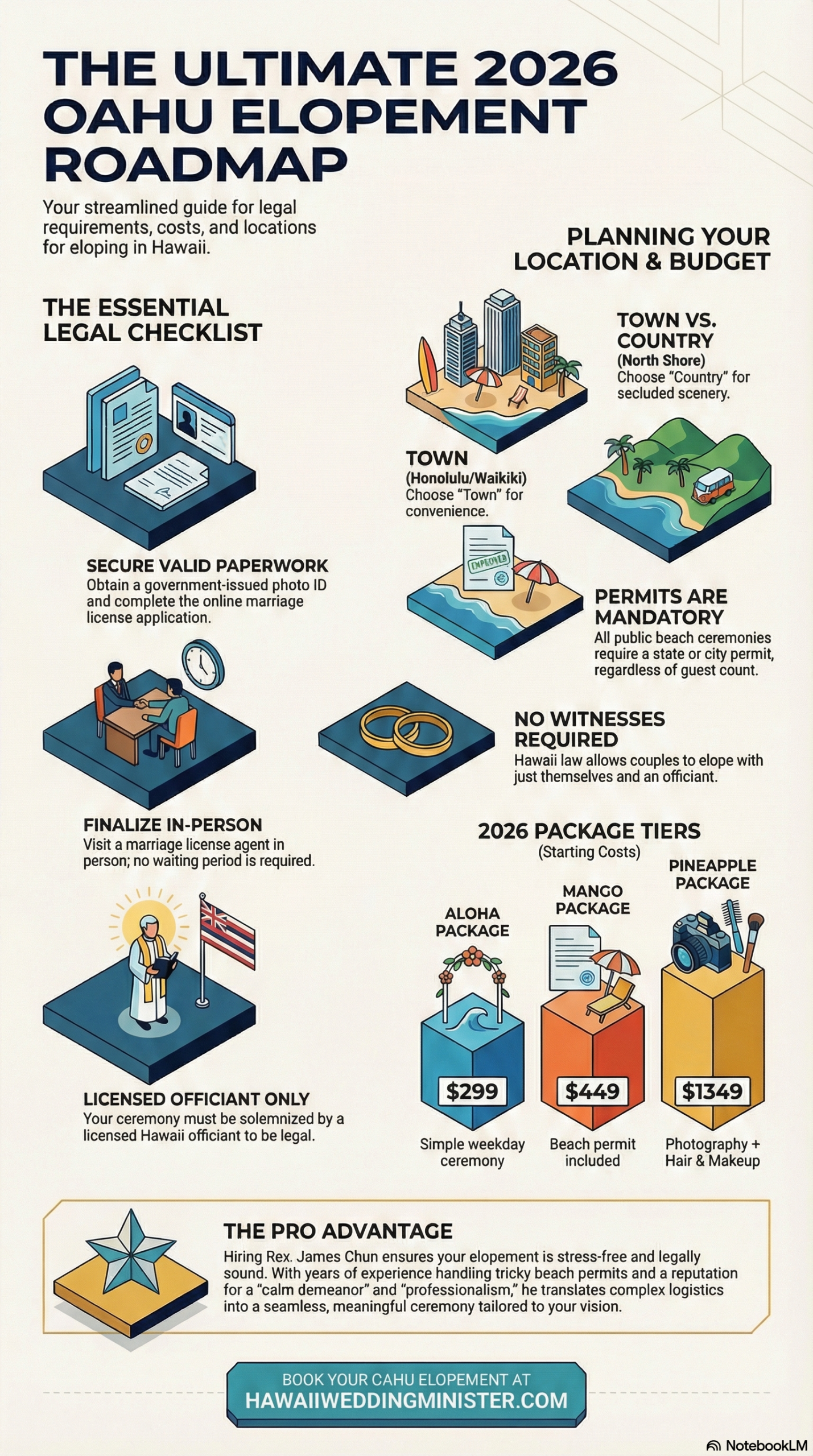
Host 2: It’s incredibly simple. Step one: Apply online. You fill out the marriage license application on the state’s website. You can do that from your couch right now.
Host 1: Okay.
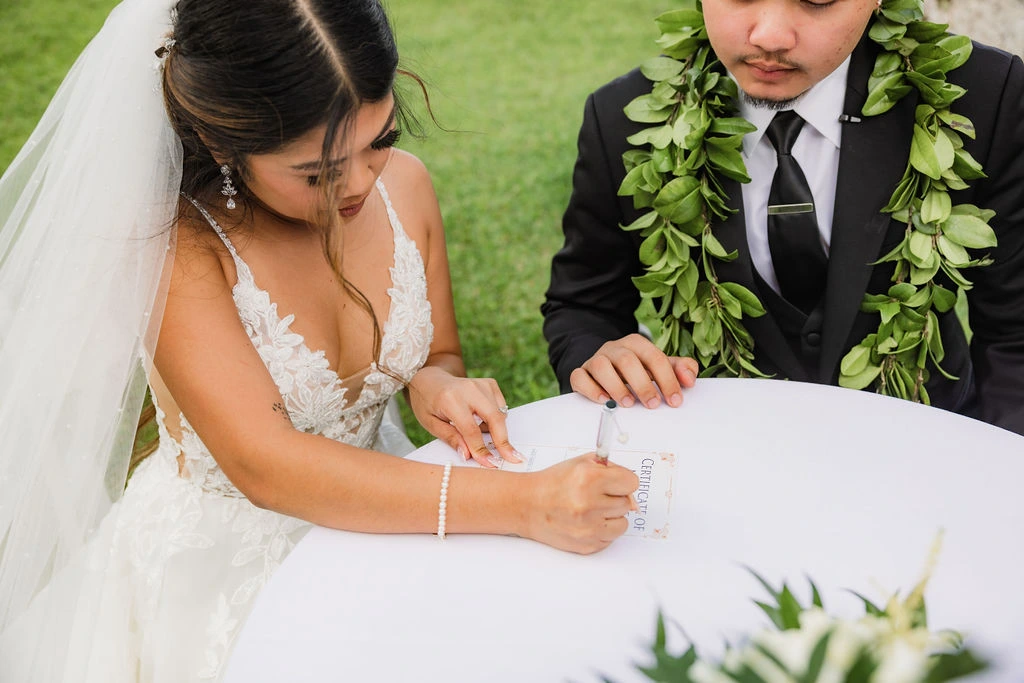
Host 2: Step two: You both show up in person to a license agent in Hawaii to verify your IDs. Just a quick check. And then step three: You get the license, you go get married.
Host 1: Okay, but hang on. In most places, there’s a catch between step two and three. Like a waiting period, a cooling-off period or something?
Host 2: Correct. Many states, many countries, have a mandatory wait—24 hours, 72 hours, whatever—to prevent impulsive mistakes. But Hawaii? Hawaii has no waiting period.
Host 1: Wait, none? At all? Zero?
Host 2: Aloha, none! You can walk out of the license agent’s office, walk across the street to the beach, and get married five minutes later.
Host 1: That is—that’s just dangerous. I love it. It’s like Vegas but with way better scenery.
Host 2: It’s designed for the traveler. They know you might only be there for a week; they don’t want you spending half of it waiting for a piece of paper to, you know, mature.
Host 1: But there’s another legal thing in here that I think is even bigger for, uh, all the introverts listening: the witness loophole.
Host 2: Oh, this is fascinating sociologically. I mean, most places, you need two witnesses to sign the license. You literally need an audience to make it official.
Host 1: Right.
Host 2: Hawaii law does not require witnesses.
Host 1: So just to be crystal clear: it can literally just be the couple and the officiant?
Host 2: Legally, yes. Just the three of you on a beach.
Host 1: That is a game-changer for avoiding family drama. You don’t have to explain why you invited your sister but not your third cousin. You can just say, “Sorry, Uncle Bob, the law.”
Host 2: It creates this bubble of absolute intimacy. I mean, you can have witnesses if you want, of course, but you don’t need them. It just strips it all down to the absolute essentials: the two people making the promise.
Host 1: Okay, and let’s talk about the other essential factor: money. Because “wedding” is usually code for “taking out a second mortgage.”
Host 2: The contrast is just—it’s stark. The state license fee, according to the sources, is about $65.
Host 1: $65? You can’t even get a decent dinner for two for $65 anymore. I think I spent that on popcorn at the movies last week.
Host 2: And then you look at the actual elopement packages. The high-end ones are around 1,300, 1,400 bucks. Compare that to the average American wedding, which is pushing, what, $30,000 now?
Host 1: In some places, it’s way more—$50,000 easy. That’s a down payment on a house.
Host 2: Exactly. You’re starting your marriage with a surplus, not a deficit. That financial freedom is a huge part of the stress-free vibe everyone talks about.
Host 1: For sure. It’s hard to be romantic when you’re worried about paying off the DJ for the next three years.
Host 2: Right.
Host 1: Okay, so we know it’s cheap, we know it’s easy. But where do you actually do it? Because Oahu is a big island, and the sources split the locations into two very different vibes: “Town” and “Country.”
Host 2: And that’s a really helpful way to think about it. Town is basically Honolulu and Waikiki. It’s all about convenience, energy, being close to your hotel. Country is about getting away from it all, finding those dramatic, secluded landscapes.
Host 1: Let’s fight it out. I’m a town person. I want to get married and then, like, immediately have a Mai Tai in my hand. No long drive. The guide mentions Magic Island.
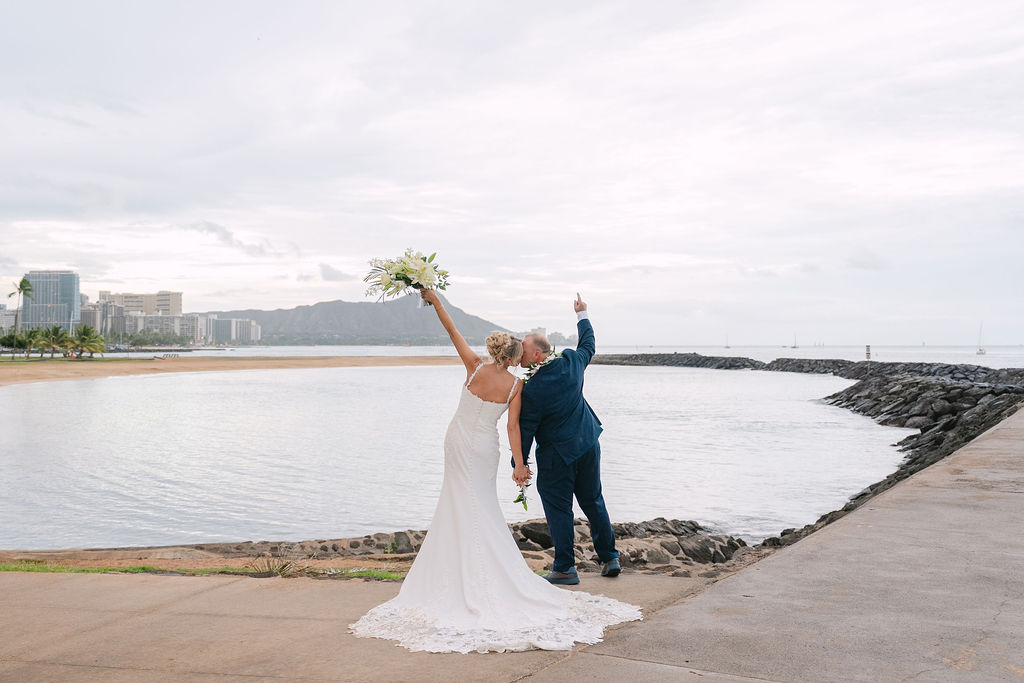
Host 2: Magic Island is iconic. It’s actually a man-made peninsula right there by Ala Moana Beach Park.
Host 1: “Man-made peninsula” sounds a little artificial, doesn’t it?
Host 2: You’d think so, but the photos are incredible. Because it juts out into the water, you get this really calm lagoon feel, and you have Diamond Head right there in the background. It says it has unmatched sunset views.
Host 1: But—I sense a “but.”
Host 2: But it is a very, very popular public park. So while you’re having your intimate moment, you might have a jogger in neon shorts running past in the background. It is not private.
Host 1: Hmm, okay, that kills the mood a little. So if I want town luxury without the joggers, what’s the move?
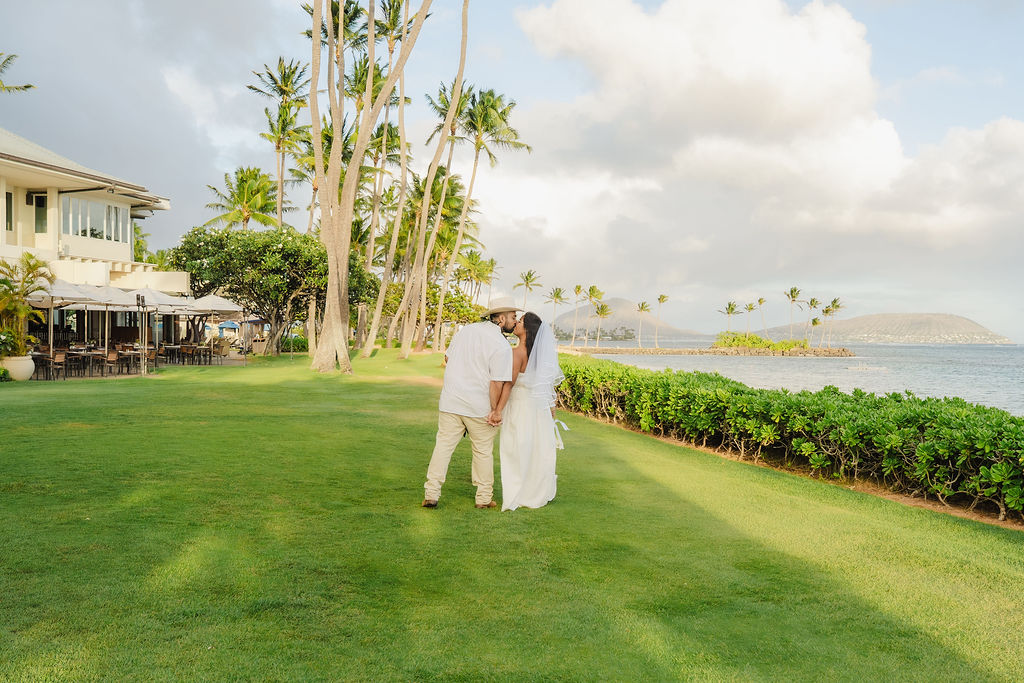
Host 2: The source points to Waialae Beach. The guide actually calls it the “Beverly Hills of Oahu.”
Host 1: Ooh, “Beverly Hills” sounds fancy and expensive.
Host 2: Very fancy vibes, but it’s a public beach, so access is free. You’ve got swaying palms, these upscale estates right on the water. It feels very quiet and elegant, but you’re still super close to Waikiki.
Host 1: Okay, I like that. But let’s say I want to go country. I want the adventure, edge-of-the-world kind of feeling. What are my options?
Host 2: Well, first up, you have Sherwood Forest.
Host 1: I’m sorry, what? In Hawaii? I thought that was Robin Hood’s turf.
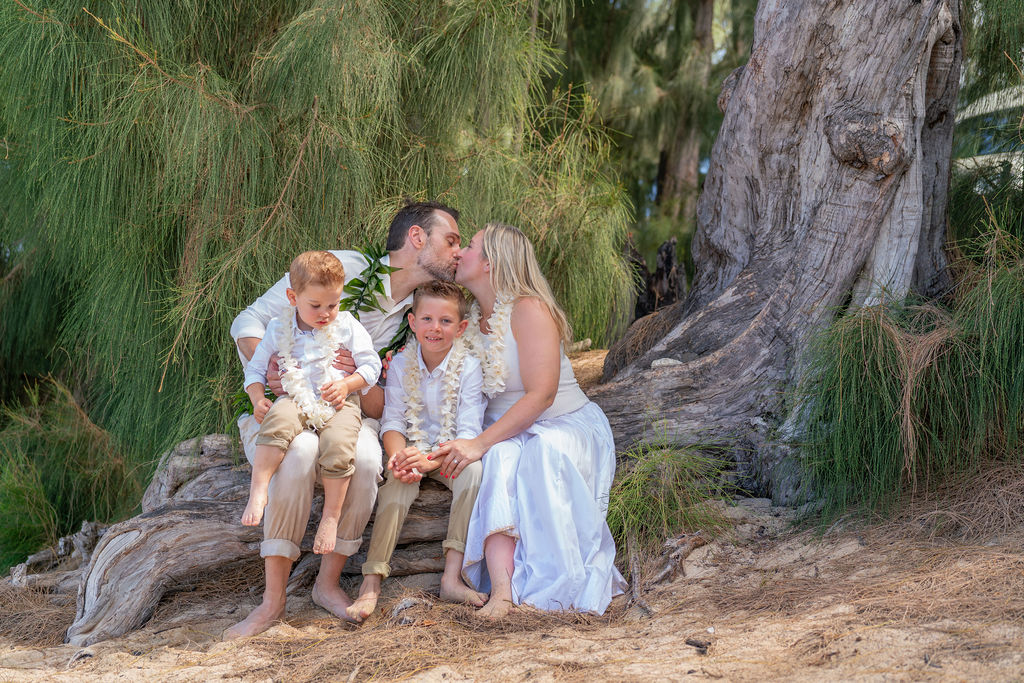
Host 2: It is, but it’s the local nickname for Waimanalo Beach. The source describes it as having these huge ironwood trees right behind the sand, and it’s the longest stretch of sandy shoreline on the whole island.
Host 1: Oh wow.
Host 2: So you get that turquoise water but also this deep green forest backdrop. It’s very dramatic.
Host 1: The contrast must be amazing for photos.
Host 2: It is. And then for something more secluded, you have Kawela Bay on the North Shore. The guide calls it the “speakeasy of beaches.”
Host 1: I love that—like you need a password to get in.
Host 2: It has these giant banyan trees. You know the ones with the roots that drip down from the branches?
Host 1: Like something from a fantasy movie, like Avatar or something.
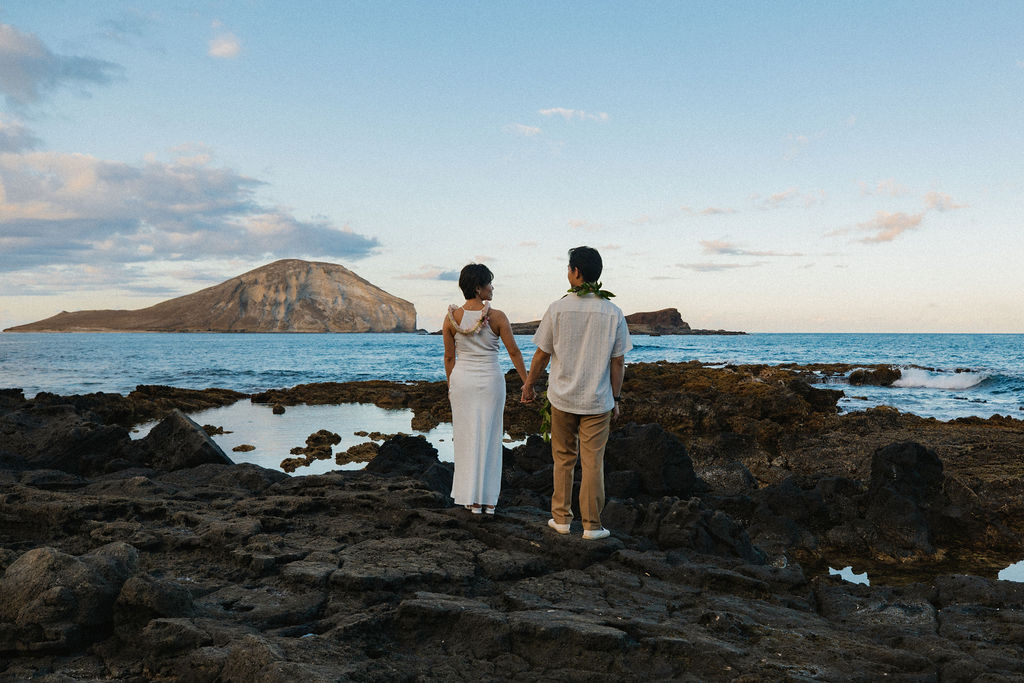
Host 2: Exactly. It creates this sort of natural cathedral. And then for the couple who wants pure drama, there is Makapuʻu Point.
Host 1: The cliffs.
Host 2: Oh yeah. Dragon’s Spine mountains, lava rock cliffs, crashing waves… it’s not a soft sandy beach wedding. It’s windy, it’s wild, it’s epic.
Host 1: Okay, but before everyone just packs their bags and runs off to a beach, you, as our voice of reason, have to give the permit police warning. Because this is a huge deal.
Host 2: Yes. This is absolutely critical, and the sources say it over and over again: you cannot just show up on a beach with an officiant and get married. You must have a permit.
Host 1: Even if it’s just the two of us using the witness loophole?
Host 2: Even then. The second you hire a professional—an officiant, a photographer—it is now considered a commercial activity on state land. And Hawaii is, rightly so, very protective of its natural resources.
Host 1: You do not want your wedding interrupted by a park ranger writing you a ticket. That is not the souvenir you’re looking for.
Host 2: Not at all. And that’s why the guide says, you know, let the professionals handle it. The vendors know the system, they have the insurance—just let them deal with the bureaucracy.
Host 1: Speaking of professionals, we have to talk about the hero of all these reviews. This guy is everywhere in our source material: Reverend James Chun.
Host 2: He really is the central character, isn’t he? A 4.9-star rating on Yelp, which, in the wedding world, that’s basically impossible.
Host 1: It really is. And there’s this one story that for me just cemented his legend status. It’s the “Fixer” story from a reviewer named Kristen S.
Host 2: Oh, I remember this one. A great cautionary tale.
Host 1: Right. So, Kristen and her husband, they decided to do a last-minute courthouse wedding on a Friday. They figured, “Okay, we’ll go get the license at 3:30 after work.” But then, disaster. They realize the courthouse closes at 4:00 PM.
Host 2: And in government time, 3:30 is basically closing time.
Host 1: Exactly. They’re panicking. It’s a holiday weekend. So at 8:30 PM on a holiday, she sends a total Hail Mary inquiry to Reverend James.
Host 2: Most people would see that Tuesday morning, maybe.
Host 1: He calls her back in 15 minutes. Says, “Let’s book a beach wedding.” He completely saves the day. Five days later, they’re married at sunset.
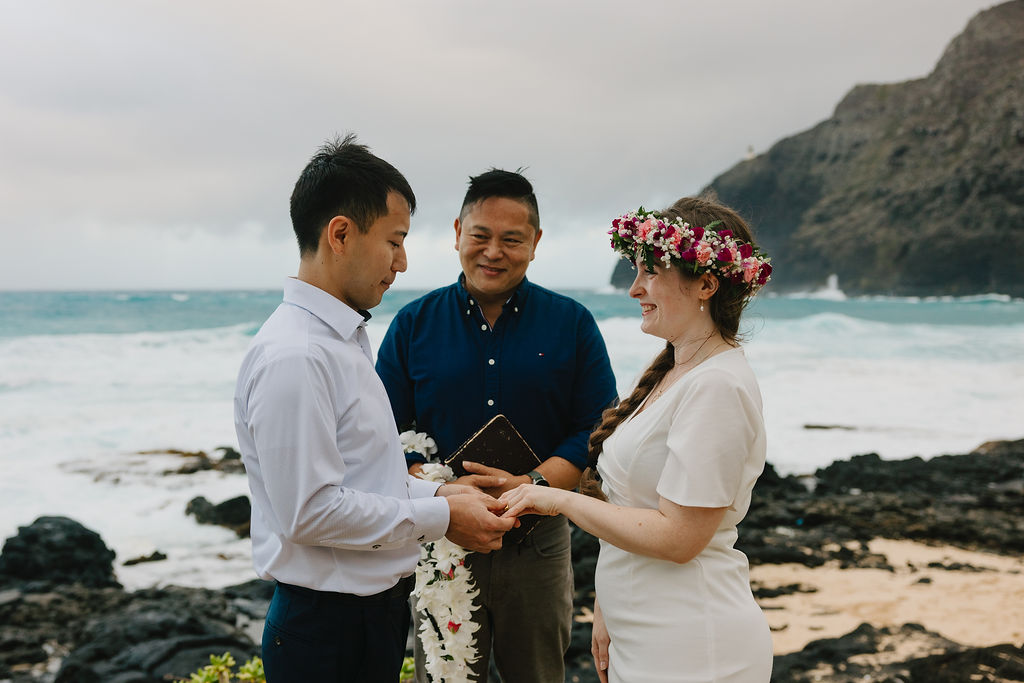
Host 2: That responsiveness is just—it’s so rare. But beyond that, the reviews point out these little quirks he has that actually make the ceremony better. He’s not just reading a script; he’s directing the scene.
Host 1: My favorite detail is the “step-aside.”
Host 2: Yes! A reviewer mentioned that right before the big kiss, he physically steps out of the frame.
Host 1: Which is genius. Because how many wedding photos have you seen where there’s just this random person’s head hovering in the background? “And do you, Bob, take Linda—and me, the officiant, hovering over you?” It ruins the shot. It shows he knows the photos really matter.
Host 2: And he also cares about the guests. There’s another detail about the “unplugged cue.”
Host 1: Mm, I loved this part. Tell me about it.
Host 2: He tells the guests to put their phones away. He says, “I’ll give you a moment later to take your own photos, but for now, just be present.”
Host 1: Oh, thank you! Put the iPhone down, Aunt Linda, and just watch this with your actual eyeballs.
Host 2: It goes right back to that theme, right? Presence over pressure. He’s creating an environment where you can actually focus.
Host 1: And he even teaches you how to walk.
Host 2: Yeah, the rehearsal reviews are glowing. He shows couples where to stand, how to turn, gives them these discrete little cues. It takes away that anxiety of “What do I do with my hands?”
Host 1: I never know what to do with my hands.
Host 2: Nobody does. One reviewer said this beats a Las Vegas drive-thru, which is a low bar, but I get the point. It feels dignified.
Host 1: Dignified simplicity—that’s a perfect way to put it. It’s a real wedding, just without all the fluff.
Host 2: Okay, now let’s get to the menu—and I mean that literally, because the packages in the sources sound like a tropical fruit salad.
Host 1: They really leaned into the theme. We’ve got the Aloha, the Mango, the Coconut, and then the big one: the Pineapple.
Host 2: It’s clever branding. But let’s look at what you actually get. The Aloha is your base model: $299.
Host 1: $299? That is the price of a fancy blender. For that, you get the ceremony and the paperwork filed. Done. You’re married.
Host 2: It’s the bare essentials. Perfect for that “Sure, why not?” couple. But then you scale up to the Pineapple. That’s the premium package for $1,349.
Host 1: Which is still less than most people spend on just the flowers. But what does the Pineapple get you?
Host 2: The works. You get the ceremony, the permit is included, an hour of professional photography with 80 images, and—this is key—in-room hair and makeup for the bride.
Host 1: Oh, that is huge. Because trying to do your own makeup when you’re nervous and it’s, like, 85% humidity? That’s a recipe for a meltdown.
Host 2: Exactly. It just removes another layer of stress. You just sit there, get pampered, and go get married. The sources also talk about these cultural add-ons, like a lei exchange or a unity sand ceremony. Is that just an upsell or does it add something?
Host 1: I think it’s important for grounding the event. A simple beach ceremony can be really quick—maybe ten minutes. Adding these elements gives it more, uh, gravitas. The lei exchange is a genuine Hawaiian tradition of respect and love.
Host 2: Right. So you’re participating in the culture of the place.
Host 1: Exactly. And they mention a veil, cord, and coin ceremony, which is a nod to Filipino and Hispanic traditions. It shows you can still honor your own heritage even if you’re ditching the big banquet hall.
Host 2: So when we look at the whole picture—the location, the fixer officiant, the affordable packages—the 2026 guide is really onto something much deeper than just a travel trend.
Host 1: It really is. If you zoom out, the whole philosophy is about starting a marriage without baggage. Financial baggage, emotional baggage, the baggage of trying to please 200 other people. It’s a total reset button. You know, we put all this pressure on this one day as if the color of the napkins is going to determine the fate of your marriage.
Host 2: And the irony is that all that stress is often the first big conflict a couple has. “You spent how much on what?”
Host 1: Hawaii is offering an alternative. Start with calm. Start with beauty. Start with just each other. And maybe a turtle if you’re at Kawela Bay.
Host 2: And maybe a turtle. A turtle is a much better wedding guest than a drunk uncle, I think we can all agree.
Host 1: Hard to argue with that logic. So here’s a provocative thought for you to chew on: if the most important day of your life is also the most stressful day of your life, are you doing it wrong?
Host 2: That is the question, isn’t it? And Hawaii seems to be offering a pretty compelling answer.
Host 1: Yes, yes you are. Go to the beach. Keep it simple. Focus on the marriage, not the wedding. So if this deep dive has saved you from a meltdown over a seating chart, or if you just like dreaming about Hawaii, you need to do us a favor: subscribe to this podcast for more great info about weddings in Hawaii.
Host 2: Absolutely. We are just scratching the surface here.
Host 1: And hey, we promise not to tell your in-laws you’re listening. Just, uh, send them a postcard from Waimanalo. “Wish you were here… sort of.”
Host 2: Exactly. Thanks for listening, everyone!