TL;DR SUMMARY
Planning an eco-friendly wedding on Oahu requires balancing luxury with a minimal footprint. Start by selecting a naturally stunning location like Waimanalo Beach to eliminate the need for heavy decor. Focus on sustainable practices: utilize local floral ‘haku’ leis, hire a resident officiant to minimize travel emissions, and strictly adhere to DLNR ‘Leave No Trace’ permit regulations to protect the ‘Aina.
| Package Name | Eco-Impact | Key Features |
| Mango Package | Ultra-Light | Simple ceremony at your choice of location, marriage registration. Insurance and permits handled by us. |
| Pineapple Package | Sustainable Luxe | 60-min photo session, hair/makeup, ceremony at beach of your choice, all permits included. |
| Coconut Package | Carbon-Conscious | 60-min professional photography, commemorative certificate, expert permit handling at beach of your choice |
Steps to an Eco-Friendly Elopement on Oahu
Choose a Natural Venue: Skip the ballroom; use Oahu’s beaches.
Secure State Permits: Ensure liability insurance ($1,000,000) and Wiki Permits.
Hire Local Experts: Use Honolulu-based vendors to reduce travel.
Practice ‘Leave No Trace’: Remove all trash and organic materials.
Digital Documentation: Prioritize digital galleries over physical prints.
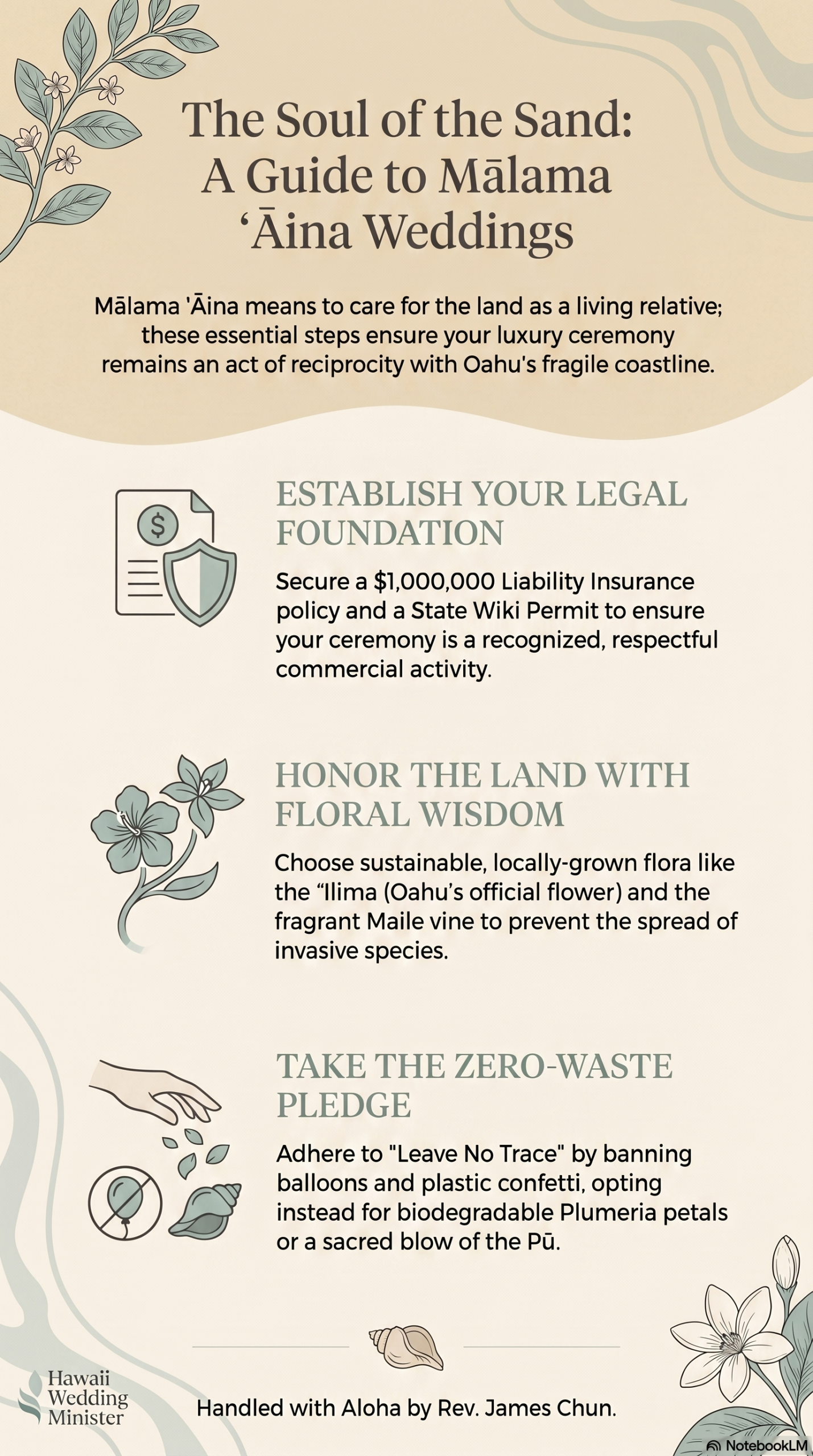
Mālama ‘Āina is a term that’s translated as “to care for the land,” but that translation barely scratches the surface. In Hawaiian, the ‘āina, or the land itself, is like a living relative. Native Hawaiians have long referred to themselves as keiki o ka ‘āina, or “children of the land,” reflecting a bond that runs far deeper than environmental stewardship as we typically understand it.
For a couple choosing an eco-friendly wedding in Hawaii, incorporating the Mālama ‘Āina means treating the ceremony itself as an act of reciprocity. You are a guest of this island and being held by something ancient and extraordinary.
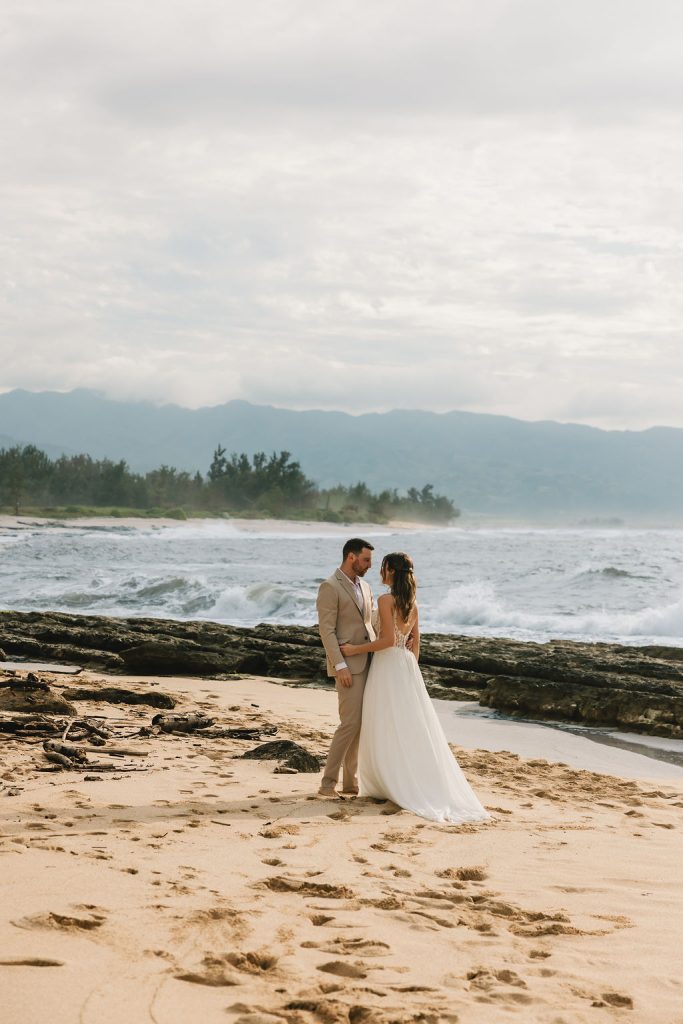
The Leave No Trace Principle
Oahu’s beaches are public lands managed by the Hawaii Department of Land and Natural Resources (DLNR). The beach wedding or elopement that hires professional vendors is classified as a commercial activity and will require a Right-of-Entry (ROE) permit, commonly called a Wiki Permit. To ensure your ceremony respects local regulations, you can check the latest State of Hawaii Wiki Permit guidelines.
We don’t have to stress that these permits come with specific conditions, and many of them align directly with Leave No Trace wedding principles. The rules exist because the coastline is fragile. The sand carries an ecosystem, and tens of thousands of couples have said “I do” on these shores. The impact of careless ceremony practices adds up quickly.
- Carry out everything you carry in and leave the beach exactly as you found it.
- Avoid disturbing the dune vegetation. Hawaii’s coastal plants are slow to recover once damaged.
- Skip the single-use plastics entirely. They fragment, enter the ocean, and harm marine wildlife.
- Hawaii was the first state in the nation to ban sunscreens containing oxybenzone, octinoxate, and octocrylene, all of which have been shown to damage coral reef ecosystems. Therefore, choose a certified reef-safe option.
- Keep your guest count within permitted limits. Most Oahu public beach locations cap ceremonies at around 30 people total, including the couple, all guests, and vendors.
The Problem with Invasive Species
Hawaii is one of the most botanically unique places on Earth, and roughly 90% of its native plant species cannot be found anywhere else in the world. But the islands also face one of the most severe invasive species crises globally. Hundreds of introduced plants have established themselves across the islands, and many actively displace native species that took millions of years to evolve here.
When flowers used in a ceremony drop seeds, shed petals, or are left behind at an outdoor location, there is a real, if small, risk of contributing to that spread. The Oahu Invasive Species Committee (OISC) actively works to identify and remove invasive plants from across the island.
What to Choose Instead
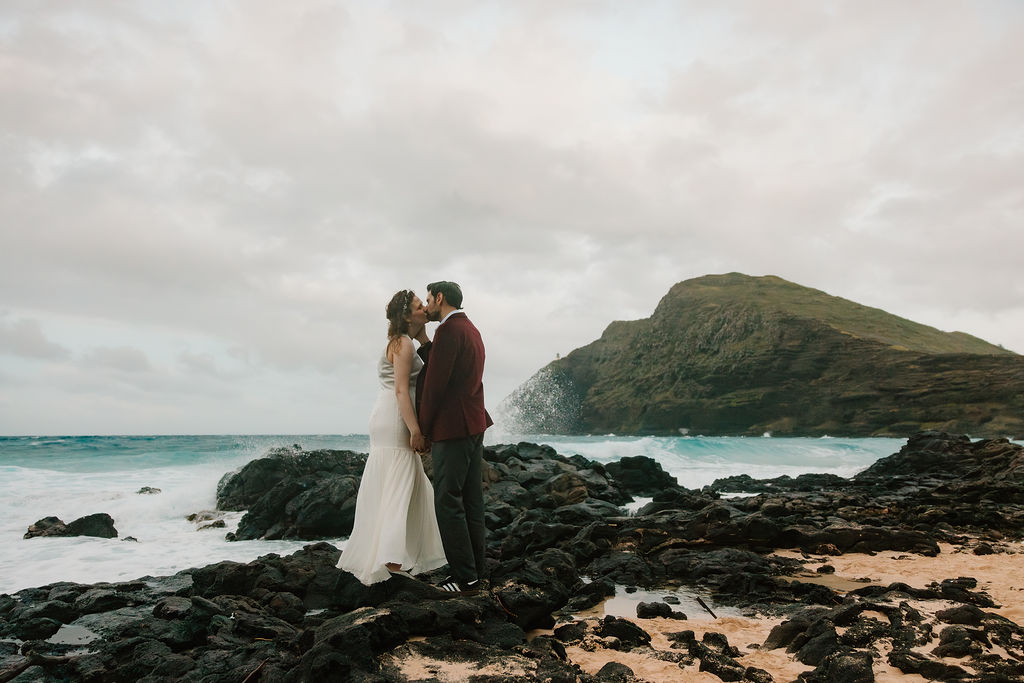
Oahu has some of the most stunning, culturally rich floral options available anywhere, so here is what you can choose for your eco-friendly wedding in Hawaii
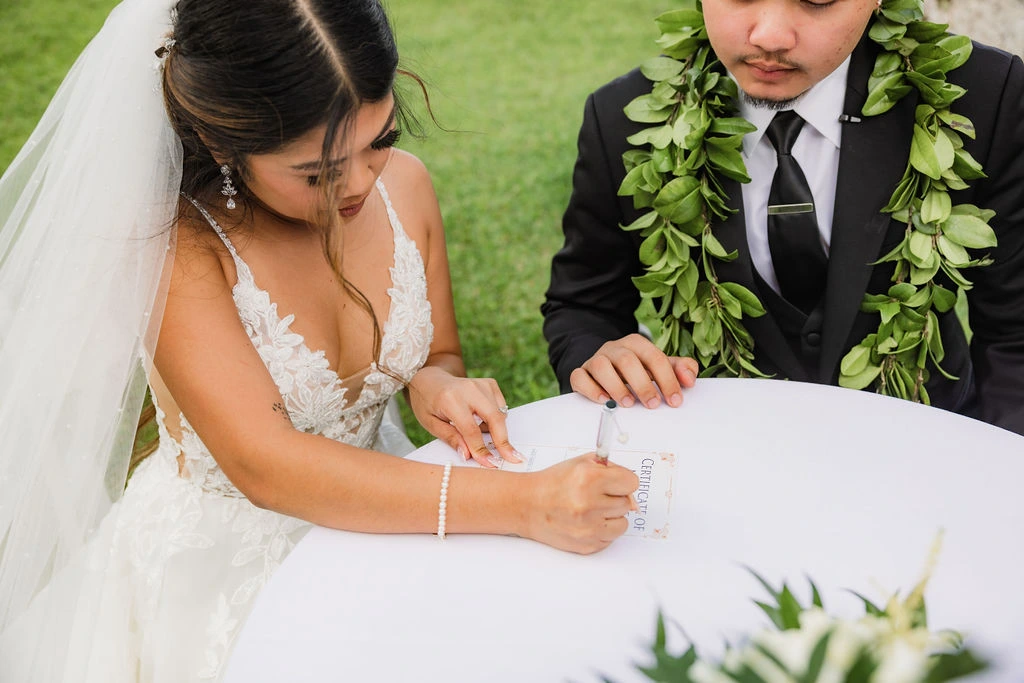
- The maile vine (Alyxia stellata) is an open-ended garland draped over the shoulders rather than worn as a closed circle. It carries a warm, vanilla-like fragrance and a deep green luster.
- The pikake (Arabian jasmine) has an intoxicating scent. Its delicate white blossoms make it the classic bridal lei.
- The official flower of Oahu, the ‘ilima, is a small, golden-yellow native Hawaiian plant that was historically associated with royalty. An ‘ilima lei requires hundreds of tiny blossoms and extraordinary patience to make.
- Ti leaf and tropical greens have been used in Hawaiian ceremonies for centuries. As a Polynesian canoe plant, one of the species brought intentionally to Hawaii by early voyagers, it carries cultural weight.
- Dendrobium orchids, while not native to Hawaii, are widely cultivated locally and make a long-lasting, environmentally lower-impact choice when sourced from island growers rather than imported from overseas operations.
Celebrating Without the Mess
Plastic confetti, metallic streamers, synthetic rose petals, and latex balloons all persist in the natural environment long after the celebration ends. On Oahu’s beaches, these materials enter the ocean within hours.
Here are the eco-friendly alternatives we recommend for beach weddings and sustainable elopements on Oahu:
- Natural and biodegradable plumeria petals, bougainvillea, or loose pikake blossoms scattered in the air create that classic celebration moment without leaving anything harmful behind. Any petals left on the sand will break down naturally within days.
- Locally dried hibiscus, rose petals, or lavender are fully compostable and photograph wonderfully, especially in the golden hour light Oahu provides in such abundance.
- Tearing strips from ti leaves and tossing them is entirely native to the islands’ tradition. It’s unusual, it’s beautiful, and it connects directly to the cultural heritage of the place where you’re getting married.
- Rather than a toss, some couples choose to mark the moment of celebration with a single, resonant blow of a pū (conch shell). In Hawaiian tradition, the conch is blown at the beginning and end of sacred ceremonies, calling attention and marking transitions. It’s a deeply meaningful alternative to any toss tradition, and it leaves nothing behind except sound.
- Some couples want their guests to walk away with something to plant. Give out locally appropriate seed packets (featuring native or non-invasive plants suited to guests’ home climates) as a zero-waste favour. Just make sure the seeds are not of species invasive to Hawaii, and that guests take the packets with them rather than scattering anything on Oahu’s public land.
- Bubbles are a classic substitute to have for an eco-friendly wedding in Hawaii that is truly biodegradable and fully ocean-safe when used in small quantities.
What to absolutely avoid:
- Balloons of any kind, latex or mylar, are devastating to marine life and are explicitly prohibited in many Oahu beach permit conditions.
- Plastic or metallic confetti will be carried directly to the ocean by the sea breeze.
- Sparklers leave metallic residue in the sand and are a fire hazard in dry coastal vegetation.
Conclusion
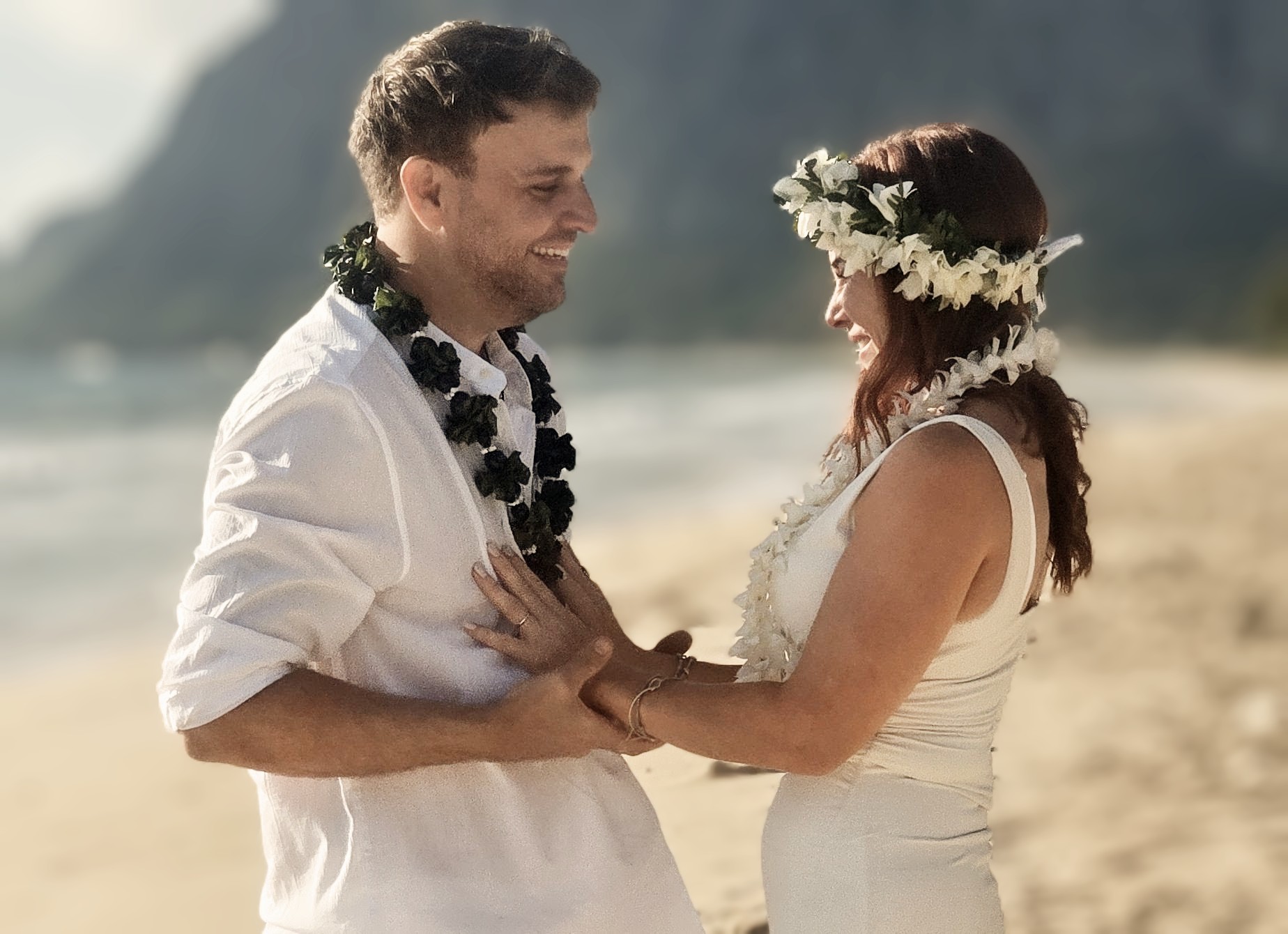
Observing Mālama ‘Āina for your eco-friendly wedding in Hawaii, with a real understanding of what it means, honors the people who have cared for this land for generations.
Rev. James Chun weaves this cultural awareness into every ceremony we conduct on Oahu, helping couples understand the significance of where they are and what they’re doing so that their vows feel genuinely rooted in place rather than simply set against a beautiful backdrop.
Take the next step and fill out our Contact Page, explore our Locations Page, or browse our Wedding Packages. For more inspiring ideas and tips, check out our blog!