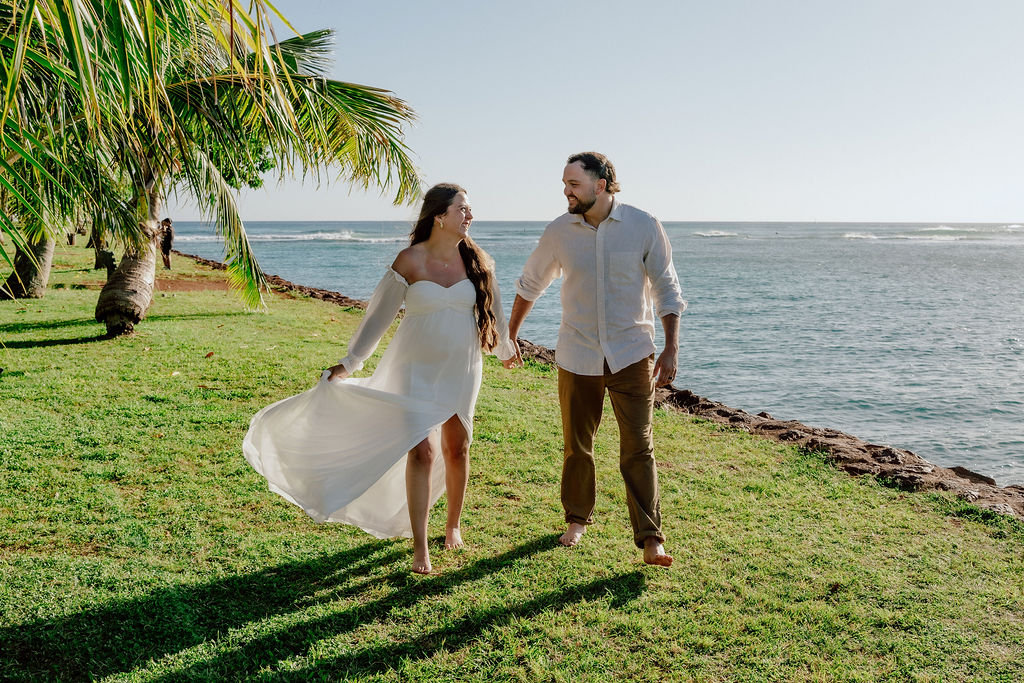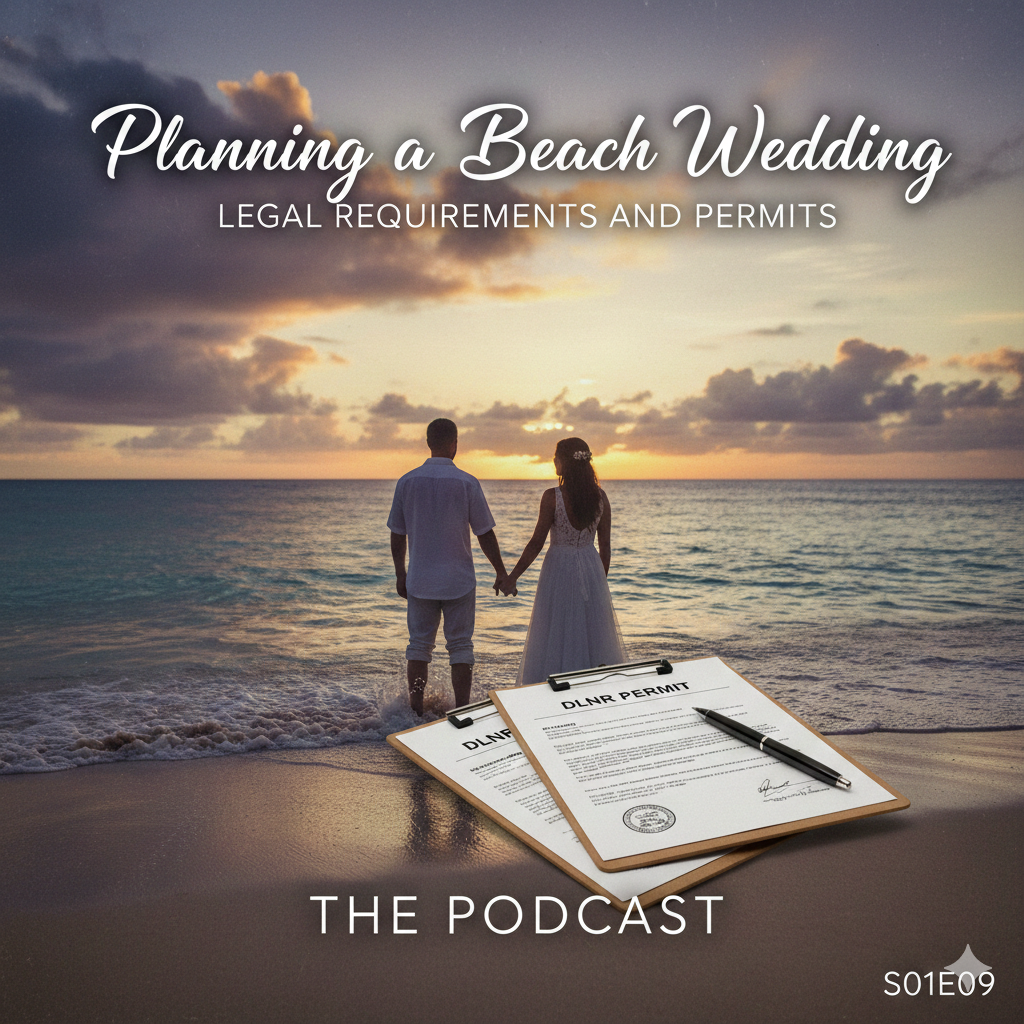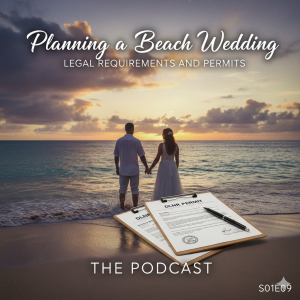
Planning a destination wedding on Oahu – then you need to get a marriage license online. Don’t let bureaucracy dampen your tropical dream. In this episode, we break down the essential steps to legally marrying in Hawaii, specifically focusing on the requirements for couples planning their ceremony on the island of Oahu. From navigating the initial online application to the mandatory in-person meeting with a marriage license agent, we cover everything you need to know to ensure your union is recognized by the state.
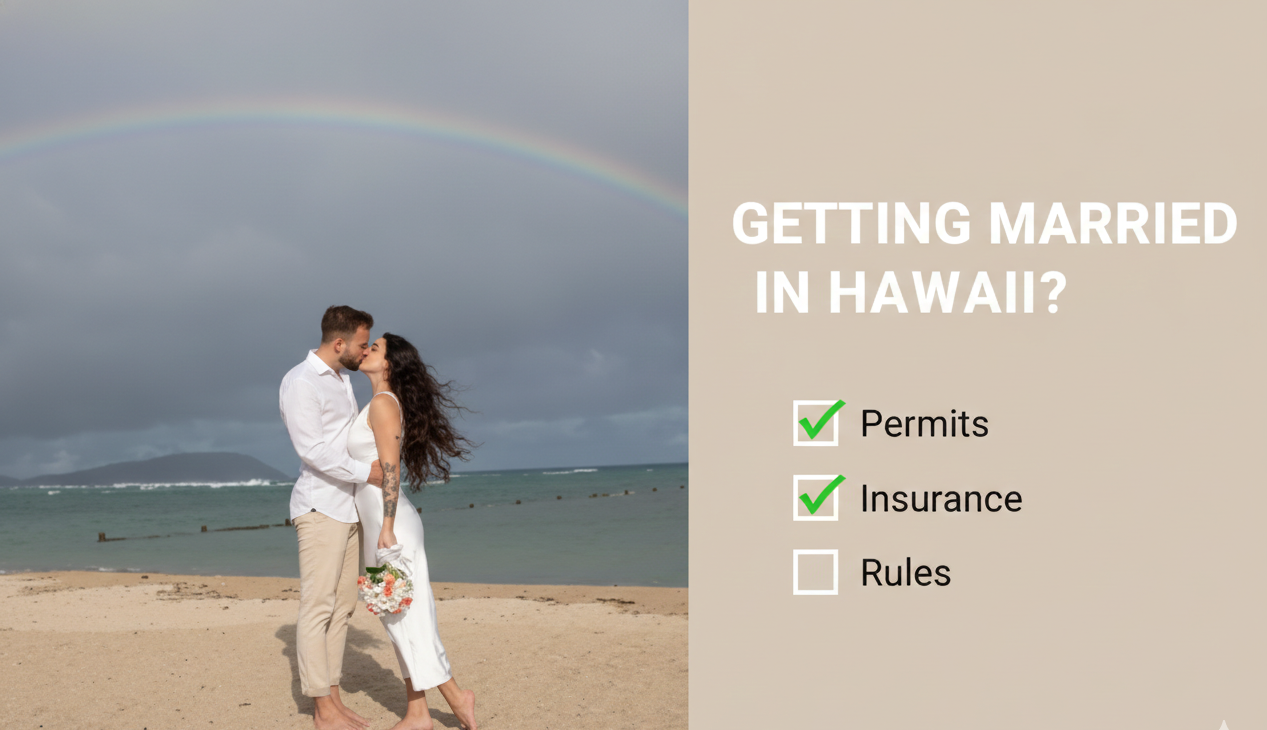
We also dive into the professional background of Reverend James Chun, a premier Oahu wedding officiant with over 20 years of experience. Discover how his unique history in video production and professional acting ensures your ceremony is perfectly blocked for photos and delivered with cinematic poise. Whether you’re worried about forgetting your paperwork on the big day or wondering if you need witnesses on a beach in Waikiki, we have the answers to keep your planning stress-free.
In this episode, you’ll learn:
- The 3-step process for the Hawaii marriage license online application.
- Why an in-person appointment is required and where to find agents on Oahu.
- The truth about beach permits (DLNR) and how to avoid the “DIY headache.”
- How to handle “just-in-case” scenarios, like missing paperwork or last-minute location shifts.
- What to expect after the “I do’s”—from electronic filing to receiving your official certificate.
Read the full detailed guide on our blog: How to Get a Hawaii Marriage License Online
AUDIO TRANSCRIPT
Host 1: All right, so picture this. You’ve spent what, like the last six months, curating this perfect Pinterest board?
Host 2: At least.
Host 1: It’s called “Tropical Nuptials.” You’ve got the vision totally locked in: pristine white sand beach, the sun is setting…
Host 2: You know, those Hollywood-level colors in the sky—purples, deep oranges.
Host 1: Exactly. A gentle breeze, you’re looking into your soulmate’s eyes, you’re ready to say “I do.” I mean, it is the ultimate fantasy, right? The Hawaii wedding dream.
Host 2: It is the dream until, you know, the wind suddenly kicks up to 30 miles an hour, blows sand right into your contacts…
Host 1: Oh no.
Host 2: …and you realize you forgot to print the permits, so you’re technically trespassing, and the person marrying you is just kind of mumbling while standing directly in front of the sunset, completely blocking the photographer’s shot.
Host 1: Exactly. That is the reality check we are here for today. We are exploring that huge gap between the Pinterest board and, well, the actual execution.
Host 2: And specifically, we’re looking at how to navigate that gap in Oahu because while love is magic, the State of Hawaii bureaucracy is—well, let’s just call it precise.
Host 1: “Precise” is a good word for it. It has forms, it has rules…
Host 2: And it definitely does not care how romantic your engagement story was.
Host 1: And it has fees! Don’t forget the fees. So, to guide us through this whole maze of tropical logistics, we are doing a deep dive into one specific guide: a man who seems to be just everywhere in the Oahu wedding scene—Reverend James Chun.
Host 2: Reverend James Chun. We’ve got a whole stack of sources here: his official site, his super detailed FAQs, some government licensing guides, and my favorite, a ton of really honest, unfiltered user reviews.
Host 1: And the mission today is pretty simple, right? How do you pull off a wedding in paradise without completely losing your mind?
Host 2: And honestly, looking at all this, it really seems like having the right officiant is maybe 90% of the battle.
Host 1: It’s the difference between a total disaster and a great memory. So, let’s unpack the man himself first, because I was looking at his bio and I expected, you know, just the standard ordained minister thing.
Host 2: Right, maybe a nice photo of him in a robe.
Host 1: Yeah, exactly. But this guy is interesting.
Host 2: He is definitely not just a guy who got a license online last week because his buddy asked him to officiate. He’s been in the Hawaii wedding industry for over two decades.
Host 1: Over two decades! He’s officiated thousands of ceremonies. I mean, that is a staggering amount of “I dos.” But here’s where it gets really interesting for me: before he was a reverend, he owned a video production company for 15 years.
Host 2: Which is such a huge detail. It sounds like this random fun fact, but when you think about it, it’s actually his secret sauce.
Host 1: Okay, yeah. Why does that matter for an officiant?
Host 2: Well, think about the mechanics of a wedding ceremony. It is basically a live stage production. There are no do-overs. If you’re a videographer, you understand blocking, you understand framing, you know exactly where to stand so you aren’t ruining the shot.
Host 1: Oh, that is such a good point! Because we’ve all seen those wedding photos where the couple is having their first kiss and right there in the background, just staring awkwardly into the camera, is the officiant.
Host 2: Just hovering. Exactly. And he actually mentions this. He understands the ceremony flow, the timing, the presentation—all because he spent 15 years behind the lens. He knows what the camera sees.
Host 1: So you’re not just hiring a guy to read a script; you’re hiring someone who’s kind of subconsciously directing the whole visual of the ceremony.
Host 2: That’s it.
Host 1: That’s a skill set I hadn’t even considered. But wait, it gets even better. He wasn’t just behind the camera; he’s been in front of it, too. Did you see the acting credits?
Host 2: I did. Hawaii Five-0 and Magnum P.I.
Host 1: I love that so much. I just have this mental image of him stopping the ceremony to dramatically arrest the groom. “Book ’em, Danno!”
Host 2: I’m pretty sure that’s not part of the standard package, but you could probably ask. But again, it speaks to a really practical skill. An officiant is a performer in a lot of ways. They have to project their voice, they have to command the space.
Host 1: Especially on a beach with all the wind and waves.
Host 2: Right, you’re competing with all that, maybe a tour bus driving by. Having actual screen credits means he’s comfortable with all eyes on him. He knows how to hold a room—or, you know, a coastline.
Host 1: No stage fright there, for sure. But beyond the resume, I kind of love the personal details: he was born in China, raised in Hawaii since he was five, married to his wife since 1996.
Host 2: So he actually believes in the product he’s selling. He walks the walk.
Host 1: Exactly. But the thing that really sealed it for me, the trust factor—it wasn’t the years of experience, it was the dogs.
Host 2: Ah, yes. The dogs.
Host 1: He has two dogs, and their names are Chewie and Solo.
Host 2: A Star Wars fan.
Host 1: A massive Star Wars fan. I feel like that tells you everything you need to know about his vibe. He’s got to be one of the good guys, right?
Host 2: You don’t name your dog Chewie if you’re a villain. It definitely humanizes him; it makes him seem really approachable.
Host 1: Totally. And clearly the industry thinks highly of him, too. He’s nominated for the Akahai Award for Officiant of the Year for 2024 and 2025.
Host 2: And he’s an ambassador for the Hawaii Chamber of Commerce. So we’ve got this Star Wars-loving, former actor, video production expert who’s also a pillar of the community.
Host 1: Which is a great foundation, establishes a lot of trust. But, you know, all the charm and Star Wars references in the world don’t matter if you’re not legally married at the end of the day.
Host 2: Ugh, the boring stuff. The paperwork.
Host 1: The necessary stuff. The stuff that actually makes it binding.
Host 2: Okay, okay, you’re right. Let’s talk about the bureaucracy of love. Because apparently, you can’t just show up on a beach in Oahu and declare your love to the ocean and expect the IRS to recognize it.
Host 1: You can, but it won’t hold up in court. If you want it legal, you have to deal with the State of Hawaii Department of Health. And based on Reverend Chun’s guides, there’s a very specific order you have to do things in.
Host 2: Okay, so walk us through it. What’s step one?
Host 1: Step one is the online application. You do this before you even see an agent. You fill out the form, put in your info, all that good stuff.
Host 2: And pay the fee.
Host 1: Step two: pay the fee. It’s $65 right now, though the sources are clear that it’s subject to change because, well, government fees always change.
Host 2: Always. Okay, so that seems easy enough. But then there’s the big hurdle, the part that I feel like really trips people up.
Host 1: The in-person requirement. This is so crucial. You cannot do this whole thing online—no Zoom calls. You and your partner have to physically show up together in front of a licensed marriage agent in Hawaii to get the actual worksheet.
Host 2: So you land in Honolulu, you’re ready to hit the pool, grab a Mai Tai, but first, you have to go to a government meeting.
Host 1: Basically. You can do it up to 30 days before the ceremony. But you absolutely must have that worksheet before the wedding starts. You hand it right to the officiant.
Host 2: Okay, let’s play out a nightmare scenario. I’m a scatterbrained bride. We get the license, we meet the agent, but on the wedding day, we leave the darn thing in the hotel safe. Oh no! We’re standing on the beach—do I have to cancel everything?
Host 1: So this is where Reverend Chun’s experience is just golden. He has this section in his FAQs that’s like a big panic button. He says, in all caps: “DO NOT PANIC.”
Host 2: Thank goodness.
Host 1: As long as you did the pre-registration online and met with the agent, all your info is in the state’s system. He can just look you up using your birthdays.
Host 2: Oh, that is a huge relief!
Host 1: It is. He can still perform the ceremony and then he just files the paperwork electronically later. It saves the day. It turns a total crisis into just a minor hiccup.
Host 2: What about if you’ve been married before? I saw something about a divorce rule that seemed a little quirky.
Host 1: Yes, this is a weird one. If your divorce was finalized within the last 30 days, you have to bring the actual physical divorce decree with you to the agent.
Host 2: Okay, that makes sense. You need proof.
Host 1: But—and this is the weird part—if it’s been longer than 30 days, the State of Hawaii just takes your word for it.
Host 2: Really?
Host 1: Yeah. No paperwork needed. You just tell them the date and location.
Host 2: That is surprisingly chill for a government agency. “Oh, it’s been a month? Yeah, you seem trustworthy.”
Host 1: I know, right? And here’s another chill factor that I found fascinating: witnesses.
Host 2: Do I need them? Do I have to, like, grab two random tourists off the beach to sign my license?
Host 1: Nope! In Hawaii, you don’t need any witnesses. It can literally just be you, your partner, and the officiant.
Host 2: That is perfect for elopements. Just run away, get married—nobody has to know.
Host 1: Exactly. Or if you just don’t want the hassle, it simplifies everything.
Host 2: Okay, so we’ve got the license, we’ve got the officiant, now we need the spot. And this brings us to what I’m calling the “Beach Permit Racket.”
Host 1: It’s not a racket—it’s land management. But yeah, for the couple getting married, it can feel like a racket.
Host 2: It just sounds complicated. I want to get married on a public beach. It belongs to the people, right? Why do we need a permit?
Host 1: Because the Department of Land and Natural Resources says so. A wedding is considered commercial activity, so you need a permit. And you have two options here. Option A is the DIY route.
Host 2: Which involves a lot of suffering.
Host 1: A little bit. You have to go buy special event insurance, which costs about 150 bucks. Then, with that insurance certificate, you apply for the permit, which is another 20. And you have to carry all that paperwork with you.
Host 2: That sounds like a major hassle. I’m on vacation. What’s Option B?
Host 1: Option B is what I call the “sanity tax.” You pay Reverend Chun $150; he just puts your wedding under his insurance umbrella and he handles the permit application for you.
Host 2: Wait, okay. So I can pay $170 and do it myself, plus all the headache? Or I can pay James $150 and he does it all?
Host 1: Exactly.
Host 2: Why would anyone ever do Option A?
Host 1: I can’t imagine. Maybe if you really enjoy filling out government forms on your vacation. For everyone else, it’s a no-brainer.
Host 2: Totally agreed. Worth every penny to not have a park ranger tap you on the shoulder during your vows. Now, speaking of vacation vibes, let’s talk about “island time.”
Host 1: Ah, yes. You know, everything’s really relaxed, 15 minutes late is on time. Yeah, Reverend Chun does not subscribe to that. Not for weddings.
Host 2: Really?
Host 1: His FAQ is very polite but very firm. He arrives 15 to 30 minutes early and he expects the ceremony to start on time.
Host 2: What if you’re late?
Host 1: He gives you a grace period: 5 to 10 minutes, that’s it.
Host 2: 10 minutes?
Host 1: If you’re later than that, he says he might not be able to perform the full ceremony, he might have to cut parts out, or worst case, if he has another wedding to get to, he might have to leave.
Host 2: Wow! So “island time” applies to your Mai Tais but not to the guy with a schedule.
Host 1: It’s a reality check, you know? He’s a professional with a calendar. He’s not just hanging out on the beach all day waiting for you.
Host 2: That’s fair. Keeps things moving. Okay, what about equipment? Because I feel like people see movies and they expect a full production.
Host 1: Oh they do. They expect the little lapel mics and the speakers hidden in the palm trees. No, Reverend Chun is an officiant, not a roadie. He does not provide microphones or speakers.
Host 2: So if you’re on a windy beach with 50 guests?
Host 1: You better shout, or hire a DJ who can bring a battery-powered system. “I TAKE THEE! CAN YOU HEAR ME IN THE BACK?” Precisely. He makes it very clear: do not expect him to bring a boombox. He’s got the words, not the amplification.
Host 2: And rehearsals—are they necessary?
Host 1: He says not mandatory, especially for small weddings. But he has a very strict warning here, which I actually really respect.
Host 2: What’s the warning?
Host 1: If you don’t hire him for a rehearsal and you don’t have your own wedding coordinator, do not expect him to direct traffic on the wedding day.
Host 2: Meaning what, exactly?
Host 1: Meaning he’s not going to tell the bridesmaids when to walk or the groomsmen how to stand. He’s just going to stand at the altar and wait. If you don’t have a plan, it’s going to be chaos.
Host 2: So basically, pay for the rehearsal or hire a coordinator. Don’t make the Reverend herd cats.
Host 1: Exactly. He’s there to marry you, not to manage your chaotic family. He draws a boundary, and I think that’s pretty healthy.
Host 2: It is. Okay, so we know how he operates on paper: he’s efficient, prepared, a Star Wars fan. But what’s the vibe actually like? What do the reviews say?
Host 1: There is a great story in the reviews about a cell phone going off.
Host 2: Oh no! The cardinal sin of weddings.
Host 1: It’s the worst, right? Right in the middle of the ceremony. Usually that’s when the officiant glares, everyone gets super awkward. Total cringe. Instead, Reverend Chun just smiles and says, “That’s my favorite song.”
Host 2: That is so good!
Host 1: It totally diffused the tension, everyone laughed and they just moved on. That’s the value of a pro. He used the moment instead of letting it ruin the moment.
Host 2: That’s the performer in him again. I love that. And then there was a review from Angeline and Blake. This one really cracked me up.
Host 1: Oh, the “no loud shirts” couple?
Host 2: Yes! They wrote this review saying they specifically requested no loud Hawaiian shirts and no religious references.
Host 1: Which is just hilarious. You’re flying to Hawaii, the home of the loud shirt, to get married by a guy who lives in paradise, but you want it to look like, I don’t know, a business meeting?
Host 2: Right. “Please come to our tropical island but dress like you’re in a boardroom.” But the point is, he did it.
Host 1: He did. He wore formal attire, he respected their wishes, and I think that’s really important. He didn’t try to impose his “brand” on them; he just adapted.
Host 2: And there was the bride from New Orleans. She had some harsh words for other officiants. She was comparing video clips online and she said other officiants lacked a calming voice or diction. She called Reverend Chun classy and sophisticated.
Host 1: Diction! You don’t see that in a Yelp review every day. “Five stars for enunciation.”
Host 2: But it matters. You want the person marrying you to speak clearly, to have that gravitas. You don’t want someone mumbling through the most important promises of your life.
Host 1: It’s right back to that acting background. He knows how to use his voice.
Host 2: Exactly. So okay, the wedding’s over, the loud shirts were avoided, the phone incident was handled. What happens next with the paperwork?
Host 1: The boring but vital part: he files the license for you electronically.
Host 2: So you don’t have to mail it in yourself?
Host 1: Nope, he handles it. You can see a temporary certificate online in about a week. But the official fancy copy with the seal? That comes by mail in about four to six weeks.
Host 2: So don’t panic if it doesn’t show up the next day.
Host 1: Correct. Don’t harass the mailman. It takes a month or so.
Host 2: All right, let’s zoom out. We’ve looked at the man, the legal stuff, the permits, the reviews. It’s a lot of moving parts. But if we sum up Reverend James Chun, we’re looking at a Star Wars-loving, former actor, efficiency expert who basically makes sure you don’t get arrested while you’re trying to get married and who ensures you are actually legally wed without all the stress. He takes the chaos out of the equation.
Host 1: It sounds like he’s the guy you want in your corner. But, let’s wrap this up with a bigger question. I was thinking about this. You know, in the age of Pinterest weddings, everyone obsesses over the flowers, the dress, the centerpieces.
Host 2: The aesthetic—it’s all about the Gram.
Host 1: Right. But going through all this, it raises a question: is the officiant actually the single most important vendor you hire?
Host 2: Ooh, how so?
Host 1: Well, think about it. If the florist doesn’t show up, you have an ugly wedding.
Host 2: Sure.
Host 1: If the DJ doesn’t show up, you have a quiet wedding.
Host 2: Uh-huh.
Host 1: But if the officiant doesn’t show up, or if they mess up the paperwork, you don’t have a wedding. You just have a very, very expensive party.
Host 2: Yeah, you’re not married. The officiant is the only person who actually makes the marriage happen.
Host 1: That is a terrifying but very valid point. The officiant is the linchpin.
Host 2: Exactly. So maybe we should spend a little less time on the napkin color and a little more time vetting the person who is actually going to sign the license.
Host 1: A profound thought to end on. If you’re planning a wedding in Hawaii or just dreaming about one, hopefully this deep dive saved you a few headaches and maybe saved you from leaving that license in the hotel safe.
Host 2: Please don’t do that. And hey, if you enjoyed this look into the wild world of Hawaii nuptials—specifically on Oahu—please subscribe to this podcast. We’ve got more deep dives coming your way covering everything you need to know about weddings in Hawaii.
Host 1: You do not want to miss it!
Host 2: Until next time, Aloha.
Host 1: Aloha.