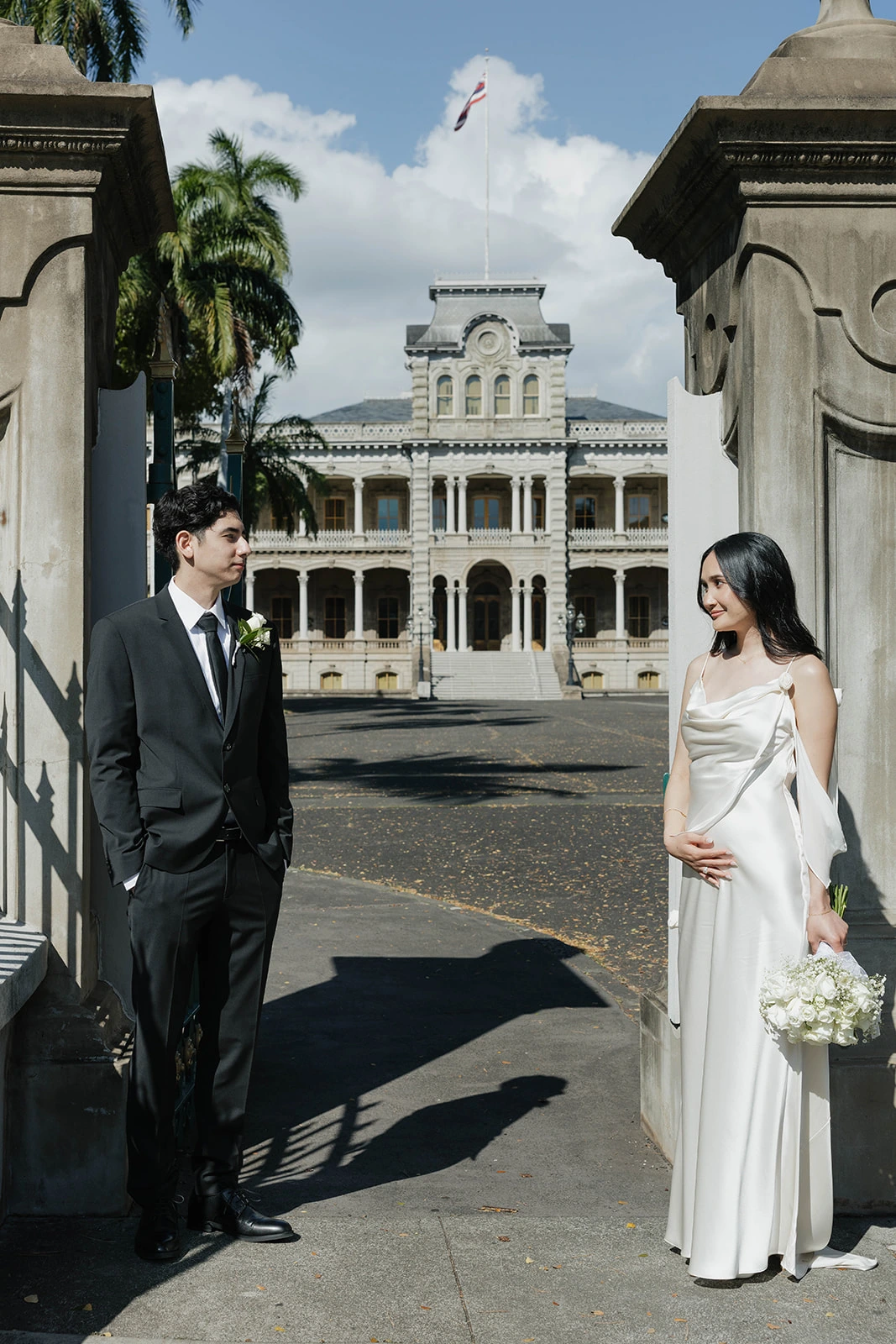
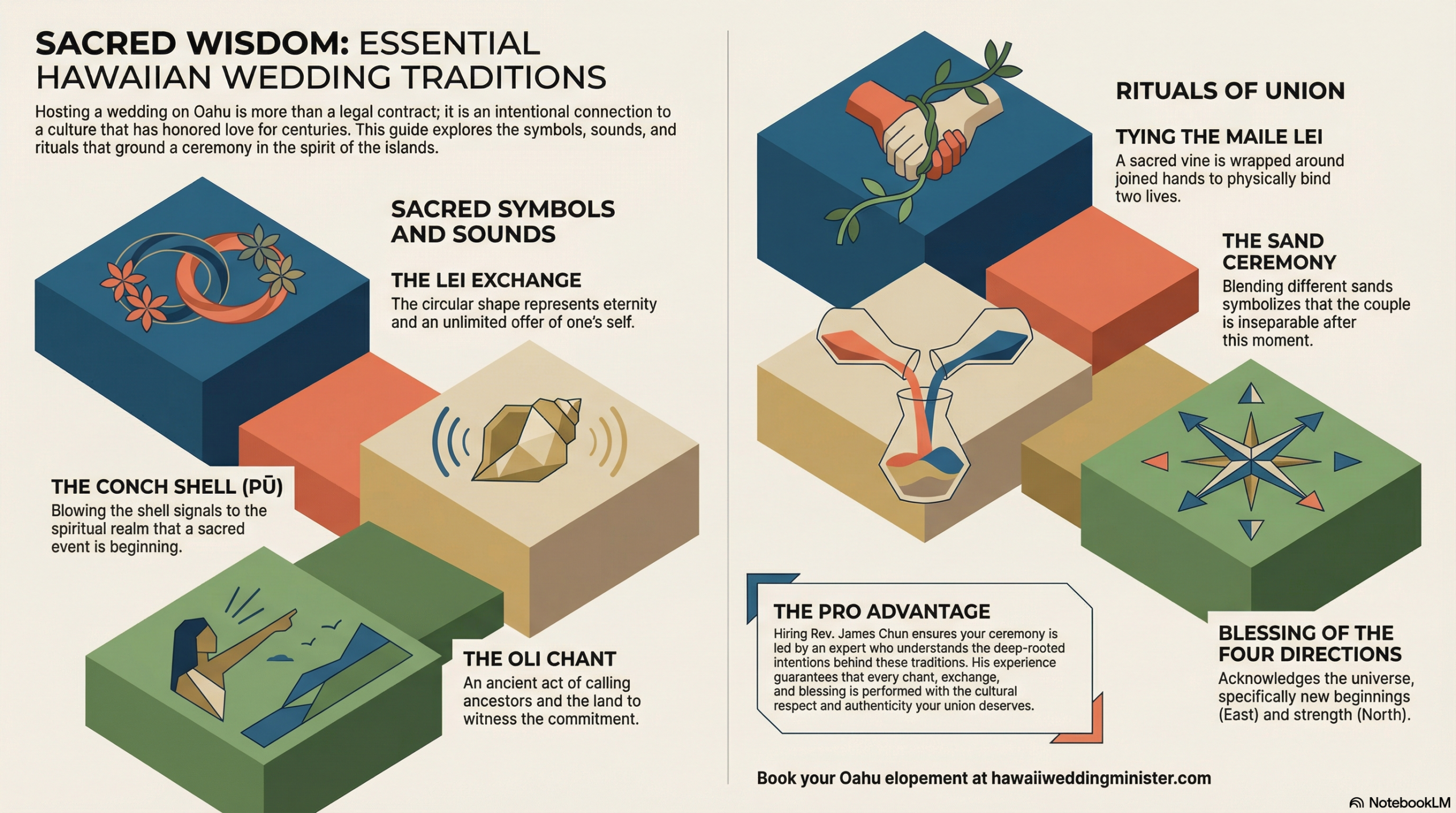
Hosting a wedding in Oahu is more than just signing a piece of paper. Many will agree that there’s something about the air here that pulls them toward something more meaningful. If you are still wondering, it’s what Hawaii wedding traditions offer. Each one carries a real intention behind it and is rooted in a culture that has honored love and commitment for centuries.
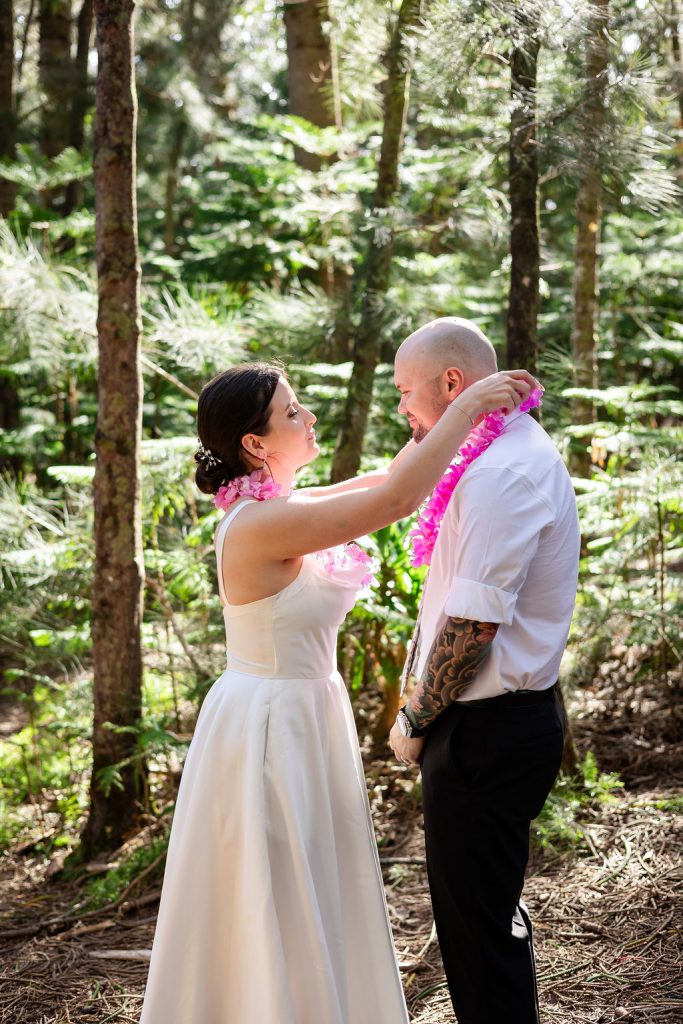
The Lei Exchange
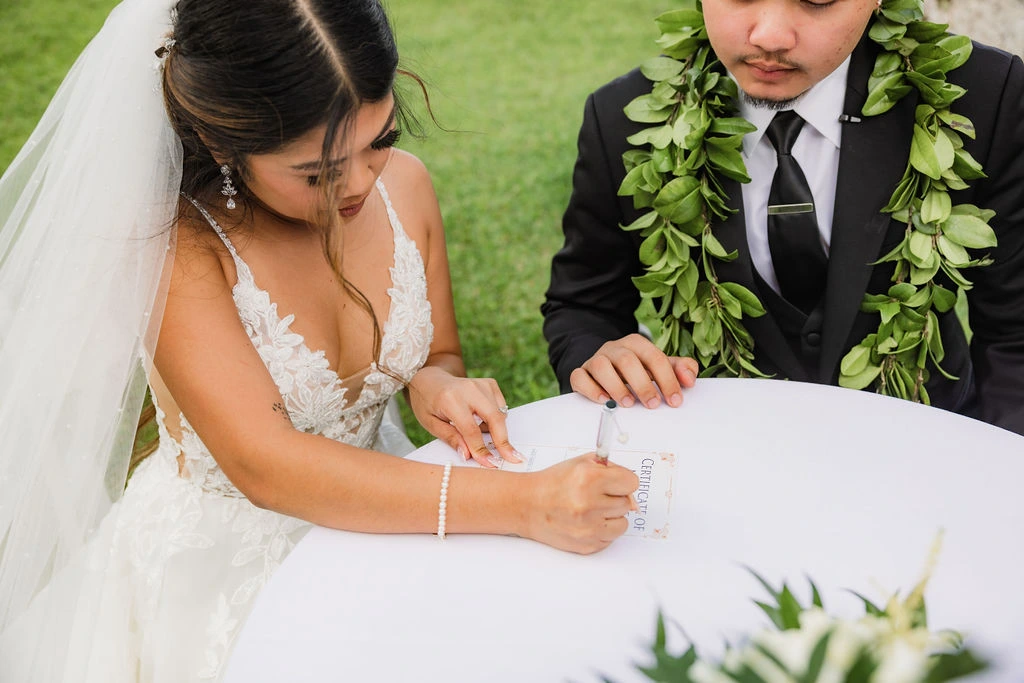
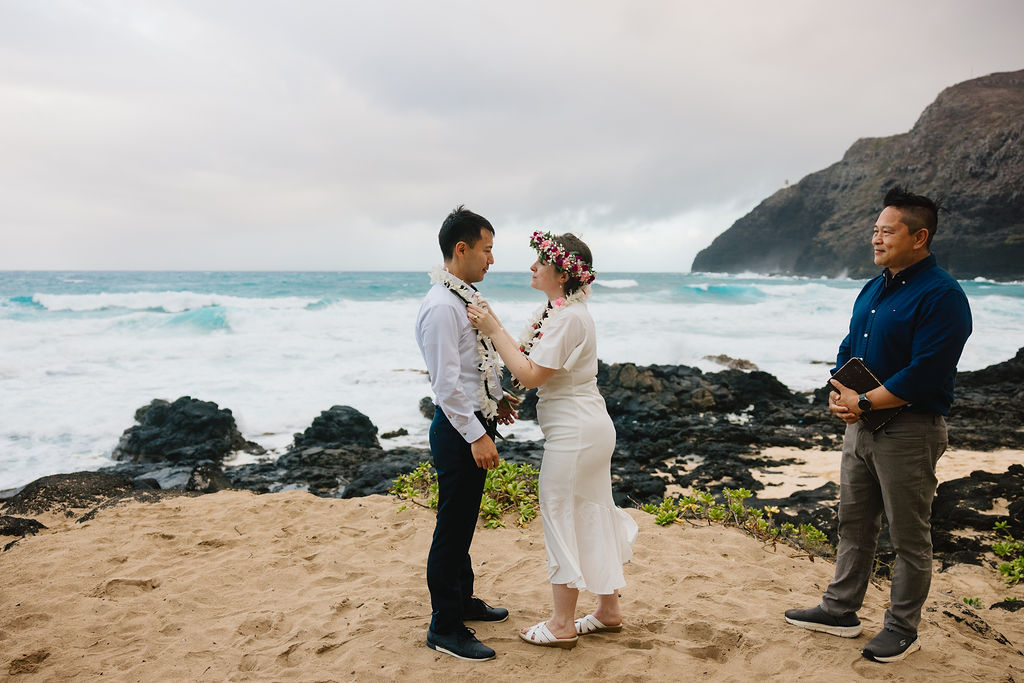
The Hawaiian wedding lei ceremony has to be the most famous tradition that everyone knows about. In Hawaiian culture, the lei is a symbol of love, respect, and connection. When two people exchange leis during their ceremony, they’re handing each other more than just flowers. The significance is that they offer a piece of themselves. The circular shape of the lei represents eternity, and it’s a quiet but powerful way of saying: I give myself to you fully, and this love has no limit.
Traditional Hawaiian wedding leis are often made from white tuberose, pī.kake (jasmine), or maile. This is a native Hawaiian vine with a deep, earthy fragrance that has long been associated with royalty and sacred ceremony. We always encourage couples to learn a little about the specific flowers in their leis before the ceremony. The exchange will feel even more intentional if you understand what you’re holding.
The Conch Shell
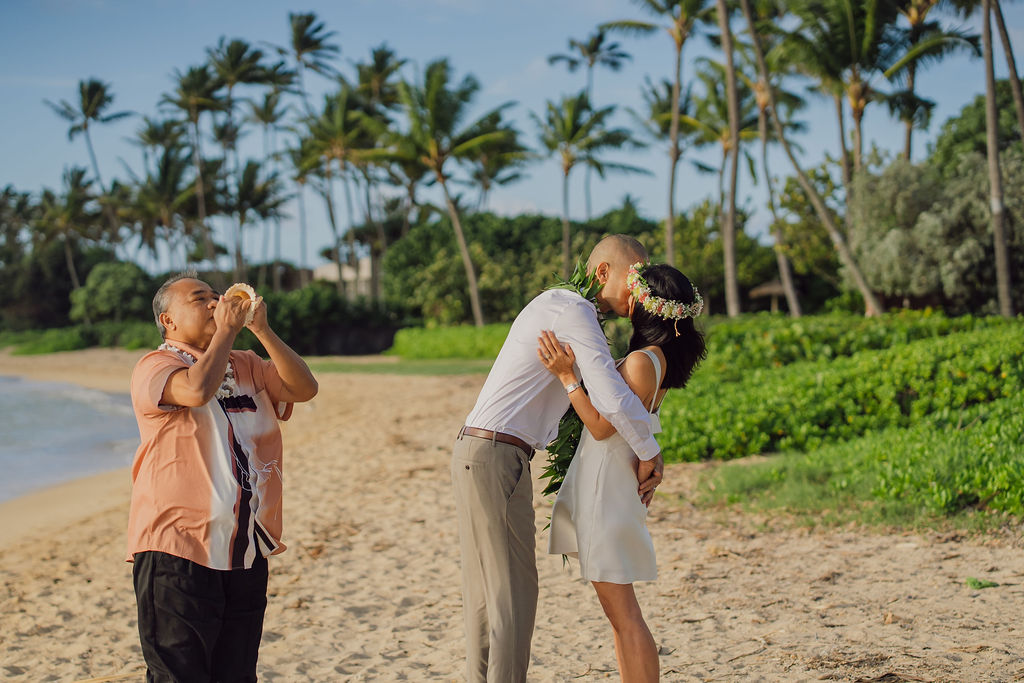
The conch shell, also known as pū, has been used in Hawaii for centuries. Its traditional use was to signal the start of important gatherings, to call people together, and to mark significant moments.
Fast forward to Hawaii wedding traditions: blowing the conch shell signals to the world and to the spiritual realm that something sacred is beginning. It’s a sound that carries across water. Therefore, the moment the shell sounds, conversations stop, people turn, and something in us responds instinctively to that call.
The Oli Chant
An oli is a chant that isn’t just background music. It’s the act of calling in the ancestors, the land, and the divine to witness what’s about to happen.
You should make a distinction between the oli kahea, a chant of calling, and the oli komo, a chant of welcome. In ceremonial contexts, these chants signal that the participants are entering a sacred space. They acknowledge that the couple isn’t alone in this moment. It’s a way to say that the people who came before them, and the land beneath their feet, are also present.
Incorporating an oli into your Oahu beach wedding can be surprisingly emotional. There’s something ancient and grounding about hearing those words rise above the sound of the surf.
Not every ceremony includes a live chant, and that’s okay. But if it speaks to you, incorporate it in a way that honors its origins.
The Blessing of the Four Directions
Turning to acknowledge each direction during the ceremony is a way of grounding the moment in the world around you. It’s a recognition that your love isn’t just between two people but exists within a larger universe that you’re now asking to hold space for your commitment.
The four cardinal directions each carry meaning in Hawaiian spirituality.
- East is associated with new beginnings
- West marks transitions and endings that make room for something new
- North represents strength and guidance
- South is connected to warmth and passion
The Hawaiian Wedding Song
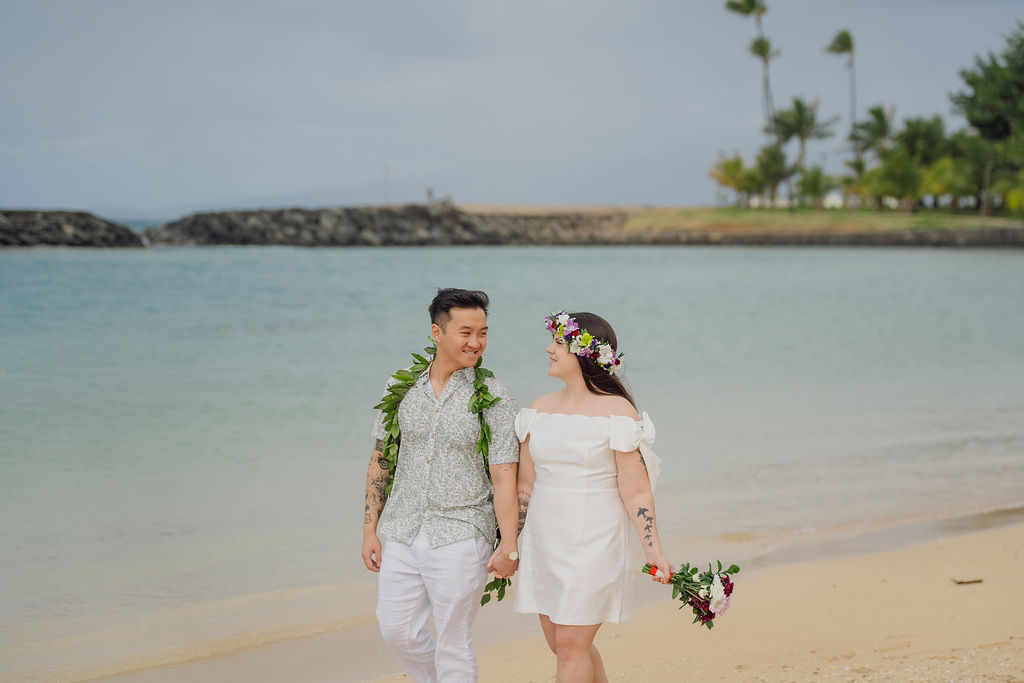
You may know it from the movie, but Aloha ‘Oe and The Hawaiian Wedding Song have histories that predate any Hollywood adaptation by decades. The Hawaiian Wedding Song (“I Love You Without End” in translation) became a wedding staple for a reason. It captures something that other love songs simply don’t.
Having this song performed live during a beach elopement or small beach wedding on Oahu adds a layer of cultural richness that couples consistently mention in their reflections afterward. It can be played on a ukulele during the ceremony or sung a cappella. It carries the spirit of the islands in a way that no imported playlist can replicate.
We often recommend couples connect with local musicians for their Honolulu or Oahu beach ceremonies. The experience is completely different when using recorded music and a live performance of a Hawaiian song.
The Sand Ceremony
The Hawaiian wedding sand ceremony has been incorporated into many Oahu beach weddings and elopements because it fits the setting so naturally. Each partner pours sand from a separate container into a shared vessel. The two colors blend together, symbolizing that they are inseparable after that moment.
Some couples use sand collected from a specific beach in Oahu that holds meaning for them. Others combine colors that represent their families. The result is a keepsake that literally holds a piece of the land where they were married.
Tying the Maile Lei
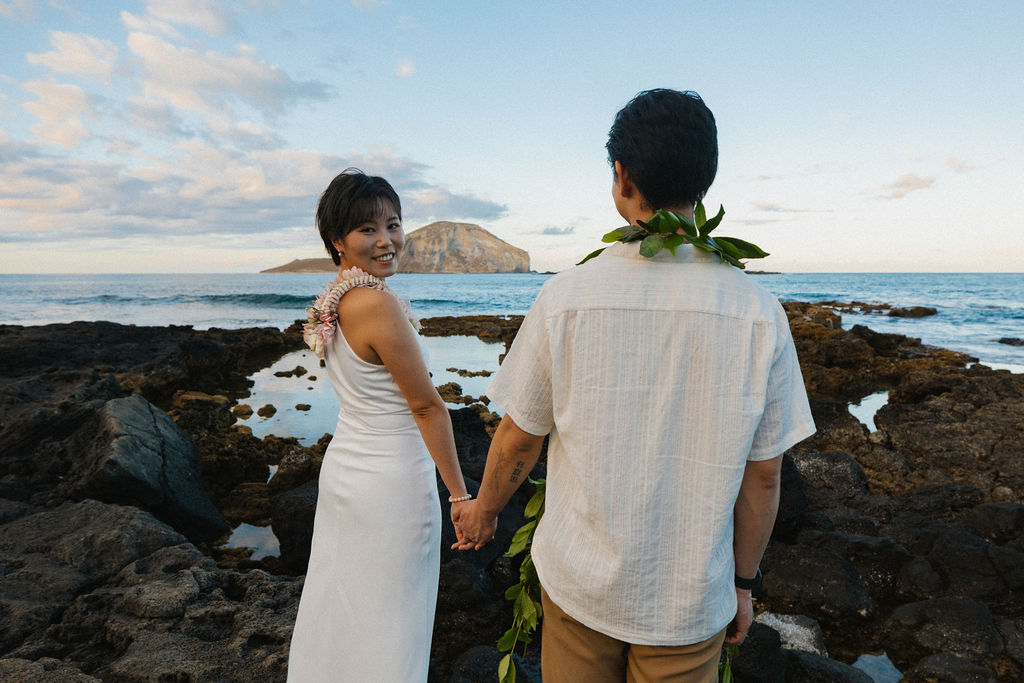
If the lei exchange is the heart of Hawaii wedding tradition, the tying of the maile lei is the hands. In some ceremonies, the officiant ties a maile lei around the couple’s joined hands, a Hawaiian version of handfasting. It represents a physical binding of two lives.
The maile vine is considered sacred in Hawaiian culture. Associated with Laka, the goddess of the hula, it was used in offerings and worn by chiefs. To have it wrapped around your hands during your vows is to connect your commitment to something much older than the two of you.
This is one of the Hawaiian wedding customs we most strongly encourage. It’s visual, tactile, and meaningful, and it photographs beautifully.
Final Words
If you’re envisioning a beach elopement or an intimate beach wedding, we’d love to hear about it. Every couple who reaches out to us gets a conversation, not a sales pitch. We want to understand what you’re looking for and help you figure out whether we’re the right fit.
Fill out our contact page and tell us a little about your vision. We’ll get back to you quickly and start the conversation from there.
Or, if you’re still exploring your options, browse our Locations page to see the beaches and parks on Oahu where we perform ceremonies. You can also check out our Wedding Packages to get a sense of what we offer and how we work. If you need more tips, you can always check out our blog!z