Podcast Transcript:
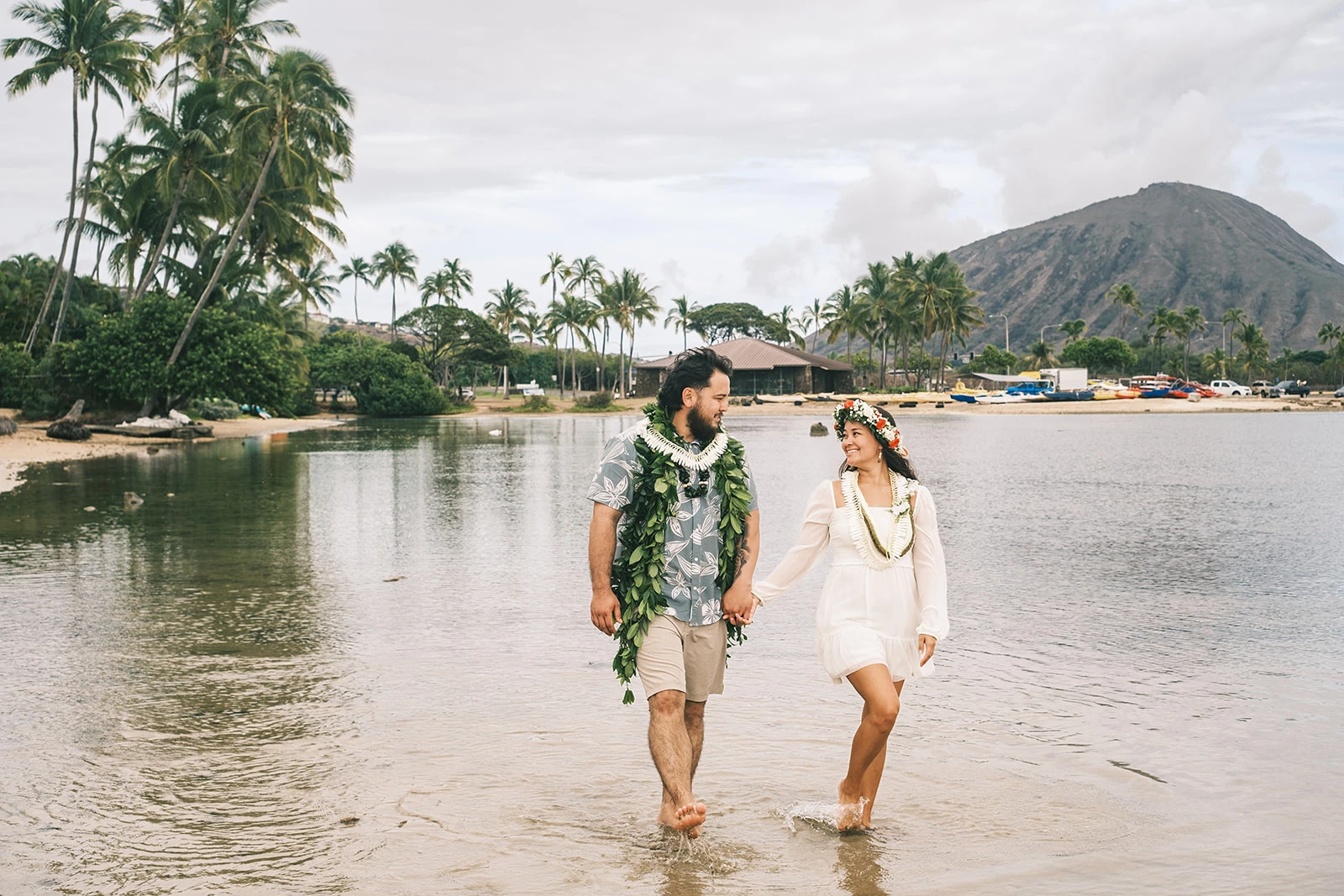
Host 1: Okay, let’s be honest for a second. When you close your eyes and you picture getting married in Hawaii, what do you actually see?
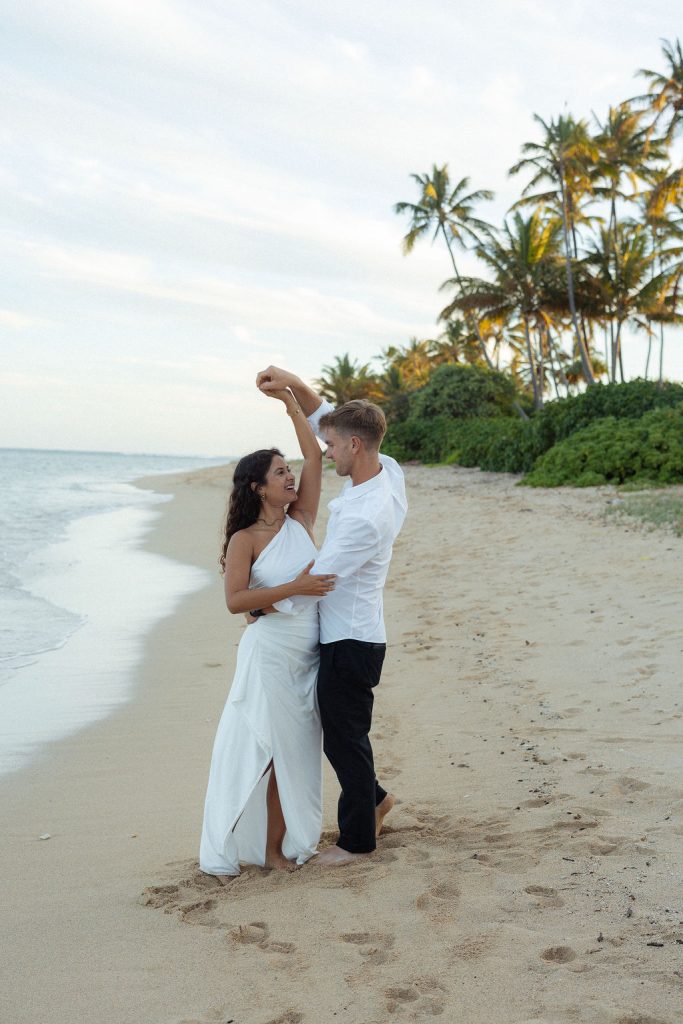
Host 2: Oh, I know what you see. You see the turquoise water. You see the powder-white sand. You feel that gentle trade wind blowing.
Host 1: Yes, just enough to make you look majestic, not like you’ve been through a wind tunnel.
Host 2: Exactly. It’s the ultimate fantasy—that whole Aloha spirit thing. You turn to your partner, you’re ready to say “I do,” tears are welling up, and then…
Host 1: And then a tourist in a neon yellow Speedo drops a cooler right behind you and asks where the bathroom is. Right in the middle of the vows! Or worse, a park ranger taps you on the shoulder and asks to see your liability insurance paperwork.
Host 2: Talk about a mood killer. But that is the reality, you know? We think of beach weddings as these simple, barefoot, “just show up” kind of things. But on Oahu—one of the most popular places on the entire planet—it’s a little more complicated.
Host 1: Which is exactly why today we are doing a deep dive into the art of the Oahu beach wedding. We’ve gone through a ton of resources from Hawaii wedding minister, focusing specifically on Reverend James Chun’s insights. And honestly, this guy isn’t just an officiant.
Host 2: No, not at all. Based on these sources, he’s like part wedding planner, part curator of coastlines, and maybe most importantly, a navigator of bureaucracy.
Host 1: I love that: “curator of coastlines.” So, okay—our mission today is simple. We’re going to help you sort through the overwhelming number of beach options on Oahu to find the one that fits your vibe.
Host 2: Right. Whether you’re a glamorous “townie” or more of a secluded nature lover.
Host 1: We’re going to find your spot. And we’re going to be ruthless with the scorecard. We have data on privacy, convenience, and even the dreaded parking situation.
Host 2: And we’ll tackle the scary stuff too: the permits, the rules, so you don’t have to worry about getting a fine on your wedding day.
Town vs. Country: The Oahu Debate
Host 1: Okay, let’s unpack this. The first thing that really jumps out from Reverend Chun’s guide is this big binary choice he presents. He basically splits the island into two vibes.
Host 2: Town and Country. Exactly. And this is such a classic Oahu debate. If you talk to anyone from there, “Town” is Honolulu and Waikiki. It’s the hub—all the hotels, the action. “Country” is… well, it’s everything else. The North Shore, the Windward side. It’s beautiful and secluded, but you have to drive.
Host 1: It’s a whole different mindset. So let’s start with Town, because I feel like Town gets a bad rap sometimes for being too crowded, but James highlights some spots that sound pretty amazing if you know how to work them. First up is Magic Island.
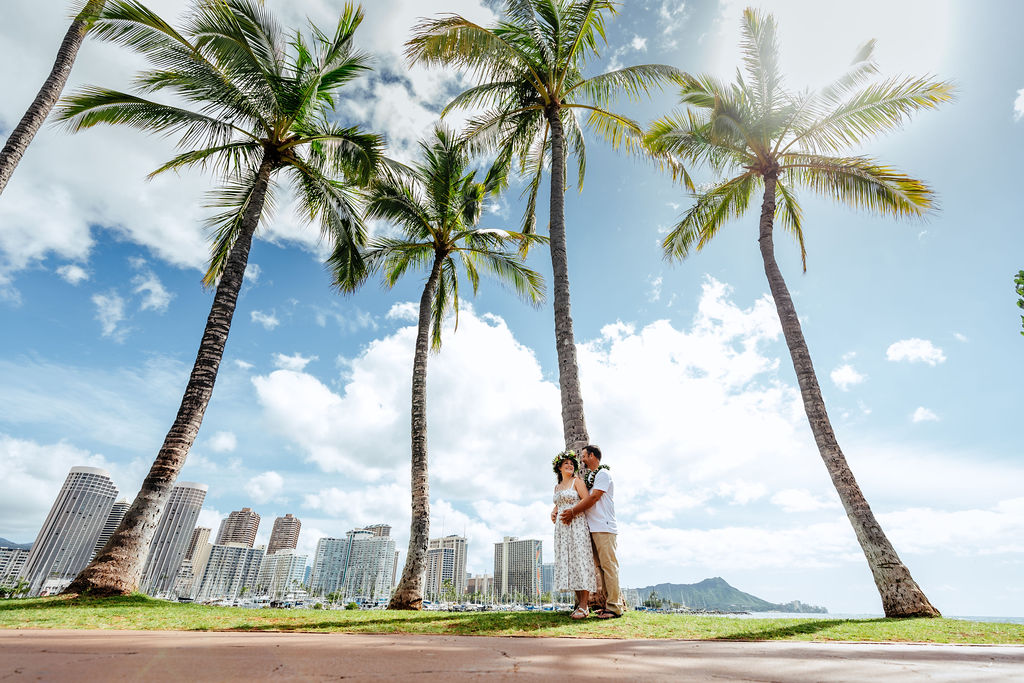
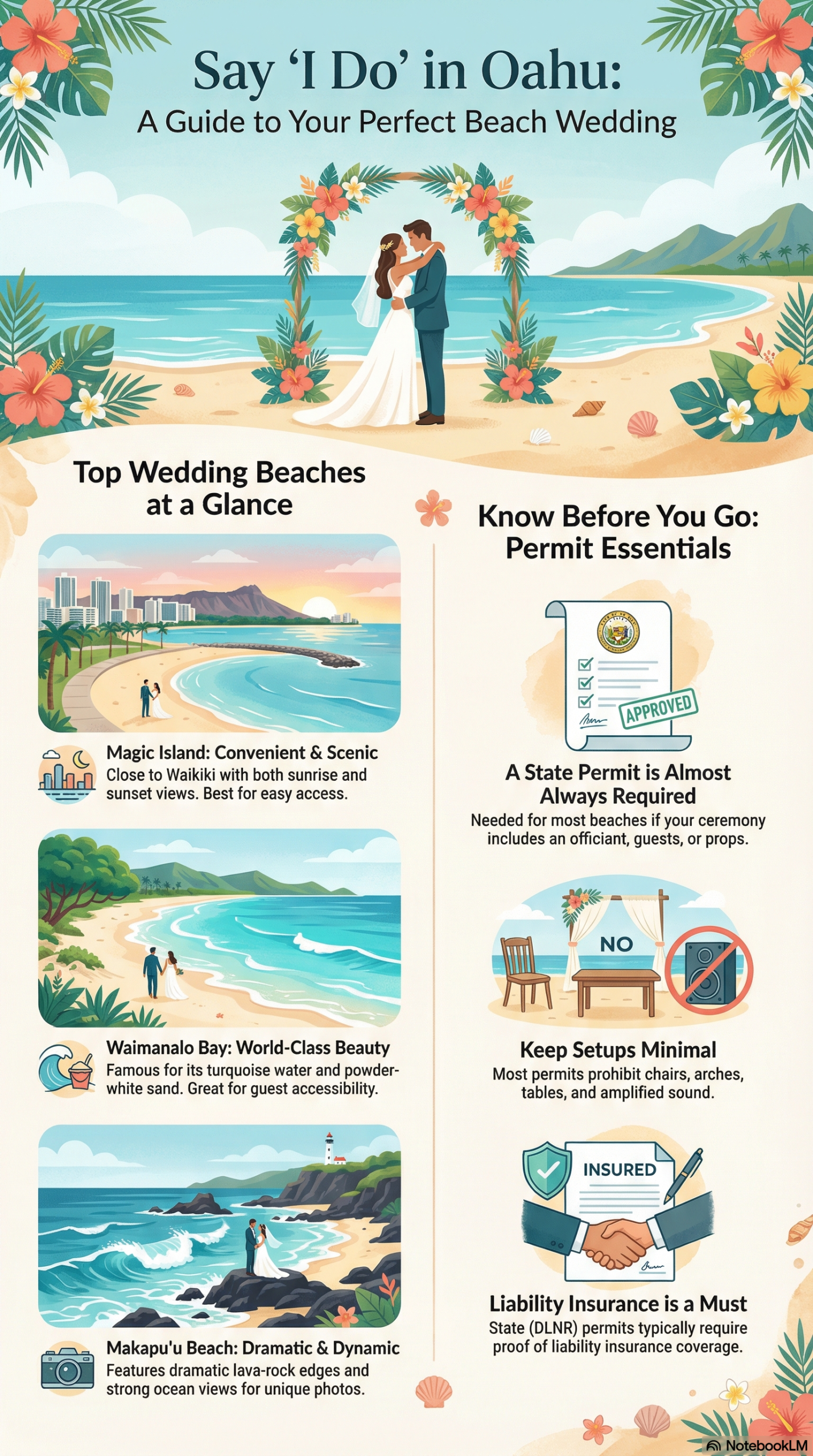
Host 2: Magic Island is so interesting because it’s completely man-made, but it just works. It’s this little peninsula right between Honolulu and Waikiki that juts out into the ocean.
Host 1: And the vibe feels like the best of both worlds, right? You’ve got a big grassy park—which I’m assuming is great for heels—so you’re not sinking into the sand immediately, but you also get the sandy beach.
Host 2: You do. But here’s the really unique thing about it, and this is a huge deal for photography: the positioning. Because it juts out, it’s one of the very few spots on the South Shore where you can get a sunrise and a sunset view.
Host 1: Wait, really? Both? Usually, you’re locked into one or the other. East side for sunrise, West side for sunset.
Host 2: Precisely. And on top of that, you get that iconic shot of Diamond Head in the background. If you want people to look at your photo and immediately know, “Okay, that’s Hawaii,” without a geotag—this is your spot.
Host 1: But okay, reality check: the scorecard. Reverend Chun rates convenience a perfect 5 out of 5. It’s close to everything. But the privacy score?
Host 2: It’s a 2. A 2 out of 5. So you are definitely going to have an audience. It’s a popular park; people are jogging, picnicking. But James has a local tip for that: go early in the morning before the crowds, or aim for sunset. The light is amazing and most of the day-trippers are packing up to go find dinner.
Host 1: Okay, so it’s a tradeoff. Killer view for a few onlookers. I could live with that. But what if I want the “classic” Waikiki experience? The Elvis movie vibe, high-rise hotels in the background?
Host 2: Then you’re looking at Duke Kahanamoku Beach. Named after the man himself, the father of surfing. The absolute legend. Yeah, this spot is right in front of the Hilton Hawaiian Village. You’ve definitely seen pictures of the Rainbow Tower—that giant mosaic on the side of the hotel. That’s your backdrop.
Host 1: The notes also mention a five-acre saltwater lagoon. It sounds visually stunning.
Host 2: It is. It’s very polished, very manicured. But here’s where it gets… well, maybe terrifying depending on who you are. The privacy score?
Host 1: Hit me.
Host 2: It’s a 1. A 1 out of 5.
Host 1: So literally zero privacy. You are the afternoon’s entertainment.
Host 2: Pretty much. You’re in the heart of the beast. But convenience is a 5. This is for the couple who wants that postcard photo and just does not care if a hundred people are watching from their balconies.
Host 1: It’s an exhibitionist’s dream! But seriously, I can see the appeal, especially if you have elderly guests who can’t do a long drive. You just walk out of the hotel, get married, and walk right back to the bar.
Host 2: That’s it. It’s about tradeoffs. Town is convenience and amenities, but you sacrifice that intimacy.
Escaping to the Country
Host 1: Okay, let’s leave the hustle. Let’s get in the rental convertible, put the top down, and drive to the Country. This is where the whole landscape changes. We’re talking drama, big scenery, and ironwood trees.
Host 2: Yes, this is a very specific look that James Chun seems to love. Let’s talk about Waimanalo Bay. The locals call it Sherwood Forest. Host 1: Sherwood Forest in Hawaii? That’s confusing. I’m picturing Robin Hood in a lei.
Host 2: It’s because of the ironwood trees that line the beach. They’re not palm trees; they’re these tall, striking trees with almost pine-needle-like leaves, and they provide a ton of shade. But for photographers, they create dramatic lighting.
Host 1: Dramatic how?
Host 2: It’s that dappled light effect. When the sun filters through the leaves and creates those soft, dancing shadows. It looks incredible in portraits, and it’s a break from that harsh tropical sun that makes you squint.
Host 1: Nobody wants squinting wedding photos.
Host 2: Nobody. And the beach itself is the longest stretch of sand on Oahu. Turquoise water, powder-white sand. James even notes some people call it “Heaven’s Point.”
Host 1: Heaven’s Point? Okay, that sets a high bar. What’s the scorecard say? Privacy?
Host 2: This is the big winner. Privacy is a 5 out of 5.
Host 1: Wow, a perfect five. So it’s just you and the ocean?
Host 2: Well, mostly. There’s always a catch. The convenience drops to a 3—it’s about a 45-minute drive from Waikiki. And the parking gets a difficulty score of 5.
Host 1: Oh no, the dreaded parking score.
Host 2: Yeah, James is very clear that parking is a real challenge here, especially on weekends. It’s a huge local spot for bodyboarders. The lot fills up fast, and you do not want to be circling for a spot in your wedding attire.
Host 1: So amazing privacy on the sand, but you’re fighting for a parking spot to get there.
Host 2: That’s the tradeoff. His advice is simple: go on a weekday. Dodge the crowds, dodge the bodyboarders, and you might actually get that Heaven’s Point all to yourself.
Drama and Luxury
Host 1: I love that. Weekdays are the secret weapon. Okay, let’s go to a place that sounds even more intense: Makapuʻu Beach.
Host 2: Makapuʻu is for the couple that wants drama—and not family drama, I mean scenic drama.
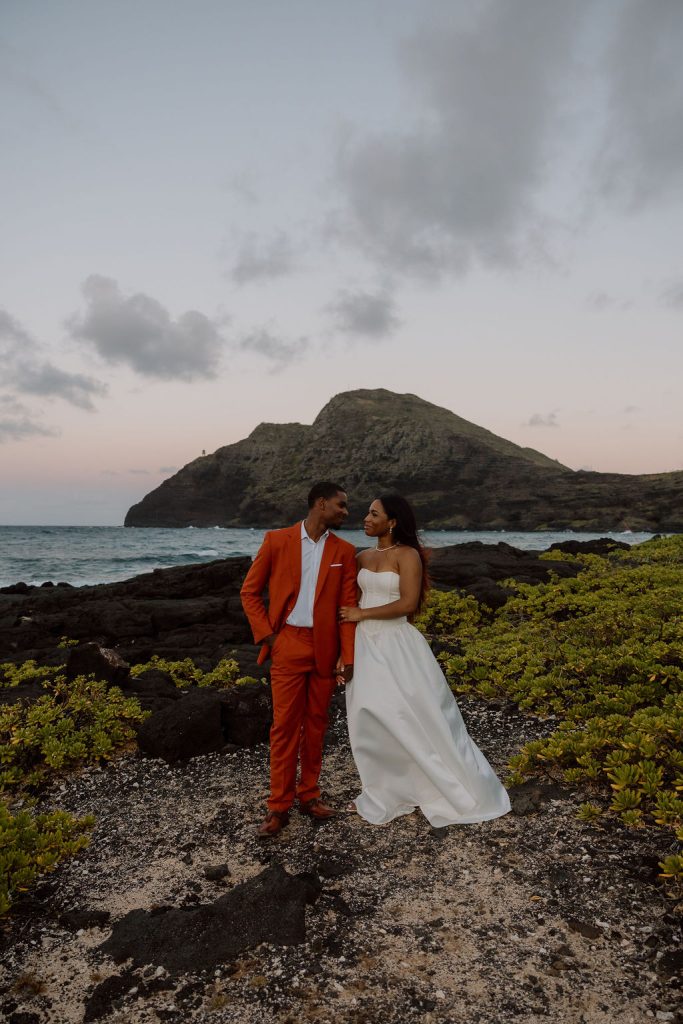
Host 1: The description here is wild. It says it’s nestled against the Koʻolau Mountain Range. Host 2: And these aren’t just any mountains. The source material describes the ridges as looking like they were formed by the fingers of God.
Host 1: “Fingers of God?” That’s heavy.
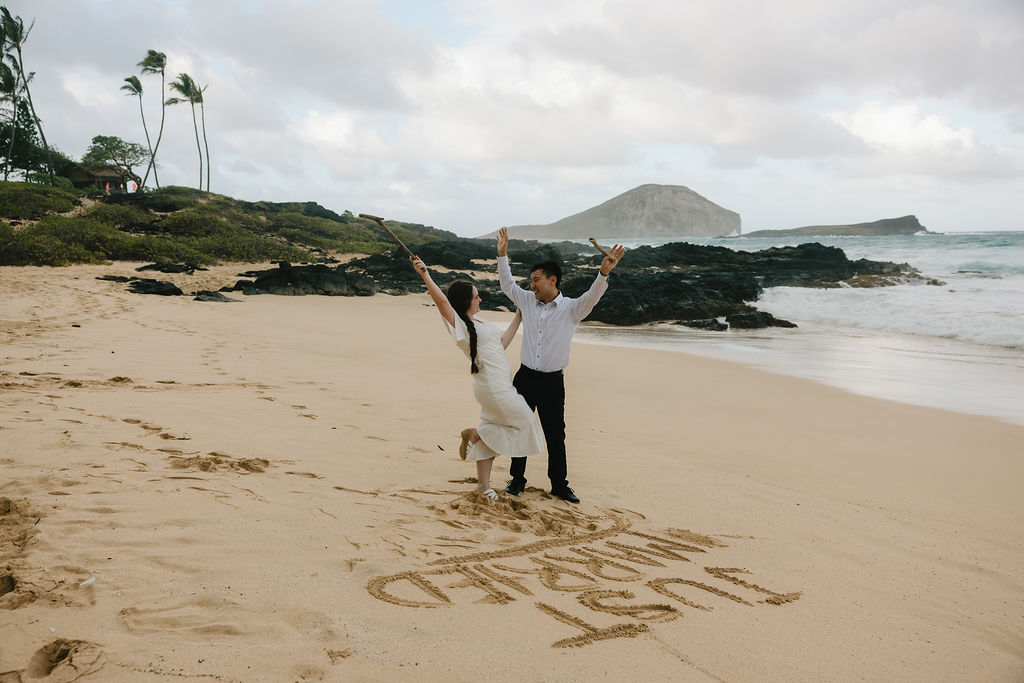
Host 2: It creates this massive, like, 3,000-foot grooved backdrop right behind you. Then in front, you’ve got lava rock, deep blue ocean, and two little offshore islands. It’s just visually overwhelming.
Host 1: I feel a “but” coming on.
Host 2: The “but” is the weather. The surf is strong, the wind is gusty—it is the Windward side, after all.
Host 1: So I need to budget for extra-hold hairspray? Or maybe just glue the veil on.
Host 2: Or just embrace it! James says this spot is for couples who want dynamic photos. If you want perfectly still hair, this is not it. If you want your dress blowing in the wind and waves crashing on the rocks like you’re in a music video, this is your spot.
Host 1: I’m picturing a very cinematic, epic wedding. Okay, so we have convenient Town and dramatic Country. But what if I want something that feels… expensive? Like old-money Hawaii?
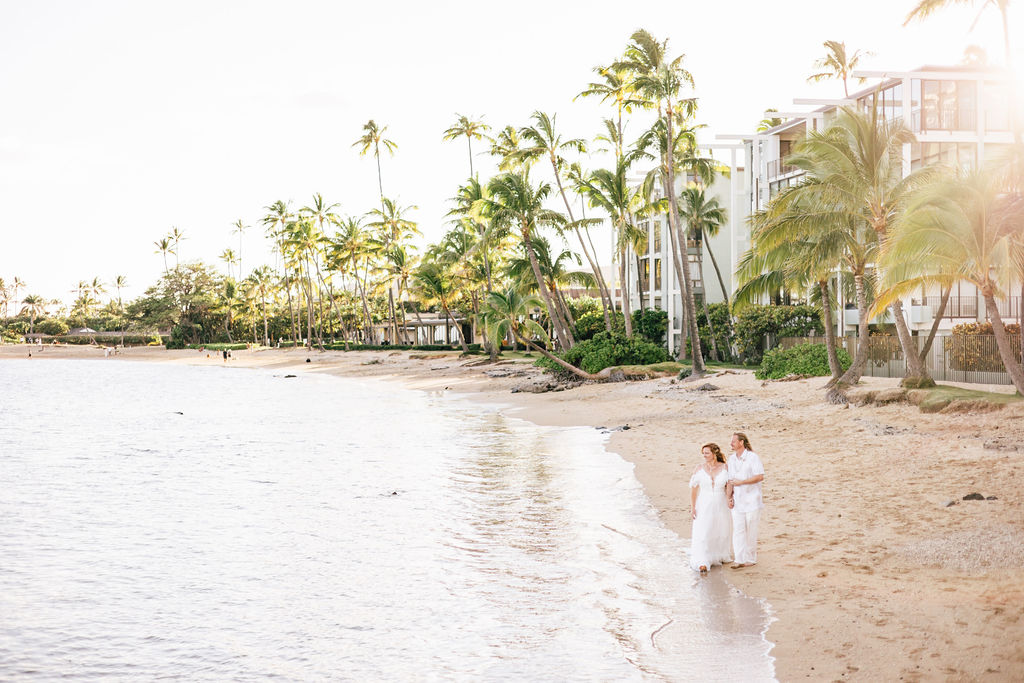
Host 2: Then you’re looking for Waialae Beach. It’s also known as Kahala Beach. The source calls this the “Beverly Hills of Oahu.” And it really is. It’s a short drive from Waikiki, but the whole vibe changes. You’re near the Kahala Hotel, these huge luxury estates… it’s just elegant. Low-key, swaying coconut palms everywhere. It feels very curated.
Host 1: Sounds amazing. So why isn’t everyone getting married there?
Host 2: Well, the catch is… it’s gotten so popular that there’s a bit of local politics involved. Residents are pushing for permit limits because of the sheer number of weddings and photoshoots happening.
Host 1: Ah, the classic case of a place being too good to stay a secret.
Host 2: Exactly. It scores a 4 on privacy and a 5 on convenience, which is a really rare combo. But because of its popularity, having a guide like James is so important. He knows the current permit situation and how to navigate the neighborhood respectfully.
Host 1: Speaking of secrets, there’s one more spot on this list. James calls it the “speakeasy of beaches”: Kawela Bay, up on the North Shore near Turtle Bay Resort.
Host 2: “Speakeasy” makes it sound hidden. What’s so special about it?
Host 1: It’s the visuals. The forest literally meets the ocean. There are these giant Banyan trees—you know, the ones with the roots that come down from the branches?
Host 2: Oh, the archetypal jungle trees! The ones that look ancient and wise.
Host 1: Yes. You walk through this whole Banyan grove to get to the sand. It feels like you’re entering another world. And because it’s a bay, it’s really protected.
Host 2: And the privacy score?
Host 1: Solid 5 out of 5.
Host 2: Nice! What about the waves, though? The North Shore is famous for those monster waves in the winter.
Host 1: And that’s the seasonal thing you have to know. In the winter, the surf can be—and I’m quoting—”heart-stopping.” But Kawela Bay is generally calmer because of its shape. In the summer, it’s glassy and perfect.
Host 2: So summer for swimming, winter for dramatic photos from a safe distance.
Host 1: Exactly. It’s a pretty safe bet year-round for that secluded, tropical feel.
The “Buzzkill”: Navigating the Bureaucracy
Host 2: Okay, I think I’ve picked my spot. I’m torn between Kawela Bay for the Banyan trees and Waimanalo for the privacy. I’m ready to go!
Host 1: But now… now we have to talk about the buzzkill. The bureaucracy.
Host 2: Oh, why did you have to ruin the mood? We were just walking through a Banyan forest in my mind.
Host 1: Because if we don’t talk about it, your wedding gets shut down. This is where the fantasy meets the Department of Land and Natural Resources (DLNR). Host 2: Doesn’t exactly sound romantic, does it? “I take you, under the jurisdiction of the DLNR.”
Host 1: It’s not! But it is so essential. Here’s the deal: you cannot just show up on a beach in Hawaii with an officiant and get married. It’s public land.
Host 2: So what are the actual rules?
Host 1: First: no structures. No arches, no chairs, no tables.
Host 2: Wait, no chairs? So Grandma has to stand?
Host 1: Grandma is standing in the sand. I mean, unless you find a different kind of venue, the rule for beach permits is basically “footprints only.” You leave nothing behind.
Host 2: Okay, that changes the logistics a lot. What about music?
Host 1: No amplified sound. No microphones, no speakers.
Host 2: So an acoustic set only?
Host 1: Strictly acoustic. A ukulele is fine. A DJ with a generator is not fine. And here is the big one that nobody expects: insurance. Host 2: Insurance? For standing on a beach?
Host 1: Yep. To get the DLNR permit, you often need liability insurance. We’re talking around $300,000 in coverage. Host 2: $300,000?! In case I, what, trip over a coconut?
Host 1: Or in case a guest damages the environment or someone gets hurt. It’s a standard requirement for any kind of commercial activity on state land—and a wedding with a hired officiant? That’s commercial activity.
Host 1: Okay, the romance is officially fading. I’m just picturing myself on my wedding morning on the phone with an insurance broker reading fine print.
Host 2: And this is exactly where someone like Reverend James Chun becomes so valuable. The optimistic spin here is that you don’t actually have to do any of that.
Host 1: He does it all?
Host 2: He handles it. He knows which beaches are State and which are County, because the rules are different. He knows the crowd size limits, he gets the permits, he makes sure the liability coverage is included.
Host 1: So you’re basically paying him to be a human shield against the government.
Host 2: Essentially. He’s the buffer. You just show up looking amazing; he shows up with all the paperwork handled.
Host 1: That is worth its weight in gold.
The Man Behind the Scores: Reverend James Chun
Host 2: Let’s talk about the man himself for a minute. Who is this Reverend James Chun? Because the reviews we looked at paint a really interesting picture. He’s not just some guy reading from a script.
Host 1: No, not at all. The vibe I get is that he’s like the ultimate chameleon—he just adapts to whatever the couple wants or needs. I saw this one review from a couple, Shavis and Joseph. They met him at a wedding event, hired him, and then invited him to the rehearsal dinner and the reception!
Host 2: That says so much. I mean, usually, the officiant is gone right after they sign the license. To be invited to stay means he really connected with them on a personal level.
Host 1: He’s described as professional but also laid back, which is the perfect Hawaii balance. And his adaptability seems to be the key thing. There was a story about a couple, Annie and Mikeen, who wanted a “Love Letter and Wine Box” ceremony.
Host 2: A love letter and wine box?
Host 1: It’s a thing where you lock love letters and a bottle of wine in a box during the ceremony. You nail it shut and you open it on, like, your fifth anniversary. And James had never even heard of it!
Host 2: So what did he do?
Host 1: He didn’t say no. He just researched it, figured it out, and made it happen for them. But my absolute favorite detail: the review from Simon and Jane. The Rapping Bride. Host 2: Oh, I know what you’re going to say.
Host 1: Yes! The bride wanted to rap her vows.
Host 2: I mean, that is a bold choice. You have to really commit to that.
Host 1: Totally! And James was just cool with it. He just made space for it, let her do her thing, and kept the ceremony flowing. Can you imagine some other officiants? They’d be horrified!
Host 2: But he rolled with it. He also translated for the groom’s mother for another couple, and incorporated Korean cultural references for another. He just creates a “relaxed and warm environment”—that’s the phrase that comes up over and over. He takes all the stress out of it.
Host 1: And when you’re getting married on a beach where the wind is a factor and there are tourists around, having that calm presence seems absolutely vital.
Host 2: It is. So the mission we started with—to navigate the options—what we really learned is there’s no single “perfect” beach.
Host 1: Right. If you want that Beverly Hills vibe, you go to Waialae. If you want the dramatic “Fingers of God” mountains, you go to Makapuʻu. And if you want to walk out of your hotel and get married in five minutes, you go to Duke Kahanamoku.
Host 2: The common thread is that all these obstacles—the wind, the parking, the permits—they’re real. But with the right guide like James Chun, they just become minor details. He handles the boring stuff so you can focus on the “I do.”
Host 1: Exactly. So what this means for you, really, is you can stop worrying about the paperwork and actually start dreaming about the place. Do you want Banyan trees or ironwood trees? Sunrise or sunset?
Host 2: Just remember to book it on a weekday!
Host 1: Always with the practical advice. Well, that wraps up our deep dive into Oahu beach weddings. If you want more great info about weddings in Hawaii, please make sure to subscribe to this podcast. We’ve got a lot more coming your way.
Host 2: And definitely check the show notes; we will link to Reverend Chun’s site so you can see those scorecards for yourself. Until next time, Aloha!
Host 1: Seriously though, does anyone know where I can get a Mai Tai around here? I feel like I’ve earned one after all that talk about insurance policies.