Oahu Beach Wedding vs. Chapel Wedding: The Complete Officiant Guide
Summary
Deciding between an Oahu beach wedding vs chapel wedding comes down to balancing atmosphere, guest comfort, weather control, and budget. While a natural beach elopement delivers organic oceanfront beauty at a lower cost, a private chapel provides climate control, guaranteed guest seating, and complete shelter from island trade winds and tropical rain.
Atmosphere and Style: Casual Nature vs. Formal Elegance
When couples begin planning their ceremony, their vision for formality often dictates their venue choice. As an officiant on Oahu since 2013, I tell couples that choosing between an Oahu beach wedding vs chapel wedding is fundamentally a choice between raw natural beauty and refined convenience.
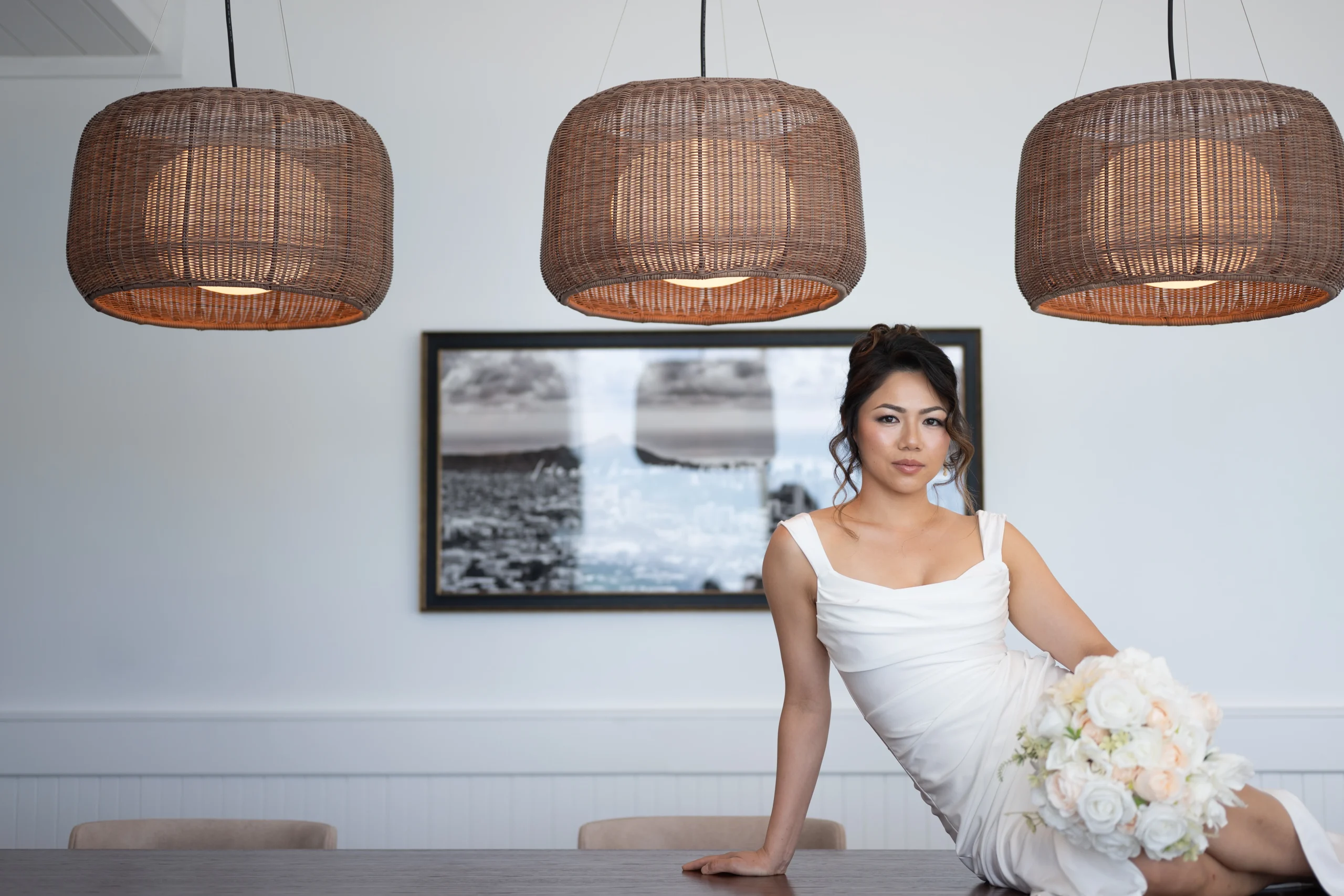
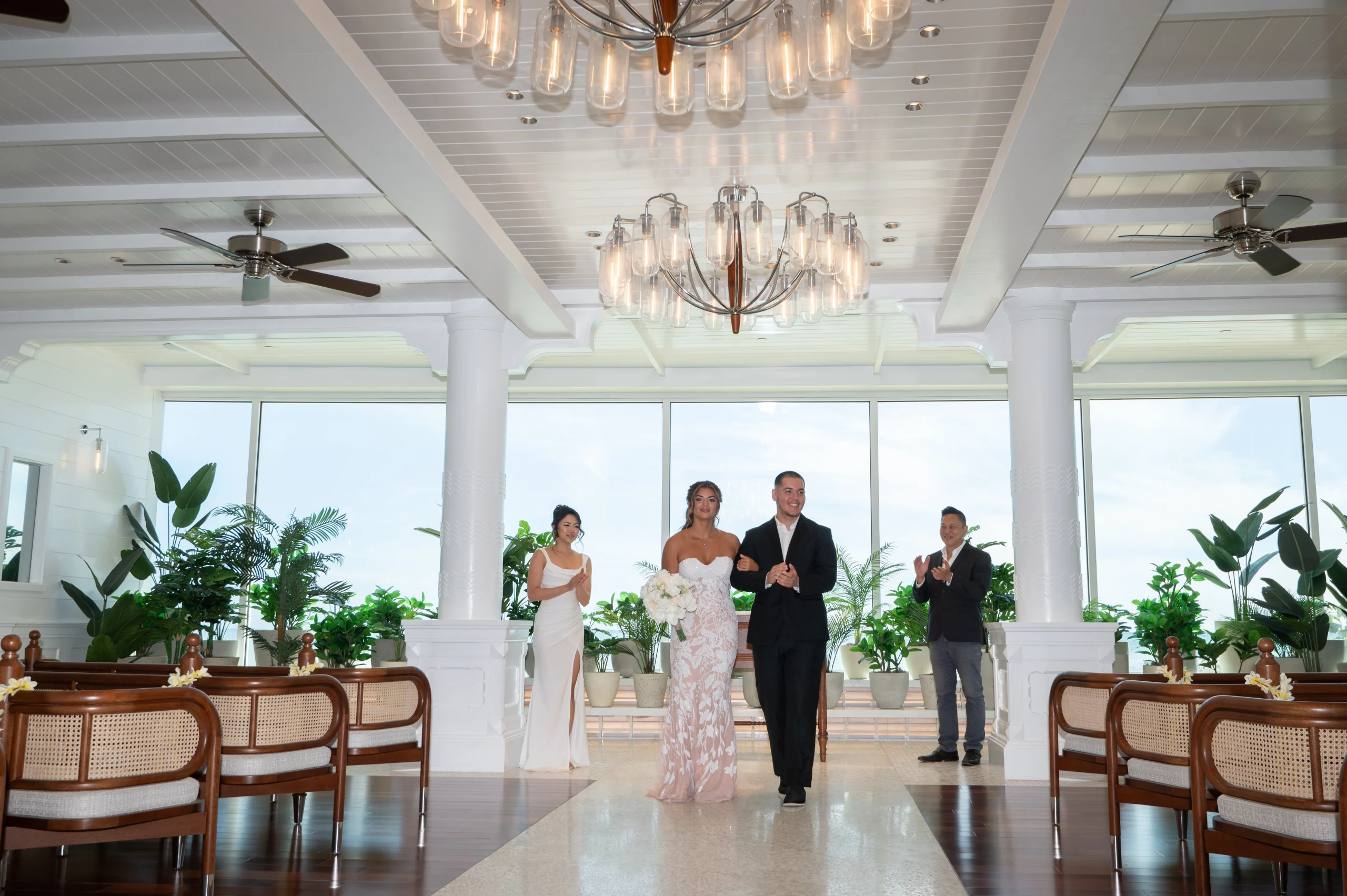
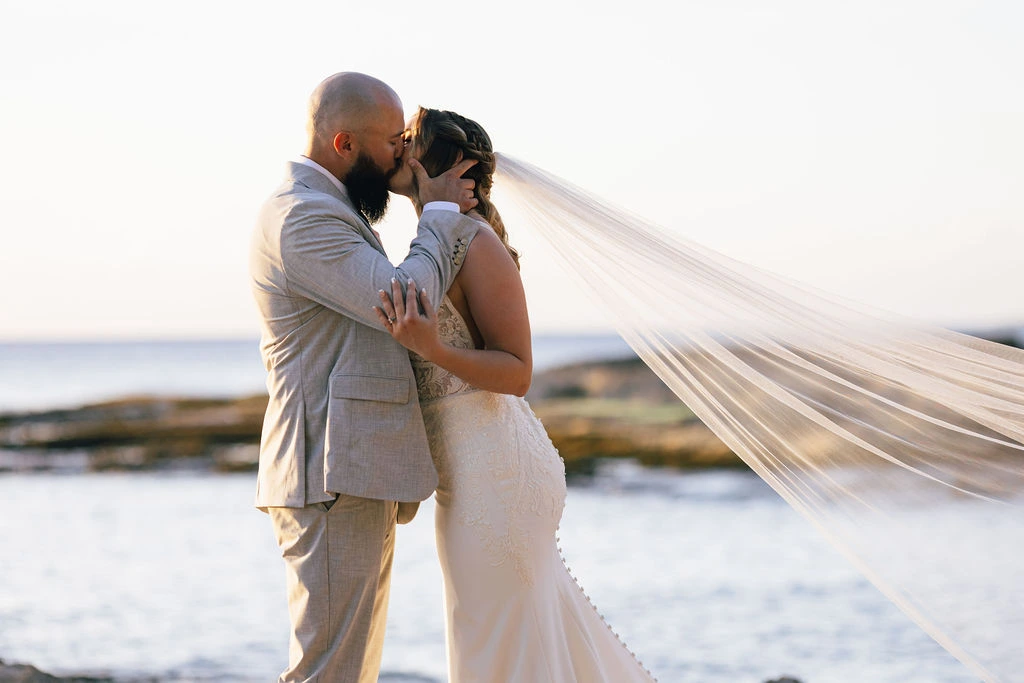
A beach ceremony delivers an authentic, barefoot island experience where the ocean waves and coastal scenery serve as your altar. However, beach environments are naturally casual. If you envision wearing a formal tuxedo, high heels, or a heavy multi-layered ballgown, the sand can quickly become impractical. Furthermore, long cathedral veils on the beach often catch the ocean trade winds like a sail, constantly tugging at the bride’s hair during vows. In contrast, an oceanfront chapel—such as St. Catalina By the Sea in Waimanalo or Kahawai Chapel in Waikiki—offers a sophisticated, formal aesthetic. You get the visual drama of sweeping ocean views through floor-to-ceiling glass windows while preserving crisp attire and flawless hair.
Weather Control, Climate, and Microclimates
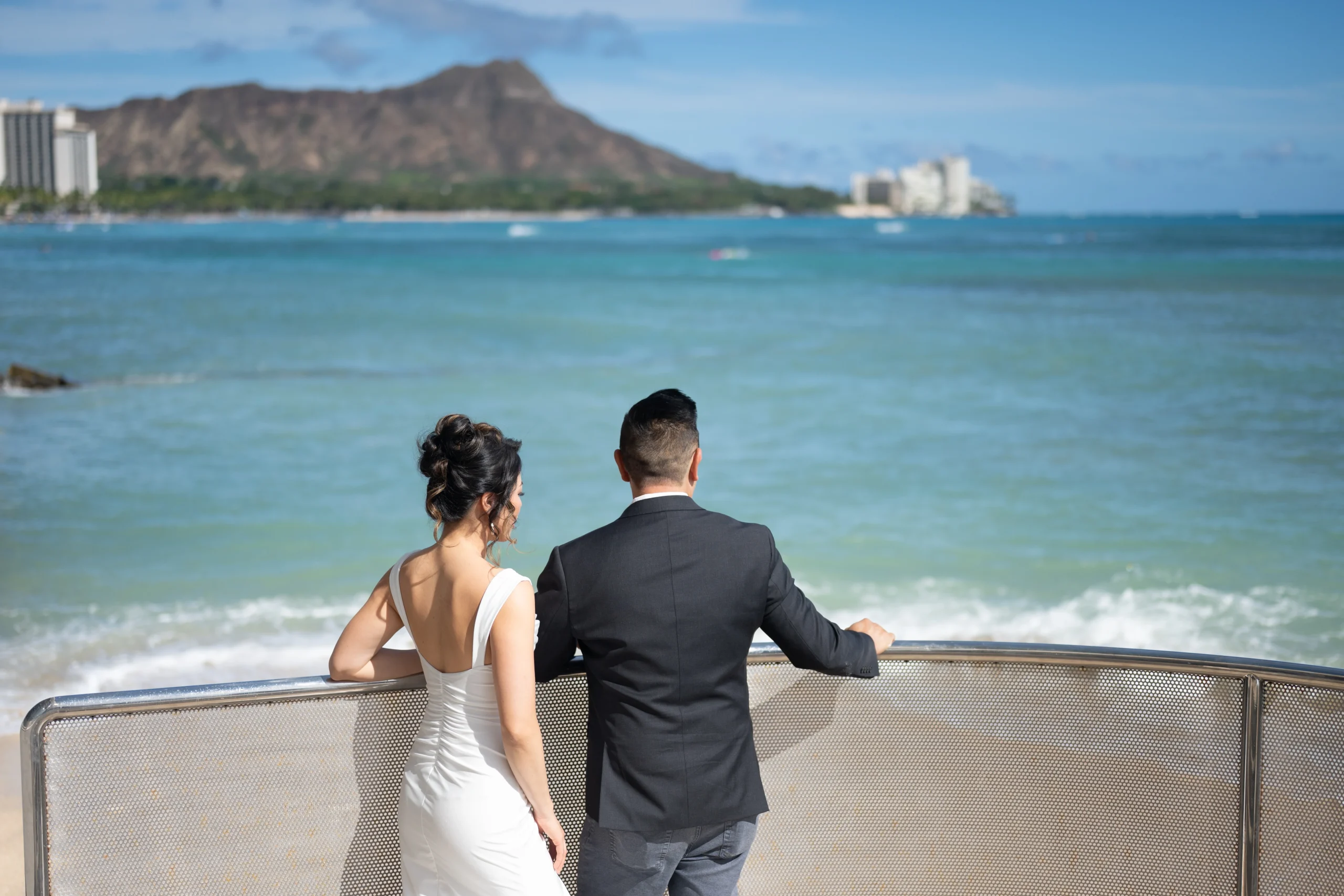
About 90% of the time, Oahu blesses couples with gorgeous tropical sunshine and pleasant ocean breezes. However, tropical island weather is naturally dynamic. When you exchange vows on open public sand, you accept a slight element of environmental unpredictability, including sudden passing showers, midday heat, and shifting ocean tides.
If you want a 100% weather guarantee and complete peace of mind, an indoor chapel is the superior choice. Chapels eliminate weather stress entirely by providing a climate-controlled sanctuary protected from tropical humidity and rain. Beyond temperature control, chapels give you complete management over your acoustic environment, professional lighting, dedicated guest parking, and private bridal dressing suites—ensuring you feel calm, refreshed, and unhurried prior to walking down the aisle.
Guest Comfort, Permitting Rules, and Budget Realities
Your guest count and attendee demographics are often the deciding factor in venue selection. Under State of Hawaii Department of Land and Natural Resources (DLNR) regulations, commercial beach ceremonies are strictly capped at 20 to 25 people total. While general guest seating is restricted on public sand to preserve coastal access, the state does permit reasonable seating accommodations for elderly guests and loved ones with mobility needs who cannot stand for the duration of the ceremony.
However, if your entire guest list prefers dedicated seating, or if you are inviting a larger group than beach permits allow, a private chapel or estate venue is the ideal choice. Private venues eliminate permit caps, provide comfortable reserved pews or chairs for everyone, and offer smooth paved walkways and air-conditioned restrooms.
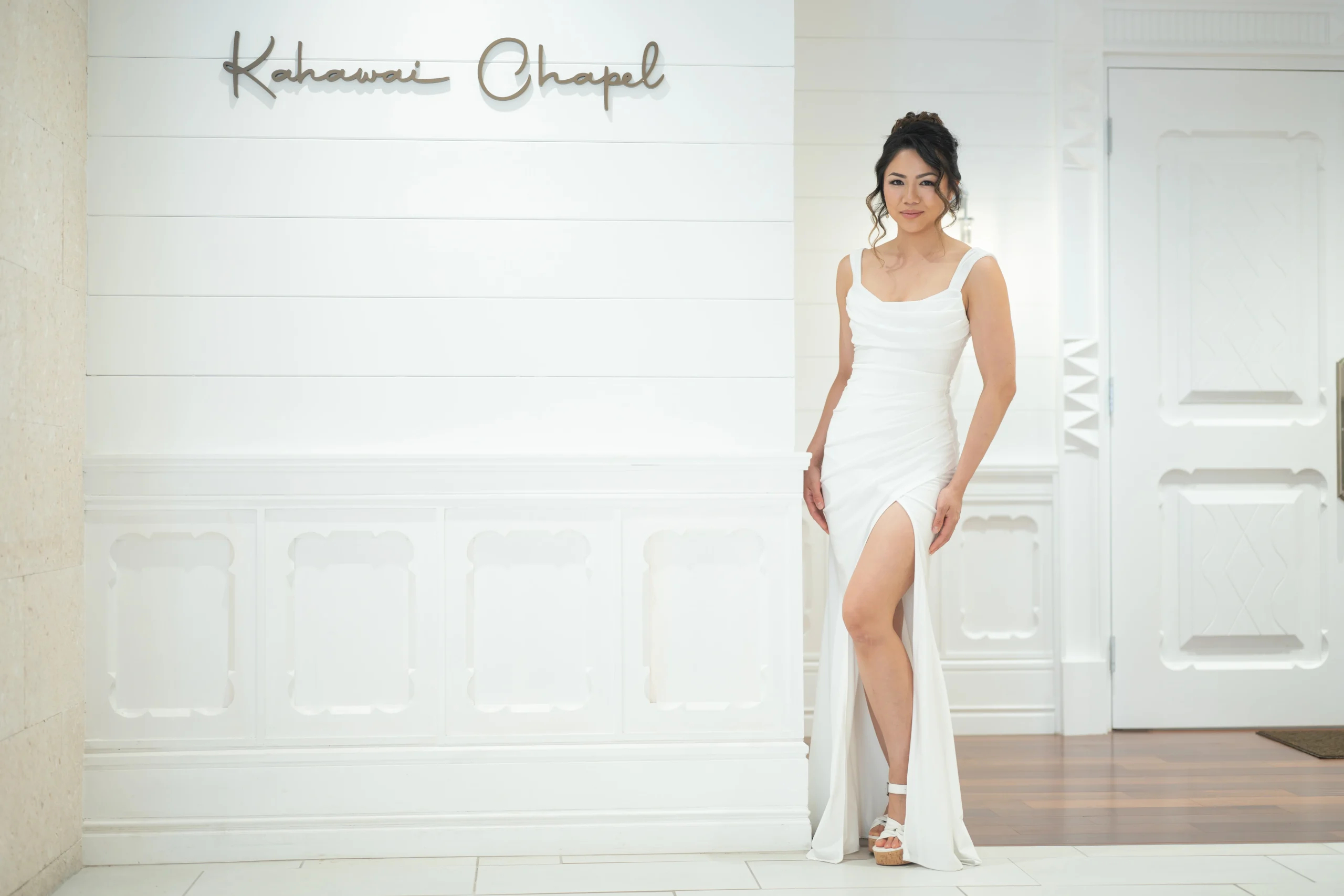
From a budget perspective, a beach elopement offers high value with minimal permit fees, whereas a chapel requires an upfront venue rental fee for its exclusive amenities. If you are weighing both options, you can explore our complete Oahu ceremony plans to compare costs across coastal beach spots and private venues. Additionally, whether you marry on the sand or in a chapel, you can streamline your mandatory paperwork by visiting our in-office State of Hawaii Private Marriage License Agent seven days a week by appointment, avoiding downtown government lines so you can spend more of your trip enjoying your vacation.
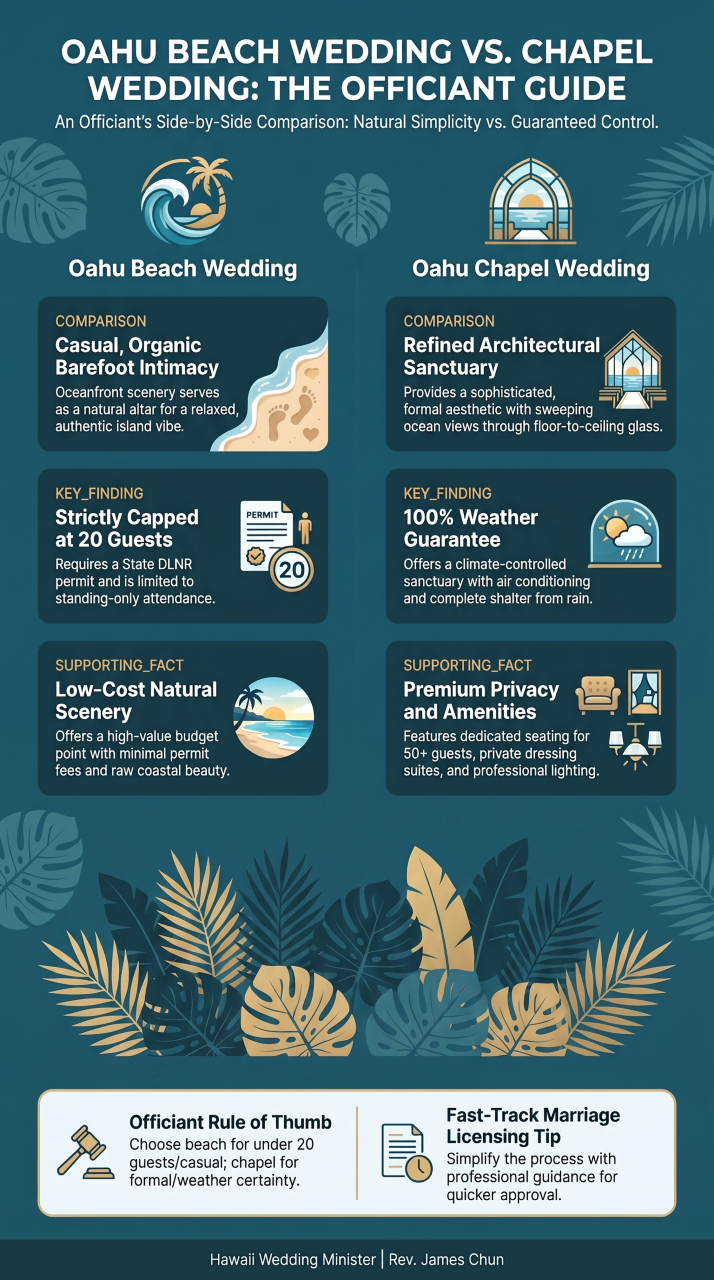
Key Takeaways for an Oahu Beach Wedding vs. Chapel Wedding
- Primary Decision Drivers: Weather protection, desired formality, guest mobility needs, and overall budget.
- Attire Suitability: Chapels accommodate formal tuxedos, heavy gowns, and cathedral veils; beaches favor lightweight fabrics and minimal veils that won’t catch trade winds.
- Guest Seating Rules: Beach ceremonies are primarily standing-only (with state accommodations permitted for elderly guests or those with mobility needs); chapels provide full seating for all attendees.
- Weather Certainty: While Hawaii weather is great 90% of the time, chapels offer a 100% guarantee with air conditioning and rain protection.
- Guest Capacity Limits: Beach permits cap attendance at 20 guests; chapels comfortably host larger parties without state permit restrictions.
- Cost Difference: Beaches offer low-cost natural beauty; chapels require a venue fee in exchange for complete control and convenience.
Frequently Asked Questions
Which is better on Oahu: a beach wedding or a chapel wedding?
A beach wedding is ideal for couples seeking an intimate, budget-friendly ceremony in raw nature with under 20 guests. A chapel wedding is best for couples wanting climate control, formal attire, guaranteed seating for all guests, and complete weather certainty.
Can we set up chairs for elderly guests at an Oahu beach wedding?
While general guest chairs are restricted on public beaches under state law, the State of Hawaii allows a reasonable accommodation for elderly guests and family members with mobility needs. If the majority of your guests require seating, an indoor chapel or private venue is recommended.
What happens if it rains during a beach ceremony on Oahu?
Because island showers are usually brief, officiants can often adjust timing by 15 to 20 minutes or pivot positioning. However, if you want complete protection from rain, heat, and wind, a chapel provides guaranteed climate control.
Can a bride wear a long veil for an Oahu beach ceremony?
Long veils can catch coastal trade winds on the beach like a sail, pulling at the bride’s hair during vows. We recommend a shorter veil, a floral haku lei, or choosing an indoor chapel where wind is not a factor.