Audio Transcript
Speaker 1: Okay, I want everyone listening to just, uh, close your eyes for a second.
Speaker 2: Unless you’re driving.
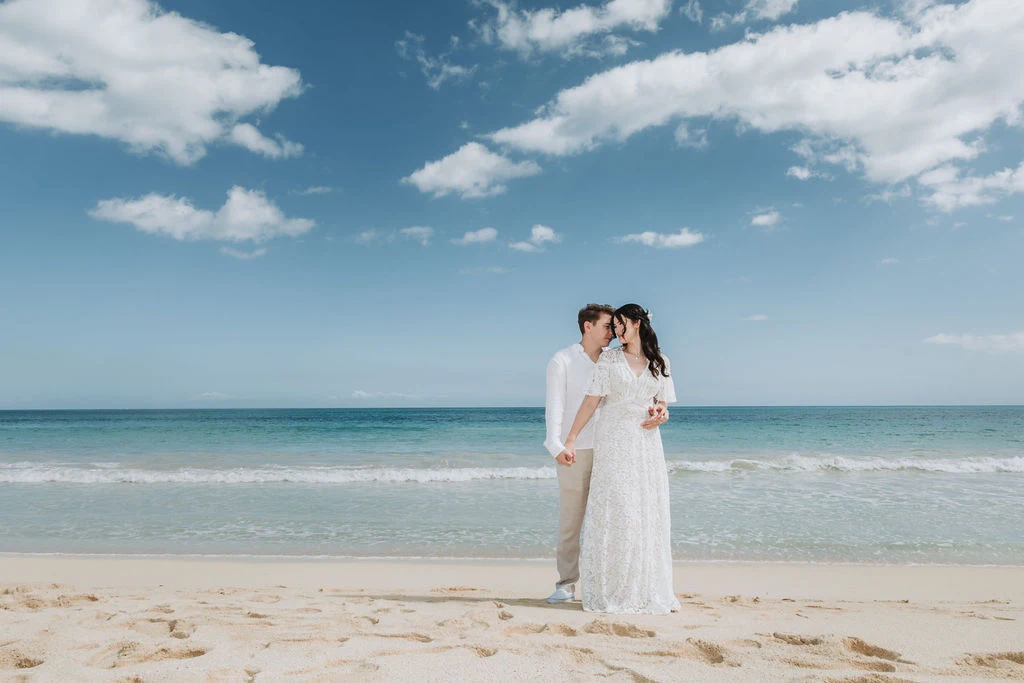
Speaker 1: Yes, right. If you’re driving, please, please keep them open. But just picture this: You’ve made it. You are standing on the soft white sand.
Speaker 2: M-hm.
Speaker 1: The sun is dipping below the horizon and it’s painting the sky in just these, like, ridiculous shades of purple and orange that you only see on postcards.
Speaker 2: It’s the dream. It’s literally the desktop background on half the computers out there. The absolute gold standard of “we made it.”
Speaker 1: It really is. But then—screech—the music stops. The dream just, you know, comes to a screeching halt because suddenly you’re not holding a bouquet of flowers, you’re holding a clipboard.
Speaker 2: Oh no. The dreaded clipboard.
Speaker 1: And on that clipboard are three of the least romantic phrases in the English language: Commercial General Liability Insurance, Right-of-Entry Permit, and Revocable Consent.
Speaker 2: Huh. Nothing says “I love you” quite like indemnifying the state government.
Speaker 1: Exactly. It’s such a massive buzzkill. But here’s the thing—and this is really what we found in our deep dive today—that clipboard is the only thing standing between your dream wedding and a very expensive ticket from a park ranger.
Speaker 2: Right. That’s the reality check we’re serving out.
Speaker 1: It is. We are doing a deep dive into the surprisingly complex, I mean, red-tape-filled world of getting married on a beach in Oahu, Hawaii. We’ve gone through everything—blogs, state regs, reviews—to answer one question: How do you pull this off without getting arrested?
Speaker 2: Or at least without getting your ceremony shut down by the Department of Land and Natural Resources (DLNR). And our guide through this whole maze, we found this fascinating figure in the research: a local officiant named Reverend James Chun.
Speaker 1: He seems to be the cheat code.
Speaker 2: He really does. He’s turned navigating all this bureaucracy into, like, an art form.
Speaker 1: He’s the Indiana Jones of marriage paperwork. But before we get to the solution—and trust me, he’s a great solution—we have to understand the problem. Because I think the biggest misconception, and I definitely had this, is the “public space myth.”
Speaker 2: Oh, absolutely. The myth that, “Hey, it’s a beach, it’s nature, I pay taxes, I can just go stand there and get married.”
Speaker 1: Yes! I mean, if I want to have a picnic with my partner, I don’t need a permit. If I want to throw a frisbee, the government doesn’t care. Why is a wedding so different?
Speaker 2: Okay, so this is the key: To the State of Hawaii, and specifically the DLNR—the agency that manages these lands—a wedding isn’t just a picnic. It’s classified as a commercial activity.
Speaker 1: Commercial? Wait, even if I’m not, like, selling tickets? Even if it’s just me and my fiancé?
Speaker 2: Yep. Because you are almost certainly paying someone. You’re paying an officiant, a photographer, maybe a videographer. The second money changes hands for a service on public land, boom, it’s a commercial event.
Speaker 1: So because I hired a photographer to get the shot, I’ve technically turned a public beach into my own private place of business for an hour?
Speaker 2: Precisely. And you have to look at it from the State’s perspective. They’ve got limited beaches, millions of tourists, and really fragile ecosystems. If they didn’t regulate this, you’d have 50 weddings side-by-side at every popular beach.
Speaker 1: Oh, that would be chaos. Total chaos. You’d be shouting your vows over the couple next to you.
Speaker 2: Okay, that’s a fair point. Which I guess brings us to the actual permit—this Right-of-Entry permit. It’s not just a formality, is it?
Speaker 1: No, not at all. It’s a strict legal requirement. The sources we looked at for Oahu are very clear: You cannot legally hold a beach wedding without this specific permit from the DLNR.
Speaker 2: And it’s not something you can just, you know, pick up at a kiosk when you land.
Speaker 1: Definitely no. You have to go online to their Wiki Permit system, create an account, select a very specific zone on a specific beach… it has to be done way in advance.
Speaker 2: Wow. Okay, and that’s just the permission slip. The part that really, really made my jaw drop was the insurance.
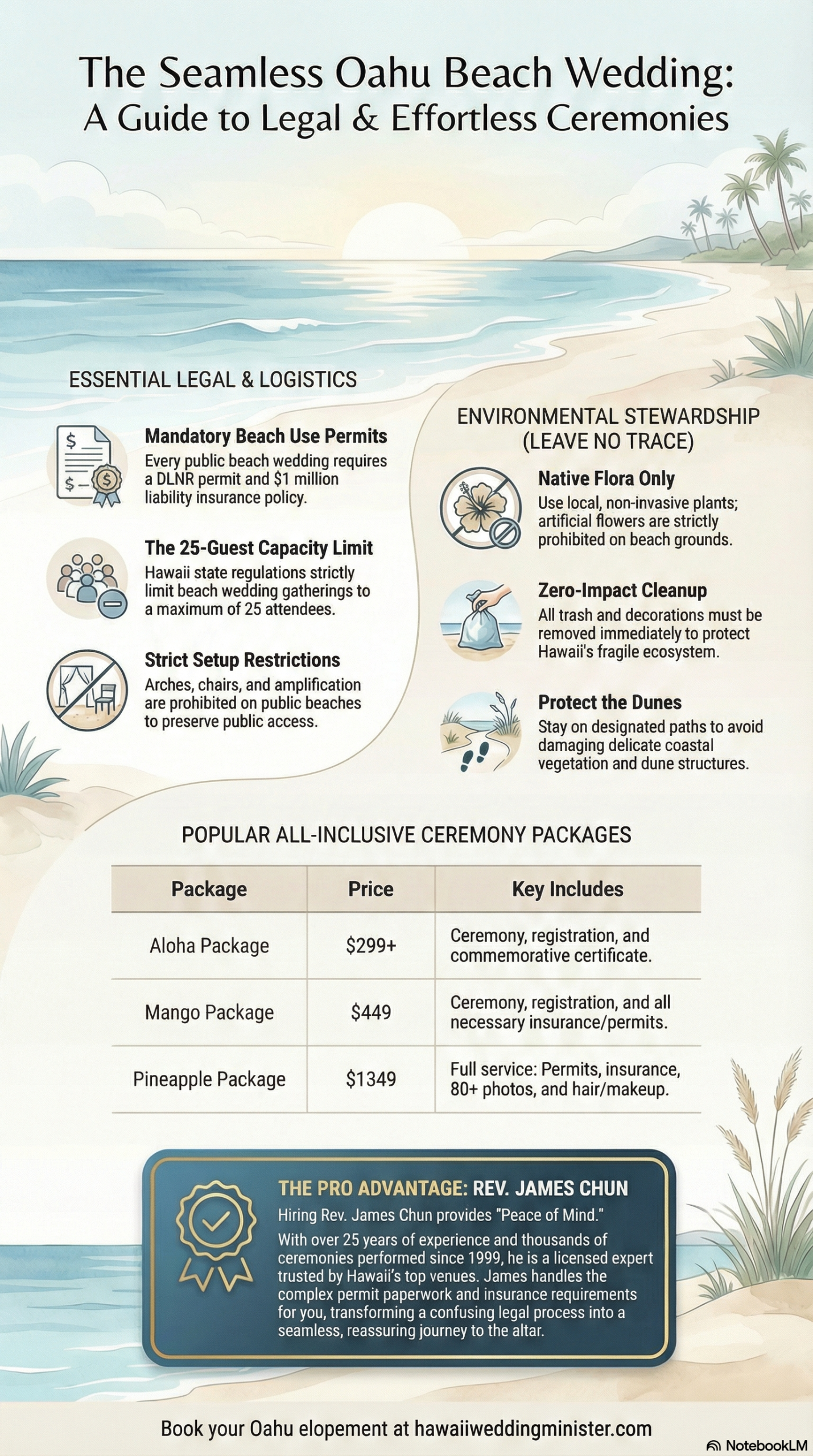
Speaker 1: The insurance requirement, yes. I read this three times to be sure: To get married on the sand, you need to hold a $1 million liability insurance policy.
Speaker 2: That is correct. One million dollars.
Speaker 1: That is absolutely insane! I mean, what do they think I’m going to do? Accidentally burn down the Pacific Ocean? Trip over a crab and sue the Governor?
Speaker 2: It sounds absurd, doesn’t it? But it’s just standard government risk management. The State is basically saying, “If your photographer trips on a piece of driftwood and breaks their leg, we, the taxpayers of Hawaii, are not on the hook for that.”
Speaker 1: “Indemnify.” There’s a romantic word for you.
Speaker 2: “I promise to love, cherish, and indemnify you.”
Speaker 1: So, is this a dealbreaker? Does this cost a fortune?
Speaker 2: Surprisingly, no. And this is a good tip for anyone listening who is starting to panic. The coverage is a million dollars, but the premium—what you actually pay—is usually around, say, $75 to $150 for a one-day policy.
Speaker 1: Okay, so it’s more of a nuisance fee. It’s a hurdle, but it’s not a million dollars out of your pocket.
Speaker 2: Exactly. But it’s a hurdle you have to know about. So, okay, let’s say you get the permit, you get the insurance, you’re ready to go. Now you run into what I like to call the “fun police rules.”
Speaker 1: The “no stuff” rule. I had this vision, you know: beautiful bamboo arch, maybe some white folding chairs for the grandparents, a little table with champagne…
Speaker 2: Denied. All of it. The standard permit strictly prohibits structures. So, no arches, no gazebos, no tables, and generally, no chairs.
Speaker 1: So Grandma has to stand in the sand?
Speaker 2: Well, there is an exception. If Grandma has a valid medical need, there’s an ADA compliance thing, so you can bring one chair for someone who physically cannot stand. But you can’t set up, like, rows of seating for all your friends. Everyone stands. It changes the whole vibe.
Speaker 1: It makes it much more casual. More of a gathering than a ceremony.
Speaker 2: It does. And speaking of the gathering, there is a hard cap on the number of people: 25.
Speaker 1: Right. That’s 25 bodies. That includes you, your spouse, the officiant, the photographer, the ukulele player… your whole vendor team. So you might only have room for, like, 10 actual guests.
Speaker 2: You really have to rank your friends. “Sorry, Uncle Bob, you didn’t make the top 15.” It’s brutal, but again, I see the logic. And here’s another key thing: The permit does not give you exclusive use of the beach.
Speaker 1: Wait, what? So if I have my permit, I can’t ask the guy in the Speedo to, like, move out of my wedding photos?
Speaker 2: Absolutely not. The beach is still public property. A family can legally build a sandcastle three feet from your vows.
Speaker 1: Wow. So you have to be prepared for photobombers.
Speaker 2: You have to have a sense of humor. Or a really, really good photographer.
Speaker 1: Okay, so strict limits, no stuff, no privacy… is there any way around all this? Any loopholes?
Speaker 2: There is one major loophole: Private property.
Speaker 1: Ah, okay. Explain.
Speaker 2: All these rules—the DLNR permit, the insurance, the “no chairs” thing—they apply to public beaches. If you get married at a hotel with a private lagoon, or on a private estate that’s on the ocean, then you just need the owner’s permission, not the State’s.
Speaker 1: Exactly. You pay the venue for the privilege of ignoring the State rules. But if you want that rugged toes-in-the-sand vibe, you have to play by their rules. Which also brings us to the environment. Because it’s not just about paperwork; it’s about respect.
Speaker 2: And rightfully so. Hawaii is not just a backdrop; it’s a living, breathing, and very, very fragile ecosystem. And one rule really stood out to me: No artificial flowers.
Speaker 1: A huge no-no. Which, I mean, honestly, if you go to Hawaii—the land of hibiscus and plumeria—and you bring plastic flowers from a craft store, you kind of deserve a fine just for bad taste.
Speaker 2: That’s a valid point. But the real reason is pollution. A plastic petal blows into the ocean, a sea turtle eats it… it’s a direct threat to wildlife. So, fresh flowers only.
Speaker 1: And what was the rule about the dunes?
Speaker 2: Direct foot traffic only. Those little vines and grasses on the sand dunes are literally holding the island together; they prevent erosion. If your whole wedding party tramples all over them to get a cool photo, you could cause real damage. So it’s basically “leave no trace.” You pack out everything you pack in.
Speaker 1: Okay, so listening to all this, I’m thinking: This sounds like a logistical nightmare. This is the opposite of relaxing.
Speaker 2: And that is precisely where the market has created a solution. This is where we bring in the hero of our story: Reverend James Chun.
Speaker 1: The “Wedding Fixer.”
Speaker 2: He really is. We looked at his site, Hawaii Wedding Minister, and the reviews. He’s been a licensed officiant since 1999.
Speaker 1: Wow.
Speaker 2: But what he’s really selling isn’t just the ceremony; it’s bureaucracy management. He knows the system inside and out, and you pay him to bridge that knowledge gap.
Speaker 1: And he bundles the headache right into his packages. I love the names, by the way: The Aloha, the Mango, the Pineapple.
Speaker 2: It’s a great menu. So the Aloha package, that’s your entry-level; it’s $299.
Speaker 1: Okay, can we just pause on that? $299? The average American wedding is what, $30,000?
Speaker 2: At least. And for less than 300 bucks, plus a marriage license, you can get married in one of the most beautiful places on Earth.
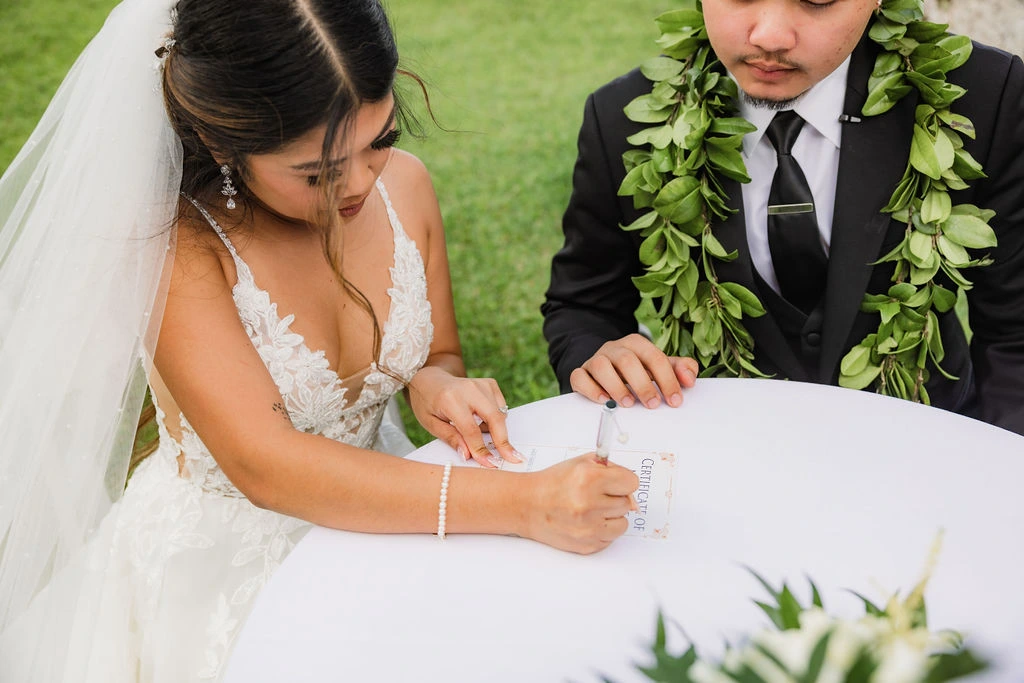
Speaker 1: It’s an incredible value proposition. And for that price, he performs the ceremony, gives you the certificate, but most importantly, he handles the permit.
Speaker 2: That’s the cheat code! You don’t have to deal with the government website; he does it. His team does the filing, they make sure you’re legal. That peace of mind alone is worth the 300 bucks.
Speaker 1: So what if I want to be a little fancier? Let’s talk about the Pineapple; that one’s $1,349.
Speaker 2: Right, the Pineapple. It’s a big jump, but it solves the two biggest problems of a destination beach wedding: Documentation and humidity.
Speaker 1: Huh. Documentation and humidity. Explain.
Speaker 2: The package includes a professional photographer for an hour—that’s your documentation. And it includes in-room hair and makeup for the bride.
Speaker 1: Ah, the humidity defense! If you’ve never been to Hawaii, you do not understand what tropical air does to hair.
Speaker 2: It’s a game-changer. It takes the experience from stressful DIY to luxury treatment.
Speaker 1: And for people who are, like, super anti-paperwork, there was another option, right? The “Parkelopement.”
Speaker 2: Yes! For the couple that says, “You know what, I don’t even want to risk the sand,” there are certain parks in Honolulu where, for a small elopement, the permitting is way simpler or even waived. He offers those as an alternative.
Speaker 1: Smart. But okay, let’s pivot to the human element. You can have the paperwork perfect, but if the officiant is a robot, the wedding’s still a bust. What’s the vibe check on Rev. Chun?
Speaker 2: We went deep into the reviews, and the word that just kept coming up over and over again was “calm.”
Speaker 1: “Calming presence.” That’s what you want. You’re nervous enough on your wedding day.
Speaker 2: And there were a few stories that really showed the value of a pro. Let’s call this Scenario A: The Interruption.
Speaker 1: Oh, the cellphone story.
Speaker 2: Yes, a total nightmare. Right in the middle of the vows, a guest’s phone starts blasting some ringtone.
Speaker 1: Oh, the cringe! That would create such awful tension.
Speaker 2: According to the review, he didn’t even miss a beat. He just smiled and said, “Hey, that’s my favorite song.”
Speaker 1: See? That’s a pro move. Instantly broke the tension; everyone laughed. He turned a disaster into a funny memory. You can’t teach that.
Speaker 2: Then there was Scenario B: The Weather. It rains in Hawaii—a lot.
Speaker 1: It does. A couple had their heart set on a specific beach, but a storm rolled in. What do you do?
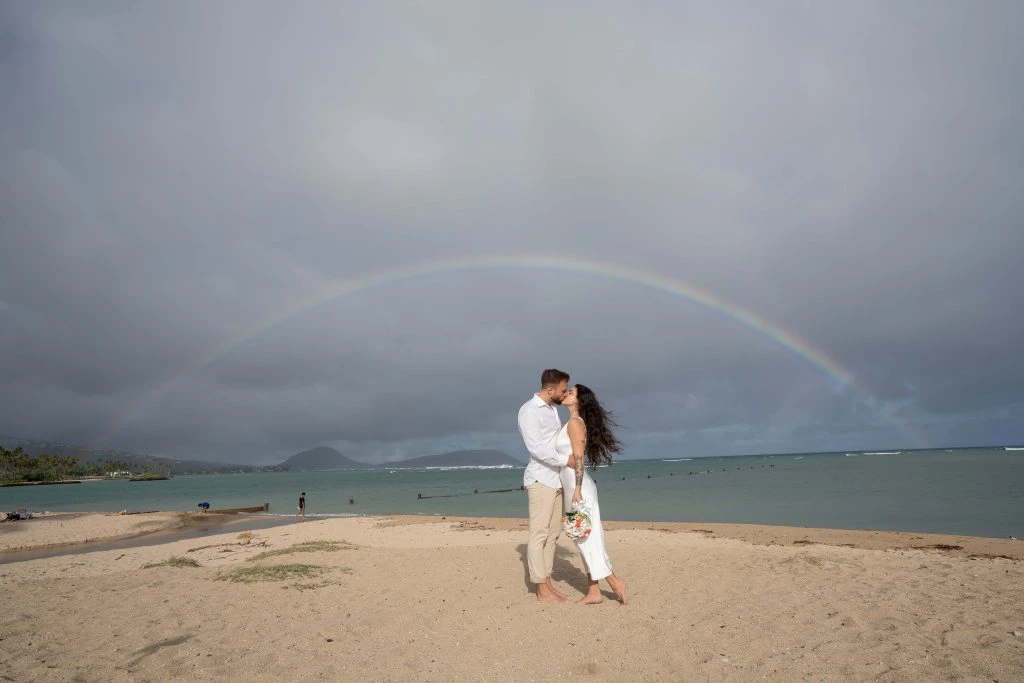
Speaker 2: He was flexible. He knows the island’s weather patterns, which is a skill in itself. He moved the location and the time, last minute. And because of that, they ended up getting married under a massive double rainbow.
Speaker 1: We saw the photo! It looked fake, it was so perfect. But that’s what you get with a local expert; he can navigate the microclimates for you.
Speaker 2: And finally, Scenario C: The “Shotgun” Elopement. The super last-minute one.
Speaker 1: Extremely last-minute. A couple decided to elope on a Saturday—the busiest day—with basically no notice, no photographer, no vows written. Total chaos.
Speaker 2: He squeezed them in, coached them on their vows right there on the spot, and—this is the best part—he took out his own cellphone and filmed the ceremony for them.
Speaker 1: Wow. That’s going above and beyond. That’s the Aloha Spirit right there.
Speaker 2: It is. And it speaks to the cultural side of it, too. It’s not just a legal transaction. The sources mention the add-ons he facilitates, like the Lei Exchange.
Speaker 1: Classic. A must-do.
Speaker 2: And the Unity Sand Ceremony, which, you know, can feel a little cheesy in a banquet hall in Ohio, but on a beach in Hawaii, it actually makes sense.
Speaker 1: It’s contextually appropriate. And he also incorporates the “Ha“—the breath of life.
Speaker 2: Explain that. It’s a traditional Hawaiian custom where you press foreheads and noses together and share a breath. It’s sharing the spirit; it’s a very intimate, spiritual moment that really grounds the ceremony in the culture of the place.
Speaker 1: I love that. It adds so much depth. Okay, before we wrap, one last logistical thing: The “taxi meter of love.”
Speaker 2: The travel fees! Right. Oahu isn’t huge, but the traffic can be legendary.
Speaker 1: It’s terrible.
Speaker 2: So the price can change depending on where you get married. If you’re in town—Waikiki, Honolulu—there’s usually no travel fee.
Speaker 1: But if you want that North Shore vibe… Haleiwa…
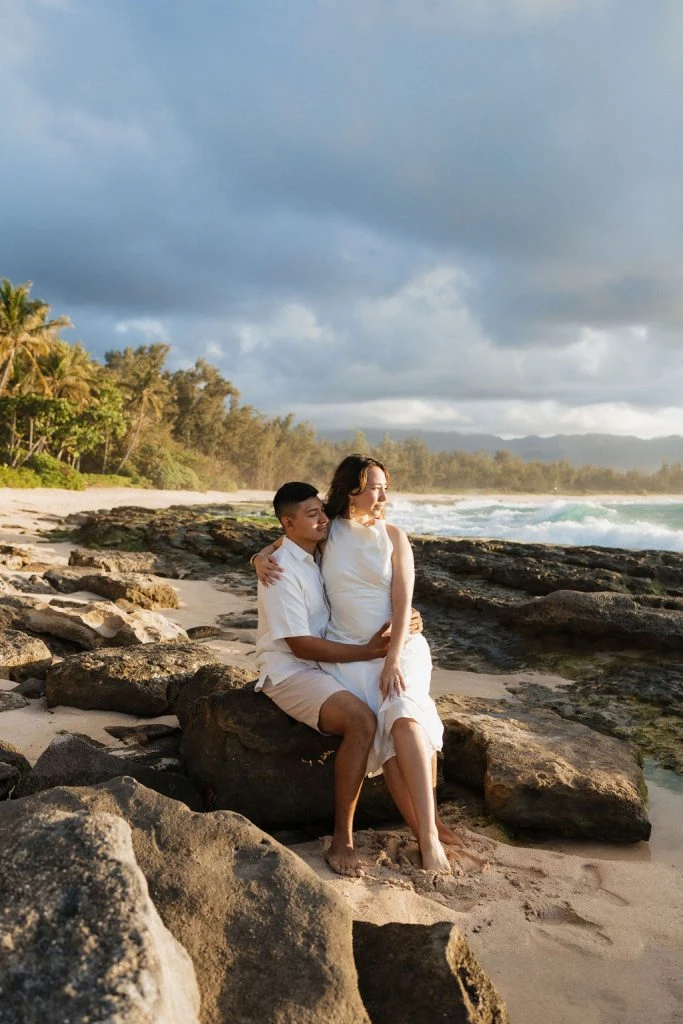
Speaker 2: It’s going to cost you. Usually an extra 150 bucks or so. It’s just gas and time; you just need to budget for it.
Speaker 1: Okay, so let’s pull all this together. We started with the fear of the clipboard—the permits, the insurance. It felt like a mountain of red tape.
Speaker 2: It is a mountain of red tape. But the takeaway here isn’t “don’t get married in Hawaii”; it’s “don’t try to climb that mountain alone.”
Speaker 1: Right. The bureaucracy is there to protect the island, which is a good thing. But you don’t need to be the expert on it.
Speaker 2: Exactly. For a few hundred bucks, you can hire someone like Rev. Chun who has the system mastered. He just takes all that liability and stress off your shoulders.
Speaker 1: And when you compare that to the stress of a big traditional wedding—the seating charts, the DJs—this actually seems incredibly simple.
Speaker 2: It’s stripped down. And I think that’s the hidden beauty of the regulations. Remember that 25-person guest limit? By legally forcing you to keep it small, the State is actually doing you a favor. It eliminates the bloat. You don’t have to invite your second cousin’s neighbor.
Speaker 1: You can just blame the government! “Sorry, the DLNR says no.” It’s the ultimate excuse. It forces you to focus on what actually matters.
Speaker 2: That is the ultimate excuse. So if you’re listening and you’re drowning in wedding planning, maybe just take a breath. Look at a map of Oahu.
Speaker 1: Throw the binder away. Book a flight.
Speaker 2: And call the guy who knows how to handle the paperwork so you can get that rainbow photo.
Speaker 1: Exactly. Well, that’s a wrap on our deep dive.
Speaker 2: This was a fun one.
Speaker 1: If you enjoyed this, if we saved you from getting a citation on your wedding day, please, please hit that subscribe button. We’re always digging into the shortcuts through life’s biggest moments.
Speaker 2: Always happy to help.
Speaker 1: And I’ll leave you with this one last thought: We mentioned that $299 price tag. A new iPhone costs, what, a thousand dollars?
Speaker 2: Easily, yeah.
Speaker 1: You could get legally married in Hawaii three times for the price of one iPhone.
Speaker 2: Please don’t test that math. Stick to one marriage.
Speaker 1: Good advice. Aloha, everyone!